What to Eat in the Morning According to Ayurveda for Balanced Energy
 Dec, 5 2025
What you eat in the morning sets the tone for your entire day-not just in energy, but in digestion, mood, and even how your body handles stress. Ayurveda, the 5,000-year-old system of medicine from India, doesn’t just tell you what to eat. It tells you why to eat it, based on your body’s natural rhythms and your unique constitution. If you’ve ever felt sluggish after toast and coffee, or bloated after a smoothie, Ayurveda offers a clearer path.
Why Ayurveda Focuses on Morning Eating
Ayurveda believes your body follows a daily cycle of energy, called doshas. From 6 a.m. to 10 a.m., Kapha energy dominates. This is the time of heaviness, slowness, and dampness. If you eat heavy, cold, or processed foods during Kapha time, you’re adding fuel to a fire that’s already too slow. Your digestion, or agni, is weakest right after waking. Eating the wrong thing here can lead to toxins building up, called ama, which causes fatigue, brain fog, and long-term imbalance.
The goal isn’t to eat the most, but to eat the right thing. Ayurveda recommends starting your day with warm, light, and easily digestible food that wakes up your metabolism without overwhelming it. This isn’t about restriction-it’s about alignment.
Your Dosha, Your Breakfast
Ayurveda recognizes three primary body-mind types: Vata, Pitta, and Kapha. Each has different needs, especially in the morning. You don’t need to be an expert to know yours. Just notice how you feel naturally.
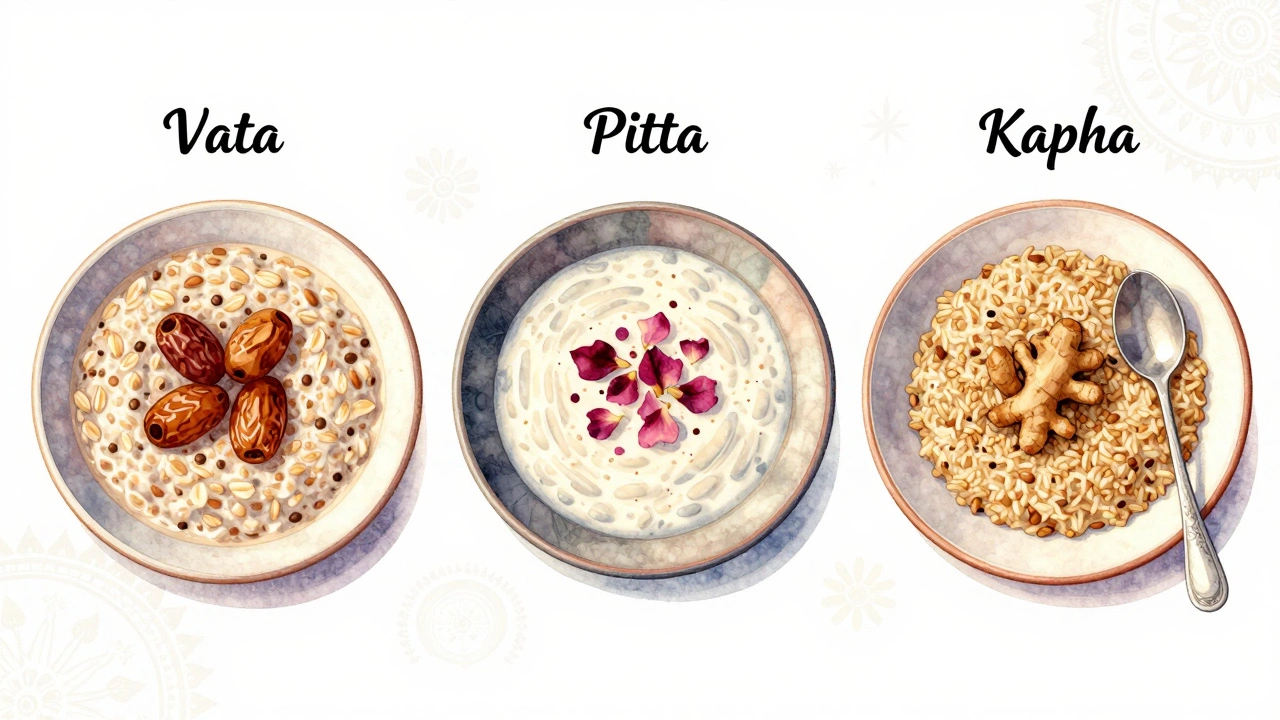
- Vata types tend to be thin, quick-thinking, and prone to anxiety or dry skin. They need warmth, moisture, and grounding foods.
- Pitta types are often medium-built, intense, and get hot easily. They need cooling, calming foods to balance their inner fire.
- Kapha types are sturdy, slow-moving, and may struggle with weight or congestion. They need light, spicy, and stimulating foods to avoid sluggishness.
Here’s what each dosha should eat first thing:
Vata: Warm, Oily, and Comforting
Vata needs stability. Cold cereal, smoothies, or toast with jam will make them feel ungrounded. Instead, try:
- Warm cooked oatmeal with ghee, cinnamon, and diced dates
- Steamed rice with a spoon of almond butter and a pinch of cardamom
- Golden milk (warm milk with turmeric, ginger, and a drop of honey)
Always eat warm. Never skip breakfast. Add a little healthy fat-ghee or sesame oil-to soothe Vata’s dryness.
Pitta: Cooling, Sweet, and Soothing
Pitta types burn hot. Spicy, sour, or fried foods in the morning will only make them irritable or acidic. Stick to sweet, cooling, and mildly spiced options:
- Chilled rice pudding made with coconut milk and rose petals
- Steamed apples with a dash of fennel and a drizzle of maple syrup
- Green smoothie with cucumber, mint, and a banana (no citrus or pineapple)
Avoid coffee. It’s too heating. Opt for fennel tea or warm water with a squeeze of lime instead.
Kapha: Light, Spicy, and Stimulating
Kapha types need to be woken up-not fed. Heavy grains, dairy, and sweeteners make them feel weighed down. Focus on warmth, spice, and simplicity:
- Warm barley porridge with ginger, black pepper, and a sprinkle of cinnamon
- Steamed vegetables with a side of lentil soup (no cream or butter)
- Herbal tea with ginger and lemon (no honey if you’re trying to lose weight)
Even if you’re not hungry, eat something light. Skipping breakfast makes Kapha worse. A small, spicy meal kickstarts digestion and prevents midday crashes.
What Everyone Should Do, No Matter Your Dosha
There are universal morning practices in Ayurveda that apply to everyone:
- Drink a glass of warm water with lemon or ginger 15-30 minutes before eating. This wakes up your digestive tract and flushes out overnight toxins.
- Wait 15-20 minutes after waking before eating. Let your body transition from rest to activity.
- Eat in silence, without screens. Chewing slowly and mindfully boosts digestion more than any superfood.
- Avoid cold drinks and ice. Cold slows down digestion. Warm or room temperature liquids keep agni strong.
- Don’t eat leftovers or reheated food. Freshly prepared food carries more life energy, or prana.
What to Avoid in the Morning
Even healthy foods can be wrong for your morning routine if they’re eaten at the wrong time or in the wrong form.
- Cold smoothies-They shock the system. Even if they’re full of greens, they dampen agni.
- Coffee on an empty stomach-It spikes cortisol, increases acidity, and disrupts natural rhythms.
- Toast with peanut butter-Too dry and heavy for early digestion. Peanut butter is hard to break down in the morning.
- Yogurt or dairy-Unless it’s warm and spiced, dairy creates mucus and slows digestion. Kapha types should avoid it entirely.
- Processed cereals and granola-High in sugar and preservatives. Even “healthy” brands spike blood sugar and crash energy by mid-morning.
One study from the Institute of Ayurveda and Integrative Medicine tracked 200 people who switched from typical Western breakfasts to Ayurvedic morning meals. After six weeks, 78% reported better digestion, 71% had more stable energy, and 65% felt less anxious. The biggest change? They stopped feeling the need for a mid-morning snack.
Simple Morning Routine to Try Today
You don’t need to overhaul your life. Start with this 5-step routine:
- Wake up and drink 1 cup of warm water with lemon or ginger.
- Wait 15 minutes.
- Prepare a small bowl of warm cooked grains (oat, rice, or barley) with a teaspoon of ghee and a pinch of spice (cinnamon, cardamom, or ginger).
- Eat slowly, chewing each bite 20 times.
- Wait 20 minutes before drinking tea or coffee.
Do this for three days. Notice how your body feels. Are you less bloated? More alert? Less cranky before lunch? That’s your body telling you it’s responding.

When Ayurveda Doesn’t Fit
Ayurveda isn’t a one-size-fits-all diet. If you have diabetes, hypothyroidism, or are pregnant, some recommendations may need adjustment. Warm water with lemon is safe for most. But if you’re on blood thinners, avoid large amounts of turmeric. If you’re insulin resistant, skip sweet fruits in the morning and focus on protein and fiber-rich grains.
Listen to your body more than any book. If a warm porridge makes you feel worse, try something else. Ayurveda is about balance, not dogma. The goal is to feel light, clear, and energized-not to follow rules perfectly.
Next Steps
Start small. Pick one thing from this list and try it tomorrow. Maybe it’s drinking warm water before breakfast. Maybe it’s swapping your smoothie for oatmeal. Don’t try to change everything at once.
After a week, ask yourself: Do I feel more awake? Less bloated? Less reliant on caffeine? If yes, you’re on the right path. Ayurveda isn’t about perfection. It’s about paying attention-and eating in a way that makes your body feel like home.
Can I drink coffee in the morning according to Ayurveda?
Ayurveda advises against coffee on an empty stomach, especially for Pitta and Vata types. It increases acidity, raises cortisol, and can lead to crashes later. If you must have it, wait until after breakfast and choose black coffee without sugar or dairy. Kapha types can handle it better, but even then, limit it to one cup and pair it with a light, spicy meal.
Is yogurt okay for breakfast in Ayurveda?
Cold yogurt is not recommended in the morning-it creates mucus and slows digestion. If you want dairy, try warm, spiced milk with turmeric or ginger. For those who tolerate dairy well, a small amount of room-temperature yogurt with roasted cumin and mint can be okay, but only after the body is warmed up with water and light food.
What if I’m not hungry in the morning?
Not feeling hungry is a sign your agni (digestive fire) is low. Ayurveda says even if you’re not hungry, you should eat something light-like warm water with lemon, a few sips of ginger tea, or a spoon of cooked rice. Skipping breakfast makes digestion weaker over time. Start small. Your appetite will return as your body learns to trust your routine.
Can I eat fruit for breakfast in Ayurveda?
Yes-but not cold fruit straight from the fridge. Ayurveda recommends cooked or warm fruit like stewed apples, pears, or bananas. Raw fruit, especially citrus or berries, is hard to digest on an empty stomach and can cause bloating. If you eat fruit, have it alone, 30 minutes before other foods, and only if your digestion is strong.
How long does it take to see results from an Ayurvedic breakfast?
Most people notice improvements in digestion and energy within 3-5 days. For deeper changes-like reduced bloating, better sleep, or stable mood-it takes 2-4 weeks. The key is consistency. One perfect breakfast won’t change everything. But a daily practice of eating warm, simple, and mindful meals will.
If you’ve tried diets that left you hungry, tired, or confused, Ayurveda offers something different: a system that doesn’t tell you what to cut out, but what to add in-warmth, rhythm, and awareness. Your morning meal doesn’t have to be complicated. It just has to be right for you.