What is the fastest way to recover from a knee replacement?
 Mar, 13 2026
Knee Replacement Recovery Tracker
Recovery Timeline
Daily Exercise Checklist
Recovery Calculator
Recovery Milestones
Your estimated milestones based on medical guidelines
Walking without assistance
6-8 weeks
Full range of motion
3-6 months
Stairs without handrail
By week 6
Avoid These Common Pitfalls
Overdoing it - Trying to walk too far too soon can cause swelling and setbacks
Ignoring swelling - Hot, red, or puffy knee after activity requires immediate ice and elevation
Dehydration - Drink at least 2 liters of water daily to support cartilage healing
Getting a knee replacement is a major step, but the real challenge starts after you leave the hospital. Many people expect to be back on their feet in a few weeks, only to hit a wall around day 10 or 12. The truth? Recovery isn’t about waiting-it’s about doing the right things, at the right time. There’s no magic pill, but there is a proven path to get you moving faster and with less pain.
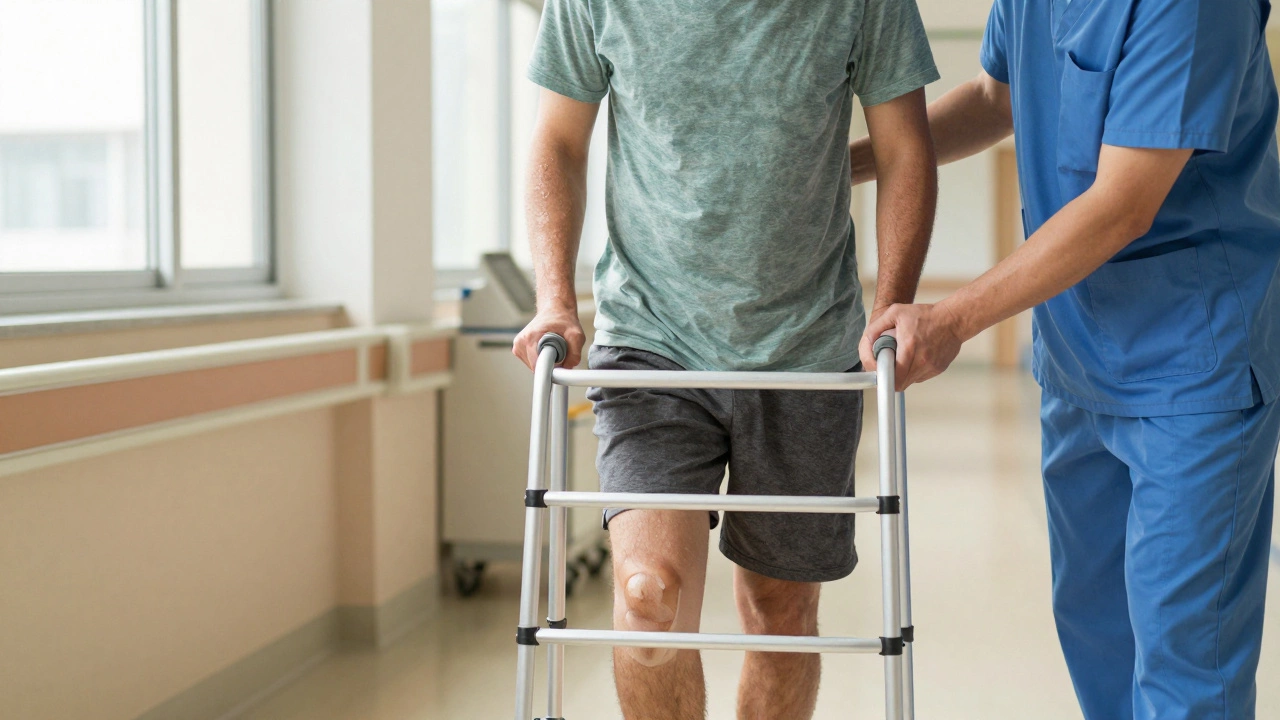
Day 1 to Day 3: Move before you think you’re ready
The biggest mistake? Staying still. Hospitals push patients to stand and take a few steps within 24 hours because science shows movement prevents blood clots, reduces swelling, and keeps your muscles from shutting down. If you’re told to walk with a walker or crutches, do it-even if it hurts. Pain doesn’t mean damage; it means your body’s waking up. Physical therapists won’t let you sit for more than 30 minutes at a time. That’s not a suggestion. It’s a rule backed by studies from the Journal of Bone and Joint Surgery that show early mobility cuts hospital stays by nearly 40%.
Day 4 to Day 10: Your daily rehab checklist
By day 4, you should be walking around your home without help. If you’re not, something’s off. Your rehab plan needs structure. Here’s what works every time:
- Walk 3 times a day-10 minutes each, even if you have to stop and rest.
- Do 3 sets of straight leg raises (10 reps each) while sitting or lying down.
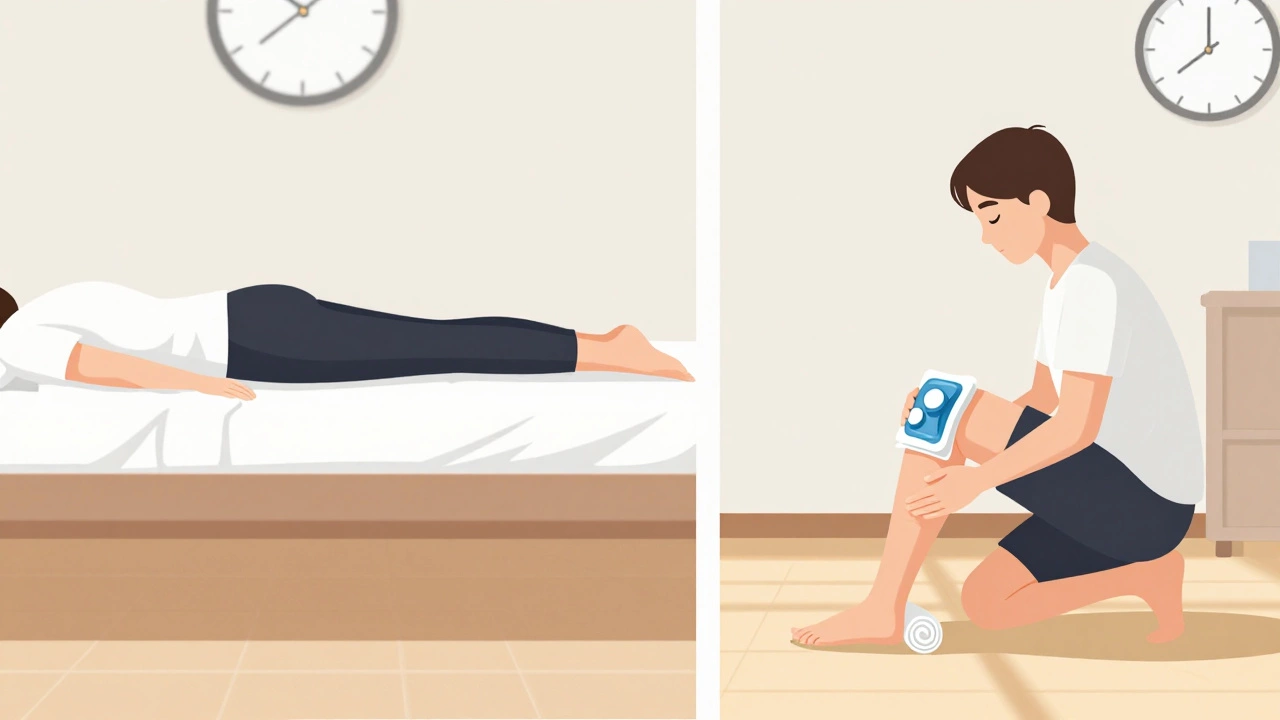
- Bend your knee to at least 90 degrees 5 times a day. Use a rolled towel under your heel to help.
- Ice your knee for 20 minutes after every activity.
- Keep your leg elevated when sitting or lying down.
This isn’t optional. Skipping even one of these daily tasks slows healing. A 2023 study from the University of Birmingham tracked 1,200 patients and found those who stuck to this routine returned to normal walking speed 11 days faster than those who didn’t.
Week 2 to Week 6: Building strength, not just mobility
By week 2, you should be off painkillers if you’re not already. If you’re still relying on opioids, talk to your doctor-long-term use delays recovery. This is when you start adding resistance. Use a light ankle weight (1-2 lbs) for seated knee extensions. Do 2 sets of 15, twice daily. Stationary biking becomes your best friend. Start with 5 minutes at low resistance, then add 2 minutes every other day. By week 6, you should be biking for 20 minutes without stopping.
Don’t rush stairs or squatting. Your surgeon will tell you when it’s safe. But you can start stepping up onto a low step (2-3 inches) with support. This trains your quads without stressing the new joint. Most people hit 110-120 degrees of knee flexion by week 6. That’s the threshold for sitting cross-legged, getting into a car, or climbing stairs without holding on.
Week 6 to Week 12: The real game-changer
Here’s where most people plateau-and where the fastest recoverers break through. You’re no longer just healing. You’re rebuilding. This is when strength training takes over. Start with seated leg presses (light weight, high reps-15-20). Add calf raises. Do wall sits for 30 seconds, three times a day. These aren’t fancy gym moves. They’re targeted, simple, and proven.
Swimming and water aerobics are gold at this stage. The buoyancy takes pressure off your knee while letting you move freely. A 2024 trial in the British Journal of Sports Medicine showed patients who did water therapy twice a week regained full range of motion 3 weeks faster than those who didn’t.
By week 12, you should be walking without a cane, climbing stairs without pain, and driving again-if your surgeon says it’s okay. You’re not done, but you’re no longer in recovery mode. You’re in maintenance mode.
What slows recovery down? Avoid these 5 traps
- Overdoing it on day 5-Trying to walk 5 miles because you felt “good” leads to swelling and setbacks.
- Ignoring swelling-If your knee is hot, red, or puffy after activity, stop. Ice it. Elevate it. Call your clinic.
- Skipping sleep-Healing happens during deep sleep. Aim for 7+ hours. No exceptions.
- Dehydration-Your cartilage needs water. Drink at least 2 liters a day. Coffee and soda don’t count.
- Waiting for pain to disappear-Some discomfort is normal for 3-6 months. Don’t let fear stop you from moving.

When should you call your surgeon?
Recovery isn’t linear. Some days feel better than others. But if you notice any of these, act fast:
- Fever over 38°C (100.4°F)
- Sudden increase in swelling or redness around the incision
- Sharp, stabbing pain that doesn’t ease with rest
- Leg that feels hot, swollen, or tender along the calf
- Drainage from the wound that’s yellow, green, or smells bad
These aren’t “wait and see” signs. They’re red flags. Call your clinic immediately. Infection after knee replacement is rare-but when it happens, speed matters.
Long-term: Staying strong for life
After 6 months, your knee will feel like yours again. But it’s not invincible. You need to keep it strong. Walk 30 minutes most days. Do bodyweight squats and step-ups twice a week. Avoid high-impact sports like running or basketball. Cycling, swimming, and hiking are safer. Maintain a healthy weight-every extra pound adds 4 pounds of pressure on your knee.
Studies show people who stick to a lifelong movement routine after knee replacement have 70% less chance of needing revision surgery. That’s not luck. That’s discipline.
How long does it take to walk normally after knee replacement?
Most people can walk without a cane or walker by 6 to 8 weeks. Full normal walking-without pain or stiffness-usually takes 3 to 6 months. It depends on your age, fitness before surgery, and how strictly you follow rehab. Those who stick to daily exercises and avoid overdoing it often return to normal walking by 12 weeks.
Can I climb stairs after knee replacement?
Yes, but not right away. Most surgeons allow stair climbing by week 2, with handrail support. Start with one step at a time, leading with your good leg going up and your operated leg going down. By week 6, you should be able to climb stairs without holding on. Always use a handrail until you feel completely steady.
Is it normal to have pain 3 months after surgery?
Yes, mild discomfort is normal. Swelling and stiffness can linger for up to 6 months as scar tissue softens and muscles rebuild. Sharp pain, burning, or sudden increases in pain are not normal and should be checked. If your pain is getting worse instead of better after 3 months, talk to your surgeon. You may need a tweak in your rehab plan.
What’s the best exercise after knee replacement?
Walking, stationary biking, and water-based exercises are the top three. Walking builds endurance, biking improves joint motion without impact, and swimming or water aerobics reduce stress while strengthening muscles. Avoid high-impact activities like running or jumping until your surgeon clears you-usually not before 6 months.
How important is physical therapy after knee replacement?
Extremely. In-hospital rehab gets you moving, but outpatient physical therapy is where real recovery happens. Studies show patients who complete 12+ sessions of structured therapy regain 40% more strength and mobility than those who skip it. Don’t treat it as optional. It’s the difference between limping and walking confidently.