What is the downside to mail-order pharmacies? Risks and realities
 Sep, 29 2026
Mail-Order Pharmacy Risk Assessment Tool
Use this tool to assess if a mail-order pharmacy is suitable for your current health situation. Answer the questions below honestly to receive a personalized risk profile.
Detailed Analysis & Recommendations
You’re sitting on your sofa in Birmingham, rain hammering against the window, and you realize you’re out of your blood pressure meds. You don’t want to drive across town, wait in line, or deal with the small talk at the counter. So, you tap a few buttons on your phone, pay a subscription fee, and wait for the box. It’s convenient, sure. But what happens when that box arrives late? Or worse, when the pills inside aren’t quite right?
Mail-order pharmacies are services that dispense prescription medications directly to patients via postal or courier delivery, often bypassing local brick-and-mortar locations. While they promise cost savings and ease, they introduce a set of unique vulnerabilities that traditional drugstores simply don’t have. If you’re considering switching your prescriptions to a remote service, you need to know exactly where the cracks in the system can form.
The disconnect between pharmacist and patient
Think about the last time you picked up a prescription locally. Did the pharmacist look you in the eye? Did they ask if you were still taking that new supplement your friend recommended? In a physical store, there’s a human checkpoint. A local pharmacist is a healthcare professional who verifies prescriptions, checks for drug interactions, and provides counseling on medication use. They see your entire profile because you likely fill all your scripts there.
With mail-order services, this relationship becomes fragmented. You might buy your heart medication from one site and your allergy relief from another. The algorithm checking your orders doesn’t always cross-reference with other providers unless they share a specific database, which many don’t. This creates a dangerous gap in drug interaction the effect of one drug on the activity of another, which can be synergistic, additive, antagonistic, or causing unexpected effects monitoring. If your doctor prescribes a new antibiotic while you’re waiting for a refill from a distant warehouse, no one catches the potential clash until you’ve already swallowed the first dose.
Logistical nightmares and temperature control
We tend to think of shipping as instant, but pharmaceutical logistics are strict. Many medications require specific storage conditions. Insulin, for example, loses potency if it gets too warm. Biologics used for autoimmune diseases often need to stay refrigerated throughout the journey.
When you order from a local pharmacy, you control the last mile. You pick it up, put it in a cooler bag if needed, and get home in twenty minutes. With mail-order, your package sits in a metal truck in July heat or freezes in a delivery van in January. Even with insulated packaging and gel packs, these solutions have limits. A delayed delivery due to weather or carrier error can turn a critical medication into ineffective sugar water. Have you ever checked the expiration date on a bottle that sat in a non-temperature-controlled warehouse for three months before reaching you? Sometimes, you find out the hard way that the shelf life wasn’t respected.
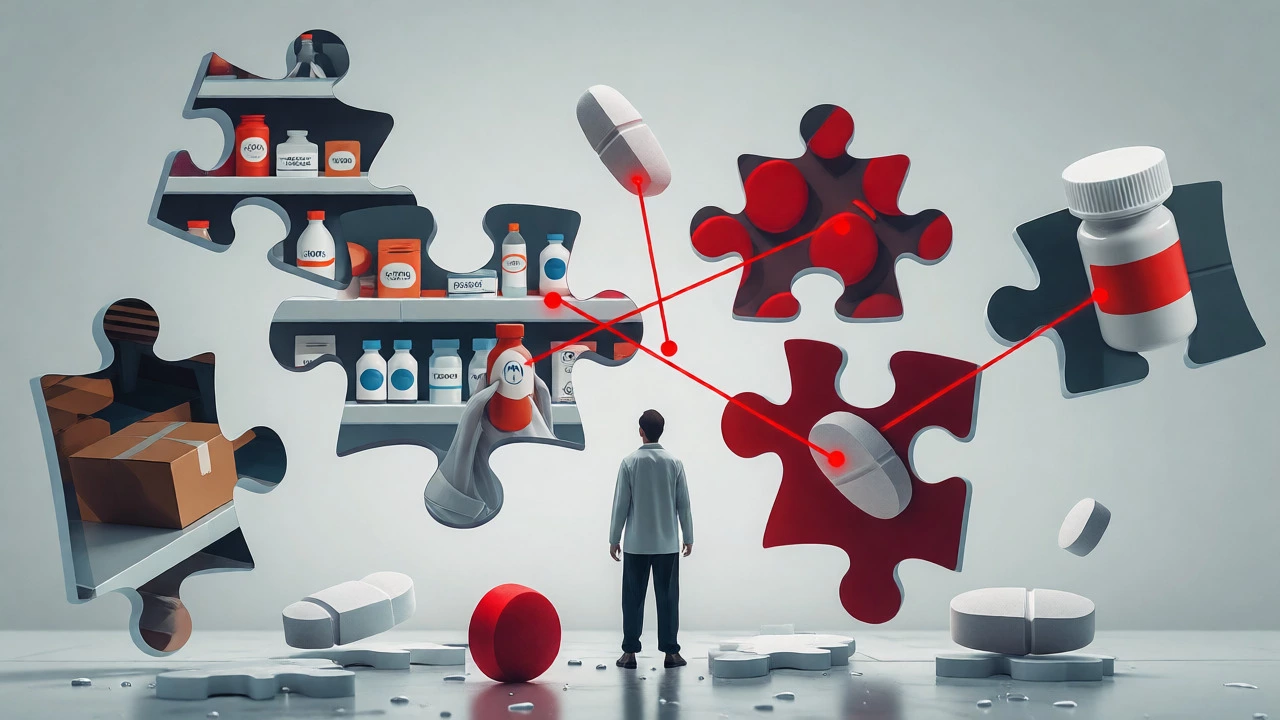
The risk of counterfeit and substandard drugs
This is the big one. Not all online pharmacies are created equal. Legitimate ones operate under strict regulations, such as those enforced by the General Pharmaceutical Council (GPhC) in the UK or the FDA in the US. But the internet is flooded with rogue sites selling everything from painkillers to steroids without proper verification.
A study published in the Journal of the American Medical Association found that a significant percentage of medications purchased from unverified online sources contained incorrect ingredients, wrong dosages, or no active ingredient at all. When you buy from a reputable mail-order service linked to your insurance, you’re usually safe. But if you’re hunting for a bargain on a site that looks slightly sketchy, you’re gambling with your health. Counterfeit pills can contain toxic substances like lead, mercury, or even fentanyl. How do you verify the source? Look for the Verified Internet Pharmacy Practice Sites (VIPPS) seal or equivalent national accreditation logos. If they’re missing, walk away.
| Feature | Local Brick-and-Mortar | Reputable Mail-Order | Rogue Online Site |
|---|---|---|---|
| Consultation Quality | High (Face-to-face) | Moderate (Phone/Chat) | None/Low |
| Delivery Speed | Immediate | 3-7 Days | Unpredictable |
| Temperature Control | High (Patient controlled) | Moderate (Insulated shipping) | Low (Standard post) |
| Drug Verification | High (Regulated supply chain) | High (If accredited) | Low (Risk of counterfeit) |
| Cost | Variable (Insurance copays) | Often Lower (Bulk discounts) | Deceptively Low |
Insurance and billing complications
Here’s a practical headache: formulary mismatches. Your insurance company has a list of covered drugs, called a formulary. Sometimes, a mail-order pharmacy will switch your brand-name drug for a generic equivalent to save costs. Usually, this is fine. But occasionally, the generic isn’t compatible with your body, or it comes from a manufacturer you had a bad reaction to previously.
Furthermore, managing multiple pharmacies complicates your deductible tracking. If you split prescriptions between a local store for acute issues and a mail-order service for maintenance meds, keeping track of your out-of-pocket maximums becomes a spreadsheet nightmare. You might hit your limit at the local store but not realize the mail-order charges haven’t counted toward it yet, leading to surprise bills. Always call your insurer to confirm which network the mail-order provider belongs to before you commit.

Lack of immediate access for emergencies
Imagine you wake up at 2 AM with severe pain or an infection flare-up. You can’t just run to the mail-order warehouse. You need a pill now. Mail-order is great for chronic, predictable conditions-like high cholesterol or hypothyroidism. It fails miserably for acute, unpredictable events.
If you rely solely on mail-order, you must keep a "bridge supply" of emergency meds. This means over-ordering or paying extra for expedited shipping when things go wrong. For people with complex medical histories, the inability to speak to a pharmacist immediately during a crisis is a genuine safety concern. A quick question about side effects can take days to resolve via email support tickets, whereas a local pharmacist answers in seconds.
How to mitigate the downsides
Does this mean you should avoid mail-order entirely? No. The convenience and cost savings are real benefits for many. The key is strategic hybridization. Use mail-order for stable, long-term medications where timing isn’t critical. Keep a relationship with a local pharmacy for anything that changes frequently or requires urgent attention.
- Verify Accreditation: Ensure the online pharmacy is registered with the GPhC (UK) or NABP (US). Check their license number on the official regulator’s website.
- Monitor Packaging: Upon arrival, check seals, expiration dates, and appearance of pills. If something looks off, don’t take it.
- Consolidate Prescriptions: Try to use one reputable mail-order service for most of your meds so their systems can better flag interactions.
- Plan Ahead: Never let your stock drop below two weeks. Shipping delays happen more often than you’d think.
Are mail-order pharmacies cheaper than local ones?
Generally, yes, especially for maintenance medications. Insurance plans often offer lower copays for 90-day supplies through mail-order networks compared to 30-day supplies at local stores. However, you must factor in any shipping fees and the potential cost of managing separate accounts.
What happens if my mail-order prescription is lost?
Most reputable services will reship the medication quickly, sometimes overnight, once you report the issue. However, you may need to provide proof of loss or sign a waiver. For critical medications, always contact your doctor for a bridge prescription to pick up locally if the delay threatens your health.
Can I return unused medication to a mail-order pharmacy?
Usually, no. Unlike retail stores that might accept returns within a short window, mail-order pharmacies typically cannot accept returned medications due to regulatory requirements regarding storage conditions after shipment. You generally bear the cost of discontinued treatments.
How do I know if an online pharmacy is legitimate?
Look for a physical address and phone number listed on the site. Verify the license with your country's pharmacy board. Legitimate sites require a valid prescription; if they sell antibiotics or opioids without asking for one, it’s a major red flag.
Do mail-order pharmacies affect my privacy?
They handle data similarly to other healthcare providers, governed by laws like HIPAA (US) or GDPR (UK/EU). However, sharing data across multiple vendors increases the surface area for potential breaches. Review their privacy policy to see if they share anonymized data with third parties for marketing.