What Is the Cut-Off Age for Knee Replacement? Real Guidelines for Older Adults
 Mar, 6 2026
Knee Replacement Eligibility Assessment
How Your Health Determines Eligibility
Unlike age, your overall health is the key factor for knee replacement surgery. This tool assesses your health status against key medical criteria surgeons consider.
There’s no strict cut-off age for knee replacement surgery. You can’t be too old for a knee replacement - but you can be too unhealthy. Many people assume that if you’re over 70 or 80, doctors will automatically say no. That’s not true. Surgeons don’t look at your birthday. They look at your body.
Age Isn’t the Decision Maker - Health Is
In the UK, the average age for knee replacement is around 68. But that’s just an average. We see patients in their 90s who recover better than some 60-year-olds. What matters isn’t how many years you’ve lived. It’s how well your heart, lungs, kidneys, and immune system are working.
A 75-year-old who walks daily, manages their blood pressure, and doesn’t smoke has a better chance of a smooth recovery than a 65-year-old with uncontrolled diabetes and severe lung disease. Surgeons use something called the ASA score to measure this. It’s not about age. It’s about risk.
What Do Surgeons Actually Check?
Before approving surgery, your surgeon and anaesthetist run through a quick checklist:
- Heart function: Can your heart handle the stress of surgery? An ECG and sometimes an echocardiogram are done.
- Lung health: If you’re short of breath climbing stairs, you might need a chest X-ray or breathing test.
- Blood sugar: Diabetics need HbA1c levels under 7.5% to lower infection risk.
- Weight: BMI over 40 increases complications. Weight loss may be advised first.
- Infection risk: Any active infection - even a foot ulcer or dental abscess - must be cleared before surgery.
These aren’t just red flags. They’re deal-breakers. If one of these is out of control, surgery gets delayed - not because you’re old, but because your body isn’t ready.
Why Some Doctors Still Say No (Even When They Shouldn’t)
There’s a quiet bias in medicine: older patients are often assumed to be frail. But studies from the National Institute for Health and Care Excellence (NICE) show that people over 80 who get knee replacements report the same improvement in pain and mobility as younger patients.
One 2023 study in The Lancet followed 12,000 patients over 75. Those who had surgery had a 62% higher chance of walking independently two years later compared to those who didn’t. The death rate within 90 days? Less than 1%. That’s lower than the risk of a hip fracture from a fall.
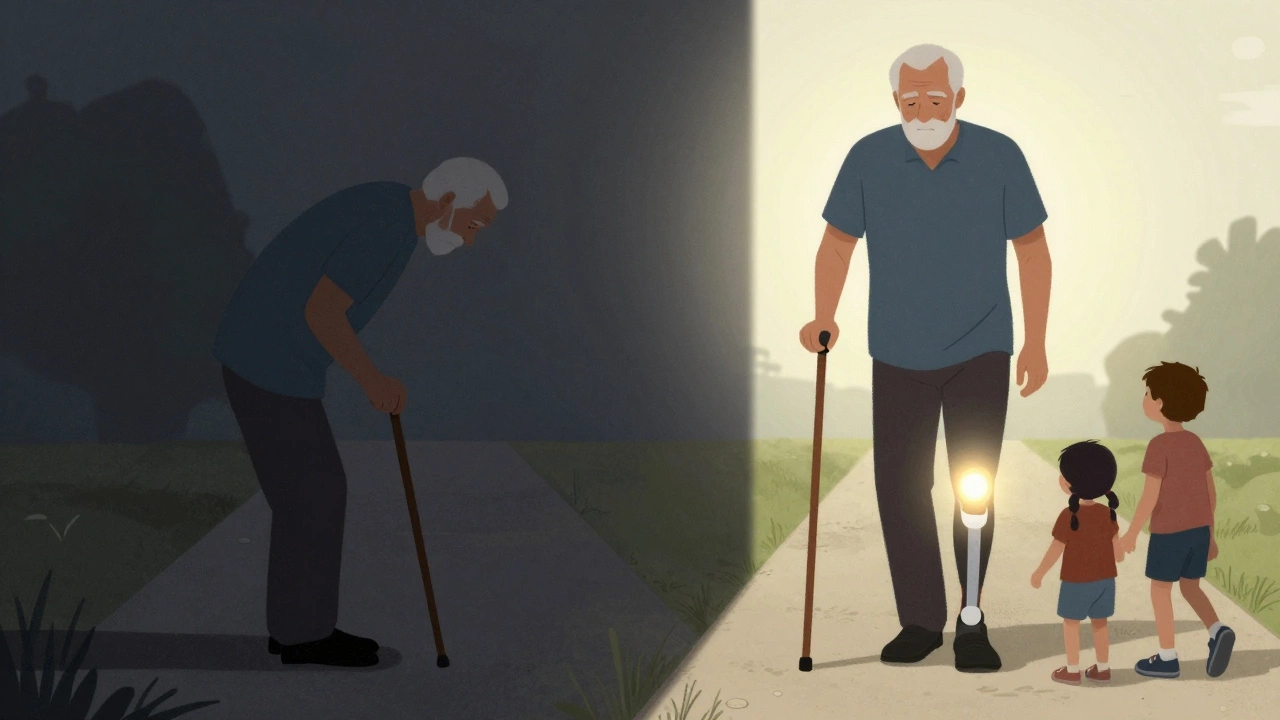
Still, some GPs and even orthopaedic nurses will say, “You’re too old.” That’s not medical advice. That’s outdated thinking. If your pain keeps you from sleeping, walking to the toilet, or seeing your grandchildren, you’re a candidate - not a risk.

What About Recovery? Is It Harder for Seniors?
Recovery takes time for everyone. But older adults often recover faster than expected - if they’re supported properly.
Here’s what real recovery looks like:
- Day 1: Standing and taking a few steps with a walker. Most go home within 1-3 days.
- Week 1-2: Walking without a cane, using stairs with help.
- Week 4-6: Driving again (if right knee), returning to light chores.
- Week 12: Most can walk a mile, swim, or play gentle golf.
Physical therapy is non-negotiable. Skipping it doubles the chance of stiffness. Many NHS trusts now offer home-based rehab for seniors who can’t travel. That’s a game-changer.
When Is It Too Soon - or Too Late?
Waiting too long is just as dangerous as rushing in. If you’re limping, using a cane, or avoiding stairs because of pain, you’re already damaging your hip, back, and other knee. That’s called “compensatory wear.” It makes recovery harder.
On the flip side, if your arthritis is mild - you still walk 20 minutes a day and don’t wake up in pain - surgery isn’t urgent. You might delay it for years with exercise, weight control, and painkillers.
The sweet spot? When pain starts to steal your independence. Not when it’s unbearable. Not when it’s barely there. When it’s just enough to make you give up the things you love.
Alternatives to Surgery
If you’re not ready for surgery - or your health doesn’t allow it - there are still options:
- Weight loss: Losing 10 pounds cuts knee pressure by 40 pounds per step.
- Physiotherapy: Strengthening your quads can reduce pain by up to 70% in some cases.
- Braces and insoles: Offloader braces shift weight away from the damaged side.
- Injections: Cortisone gives short-term relief. Hyaluronic acid helps some, but evidence is mixed.
None of these fix the arthritis. But they can buy you time - or help you get ready for surgery.
Real Talk: What Patients Wish They Knew
From talking to hundreds of patients:
- “I thought I’d be stuck in a wheelchair.” Most walk out of hospital. Many walk without aids within weeks.
- “I was scared of the anaesthetic.” Modern spinal anaesthesia is safer than a general for most seniors.
- “I didn’t know I could get help at home.” NHS home rehab is free and widely available.
- “I waited too long.” That’s the most common regret. Pain doesn’t get better with time.
If you’re thinking about surgery, talk to your GP. Ask for a referral to an orthopaedic clinic. Don’t let age be the reason you don’t ask. Let your health be the reason you do.