What Herbs Should You Not Mix Together? Safe Herbal Combinations and Dangerous Pairings
 Jan, 30 2026
People turn to herbal supplements for all kinds of reasons-better sleep, less stress, more energy, or just to feel more in control of their health. But here’s the thing: just because something is natural doesn’t mean it’s safe to mix. Some herbs play nice together. Others? They clash like oil and water-and the results can be serious.
Why Herb Combinations Matter
You wouldn’t throw random pills into a smoothie and call it medicine. Yet many people do the same with herbs. St. John’s wort with turmeric? Garlic with ginkgo? It sounds harmless. But herbs don’t just float around in your body doing nothing. They interact with enzymes, blood clotting, liver function, and even your nervous system. When you mix the wrong ones, you’re not just doubling the effect-you might be creating something unpredictable.
A 2023 study in the Journal of Clinical Pharmacology found that over 30% of adults taking herbal supplements were also on prescription meds-and nearly half of them didn’t tell their doctor. That’s a recipe for trouble. The liver doesn’t care if something came from a plant or a lab. It processes both the same way. And when two herbs (or an herb and a drug) compete for the same enzyme, one can build up to dangerous levels.
Herbs That Should Never Be Mixed
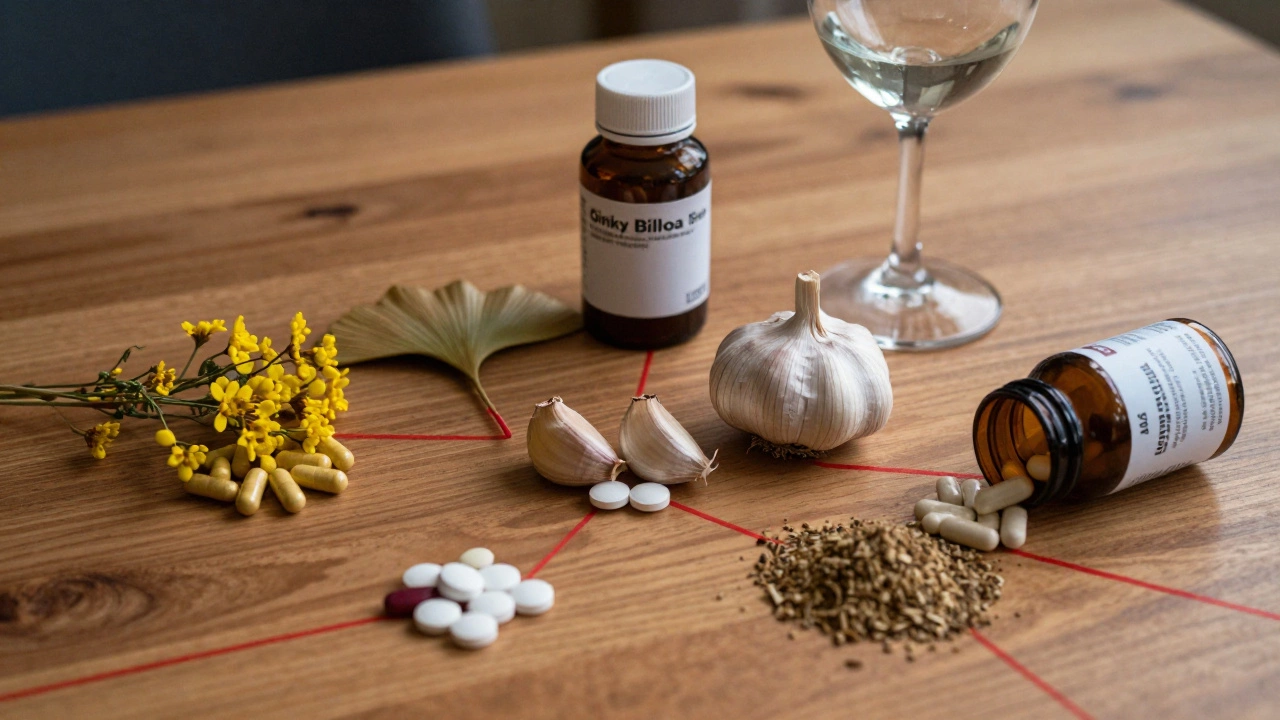
Here are the top five dangerous combinations you need to avoid-backed by real clinical reports and pharmacology data.
1. St. John’s Wort + SSRIs or SNRIs
This one’s deadly serious. St. John’s wort is often used for mild depression. But if you’re already on an antidepressant like fluoxetine (Prozac), sertraline (Zoloft), or venlafaxine (Effexor), mixing them can trigger serotonin syndrome. That’s when your body gets flooded with too much serotonin. Symptoms? Agitation, rapid heart rate, high fever, tremors, confusion. In severe cases, it leads to seizures or death.
There’s no safe threshold. Even low doses of St. John’s wort can interfere. One case in the UK in 2024 involved a 48-year-old woman who took St. John’s wort with citalopram for ‘natural relief.’ She ended up in intensive care. She didn’t know the two could interact. Neither did her pharmacist.
2. Ginkgo Biloba + Blood Thinners
Ginkgo is popular for memory and circulation. But it also thins the blood. If you’re taking warfarin (Coumadin), aspirin, clopidogrel (Plavix), or even fish oil, adding ginkgo can turn a minor cut into a bleeding nightmare.
There’s a documented case from Birmingham in 2023: a 72-year-old man took ginkgo with low-dose aspirin for ‘brain health.’ He developed a subdural hematoma after a minor fall. His INR levels were off the charts. He had no idea ginkgo could do that.
Even if you’re not on meds, if you’re scheduled for surgery, stop ginkgo at least two weeks before. Surgeons ask because they’ve seen too many complications.
3. Garlic + Anticoagulants and Blood Pressure Meds
Garlic is great for heart health-but not when it’s stacked with other heart meds. Garlic naturally lowers blood pressure and thins blood. When combined with warfarin, dabigatran (Pradaxa), or even beta-blockers like metoprolol, it can push your blood pressure too low or cause excessive bleeding.
One 2025 review of ER visits in England found garlic supplements were linked to 17% more bleeding events in patients on anticoagulants than those who didn’t take them. And garlic doesn’t just come in pills. Raw cloves, garlic oil, even garlic-infused honey can add up.
4. Kava + Alcohol or Sedatives
Kava is used for anxiety and relaxation. Sounds safe, right? But it’s processed by the same liver enzymes as alcohol and benzodiazepines. Mixing them can cause extreme drowsiness, liver damage, or even respiratory depression.
In 2022, the UK’s Medicines and Healthcare products Regulatory Agency (MHRA) issued a warning after three cases of acute liver failure linked to kava use. All three patients drank alcohol regularly. One was also taking diazepam. They thought kava was a ‘gentle’ alternative. It wasn’t.
Even if you don’t drink, avoid kava if you’re on sleep aids, muscle relaxants, or antihistamines. The combination can knock you out-or worse.
5. Valerian Root + Alcohol, Benzodiazepines, or Barbiturates
Valerian is a go-to for insomnia. But it boosts GABA, the brain’s main calming chemical. So does alcohol. So do sleeping pills like zolpidem (Ambien) or phenobarbital. Combine them, and your central nervous system slows down too much.
There’s no ‘just one glass’ rule here. Even a small amount of alcohol with valerian can cause dizziness, slowed breathing, or loss of coordination. Elderly users are especially at risk. One 2024 study found valerian users who drank alcohol were 4 times more likely to fall than those who didn’t.
What About Common Herbs Like Turmeric, Ginger, and Green Tea?
These are generally safe-but not if you’re on certain meds.
Turmeric (curcumin) is a strong anti-inflammatory. But it also inhibits platelet aggregation. If you’re on blood thinners, it can increase bleeding risk. Stick to culinary amounts if you’re on warfarin or aspirin.
Ginger is fine for nausea and digestion. But it can also thin blood. If you’re having surgery or taking anticoagulants, keep it to food amounts. Skip the ginger capsules.
Green tea (especially extract) contains caffeine and catechins. High doses can interfere with beta-blockers and blood pressure meds. It can also reduce the absorption of iron and folic acid. If you’re on thyroid meds like levothyroxine, take green tea at least 4 hours apart.
How to Check for Herb Interactions
You don’t need a pharmacy degree to stay safe. Here’s how to protect yourself:
- Write it down. Keep a list of every herb, vitamin, or supplement you take-including dosage and frequency.
- Ask your pharmacist. Pharmacists see drug interactions every day. Bring your list to them. Don’t wait for your doctor to ask.
- Use trusted sources. The National Center for Complementary and Integrative Health (NCCIH) and the British Herbal Medicine Association have searchable databases. Avoid random blogs or Amazon reviews.
- Wait and watch. If you’re starting a new herb, wait at least 3-5 days before adding another. Watch for new symptoms: dizziness, bruising, nausea, changes in heart rate.
- Stop before surgery. Most herbal supplements should be stopped 1-2 weeks before any procedure. Tell your surgeon. Even if they don’t ask.

When in Doubt, Skip It
Herbs aren’t candy. They’re active substances with real effects on your body. And unlike pharmaceuticals, they’re not tightly regulated. A bottle labeled ‘organic’ doesn’t mean it’s safe to mix with your other meds.
If you’re unsure whether two herbs can be taken together, assume they can’t. There’s no shame in sticking to one thing at a time. In fact, that’s how most herbalists recommend it: simple, slow, intentional.
Your body doesn’t need to be a chemistry lab. Sometimes, less really is more.
Can I mix herbal supplements with prescription medications?
Sometimes, but not without caution. Many herbs interact with prescription drugs, especially blood thinners, antidepressants, and blood pressure medications. Always talk to your pharmacist or doctor before combining herbs with any medication. Never assume natural means safe.
Are there any herbs that are safe to take together?
Yes. Simple combinations like chamomile and lavender for sleep, or ginger and peppermint for digestion, are generally well-tolerated. But even these should be used in moderation. The safest approach is to use one herb at a time, especially if you’re new to herbal supplements.
How long should I wait between taking different herbs?
Wait at least 3-5 days before introducing a new herb. This gives your body time to adjust and helps you spot any side effects or interactions. If you’re switching herbs because one isn’t working, give it a full 2-4 weeks before trying another. Patience matters more than speed.
Do herbal supplements have to be regulated like drugs?
No. In the UK and most countries, herbal supplements are classified as food or dietary supplements, not medicines. That means they don’t need to prove safety or effectiveness before being sold. Labels can be misleading. Just because it’s on a shelf doesn’t mean it’s safe to mix.
What should I do if I think I’ve had a bad reaction to mixed herbs?
Stop taking all supplements immediately. If you feel dizzy, have chest pain, unusual bleeding, or confusion, seek medical help right away. Bring your supplement list with you. Many doctors don’t ask about herbs-so you have to tell them. Don’t wait to see if it gets better.
Final Thought: Your Body Knows Best
Herbs have been used for thousands of years. But modern life has changed how we use them. We don’t just sip teas anymore-we take concentrated pills, powders, and extracts, often in multiple doses per day. That’s not traditional use. That’s pharmacology.
There’s no magic blend that cures everything. The best herbal strategy isn’t about stacking more herbs. It’s about choosing one, using it well, and listening to your body. If something feels off, stop. If you’re unsure, ask. Your health isn’t a gamble. It’s your responsibility-and you don’t need to risk it for a quick fix.