What Are the Dark Side of ADHD in Adults?
 Mar, 4 2026
Most people think of ADHD as a childhood disorder - the fidgety kid who can’t sit still, the student who forgets homework, the one who talks over everyone in class. But for adults, ADHD doesn’t just fade away. It changes shape. And sometimes, it turns into something far heavier than distraction.
It’s Not Just Forgetting Your Keys
Adults with ADHD aren’t simply disorganized. They’re often caught in a cycle where small failures pile up into big emotional wounds. Missing a bill payment isn’t just a mistake - it’s another ding on their credit score. Forgetting a friend’s birthday isn’t just forgetfulness - it’s another reason they feel like they’re letting people down. These aren’t quirks. They’re daily reminders that something inside them doesn’t work the way it should - and no amount of willpower fixes it.
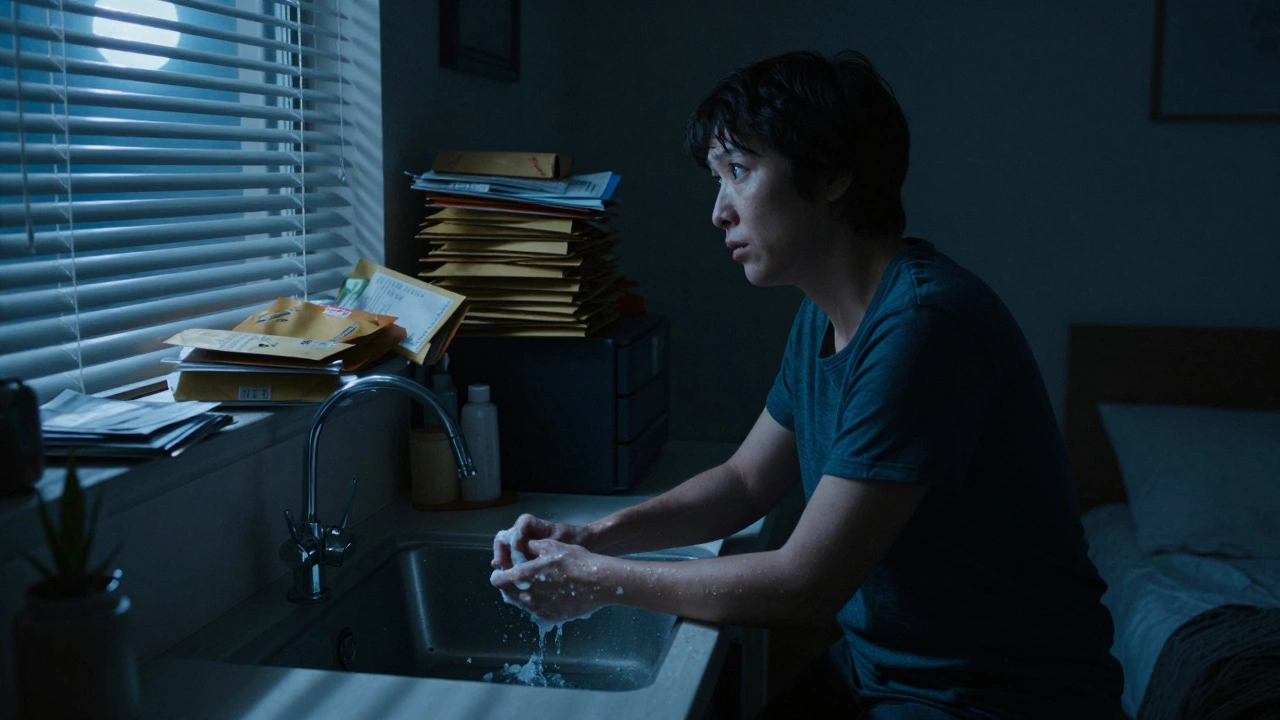
The brain of someone with ADHD doesn’t lack focus. It lacks regulation. The part that filters out noise, manages impulses, and holds priorities in order? It’s underactive. So instead of choosing what to pay attention to, the brain gets hijacked by whatever feels most urgent, most stimulating, or most comforting in the moment. That’s why some adults with ADHD binge-clean their kitchen at 2 a.m. - not because they’re productive - but because the quiet, repetitive motion gives them a rare sense of control.
The Hidden Cost of Masking
Many adults with undiagnosed ADHD spend years pretending they’re fine. They’re the ones who show up early, over-prepare, and work twice as hard just to keep up. They memorize scripts for conversations. They set 17 alarms. They write lists within lists. They become experts at covering up what they can’t do.
But masking isn’t free. It drains energy. It breeds anxiety. It makes you feel like a fraud - even when you’re one of the most capable people in the room. A 2023 study from the University of Birmingham found that adults who masked ADHD symptoms for over five years were 3.5 times more likely to develop chronic burnout than those who received early diagnosis and support. That’s not just stress. That’s a slow erosion of self-worth.
Relationships That Don’t Add Up
Intimacy gets messy with ADHD. It’s not that you don’t love your partner. It’s that you forget to ask how their day went. You promise to call - then get lost in a YouTube rabbit hole. You say you’ll handle the bills - but the envelopes pile up until they’re buried under laundry. Your partner doesn’t see a disorder. They see indifference. And over time, that feels like rejection.
Research from the UK’s National Institute for Health and Care Excellence shows that couples where one partner has untreated ADHD are 40% more likely to separate within five years than those without. The issue isn’t love. It’s mismatched expectations. One person needs structure. The other needs space. Neither understands why the other can’t just… do it.

The Emotional Rollercoaster
Adult ADHD isn’t just about forgetfulness. It’s about emotional dysregulation. A minor criticism can feel like a personal attack. A small delay triggers rage. A missed deadline isn’t a setback - it’s proof you’re broken. Many adults with ADHD describe feeling like they’re always one step away from falling apart.
Depression and anxiety don’t just coexist with ADHD - they often grow out of it. A 2024 meta-analysis of UK clinical records found that 68% of adults diagnosed with ADHD also had a history of major depressive disorder. Not because ADHD causes depression. But because living with untreated ADHD - constantly failing, constantly apologizing, constantly feeling like you’re letting everyone down - wears your spirit thin.
Workplace Traps
ADHD in the workplace looks different than you’d expect. It’s not the person who’s late. It’s the person who finishes projects in 48-hour bursts, then crashes for days. It’s the employee who gets promoted for their creativity, then demoted for missing deadlines. It’s the one who’s brilliant in meetings but can’t send a follow-up email for weeks.
Employers rarely understand this. They see inconsistency as unreliability. They reward punctuality over innovation. They don’t realize that an ADHD brain doesn’t work on a 9-to-5 schedule - it works on intensity. When the right stimulus hits, output explodes. But when it doesn’t? The system freezes.
One UK tech manager told me last year that half the people on her team who quit suddenly had undiagnosed ADHD. They didn’t quit because they hated the job. They quit because they couldn’t keep pretending they were normal.

Self-Medication and the Search for Calm
Without proper diagnosis or support, many adults with ADHD turn to what works - even if it’s dangerous. Caffeine. Alcohol. Cannabis. Prescription stimulants bought online. They’re not trying to escape. They’re trying to stabilize.
A 2025 survey by the ADHD Foundation UK found that 52% of adults with untreated ADHD used substances to manage symptoms. One woman in Manchester told me she drank two glasses of wine every night just to quiet the noise in her head. Another started taking Adderall he’d found in his son’s room. He didn’t think he was addicted. He thought he was finally feeling normal.
These aren’t choices made lightly. They’re survival tactics in a world that doesn’t accommodate neurodivergence.
The Shame That Never Leaves
Here’s the cruelest part: even when you get help - even when you’re on medication, in therapy, and finally understood - the shame sticks. You still remember the times you failed. The jobs you lost. The relationships you damaged. The people who thought you were lazy.
That shame doesn’t vanish with a diagnosis. It lingers. It whispers during quiet moments. It makes you hesitate before asking for help. It makes you feel like you don’t deserve support.
But here’s what no one tells you: ADHD isn’t a character flaw. It’s a neurological difference. And like any difference, it comes with costs - but also strengths. Hyperfocus. Creativity. Resilience. The ability to think outside the box when everyone else is stuck in it.
The dark side isn’t ADHD itself. It’s the world that refuses to see it - and the silence that lets people suffer alone.
What Can Change?
Diagnosis isn’t magic. But it’s the first step. Medication helps - but not for everyone. Therapy, especially cognitive behavioral therapy adapted for ADHD, changes lives. Workplace accommodations? They’re not luxuries. They’re necessities.
Simple things make a difference: flexible hours. Written instructions. Permission to take breaks. Managers who understand that productivity isn’t about hours logged - it’s about energy managed.
And maybe most of all: compassion. Not pity. Not tolerance. Real, quiet, consistent compassion - from partners, from coworkers, from friends who stop saying "just try harder" and start saying "how can I help?"
You’re not broken. You’re not lazy. You’re not failing. You’re navigating a world built for a different kind of brain.
Is adult ADHD just poor discipline?
No. Adult ADHD is a neurodevelopmental disorder rooted in brain chemistry and structure, not willpower. Studies using fMRI scans show clear differences in the prefrontal cortex and dopamine regulation in people with ADHD compared to neurotypical individuals. You can’t "try harder" to fix a biological difference - just like you can’t will yourself to see color if you’re colorblind.
Can ADHD be diagnosed in adulthood?
Yes. Many adults are diagnosed for the first time in their 30s, 40s, or even later. Diagnosis requires evidence of symptoms dating back to childhood - even if they weren’t recognized at the time. Clinicians use structured interviews, childhood history, and symptom checklists. It’s not about "catching up" - it’s about understanding lifelong patterns.
Why do so many adults with ADHD go undiagnosed?
Because the stereotypes are outdated. ADHD is still widely seen as a "boy problem" - hyperactive, disruptive, in school. Adult symptoms are subtler: chronic lateness, emotional outbursts, overwhelm from routine tasks. Women and non-binary adults often internalize symptoms, making them invisible. Plus, healthcare systems rarely screen for ADHD in adults unless there’s a crisis - like depression, job loss, or relationship breakdown.
Do ADHD medications work for adults?
For many, yes - but not all. Stimulants like methylphenidate and lisdexamfetamine improve focus and impulse control in about 70-80% of adults. Non-stimulants like atomoxetine help those who can’t tolerate stimulants. But medication alone isn’t enough. It works best with therapy, structure, and lifestyle changes. Some adults find non-medical strategies - like body doubling, timers, or task batching - just as effective.
Can ADHD lead to job loss or financial trouble?
Yes, without support. Adults with untreated ADHD are twice as likely to be unemployed or underemployed. They’re more likely to miss deadlines, struggle with organization, and have difficulty managing money. A 2024 UK study found that 37% of adults with ADHD had been in debt for over two years. This isn’t about laziness - it’s about executive dysfunction. Paying bills, planning ahead, and following through on tasks require brain functions that ADHD impairs.