What Are Legitimate Online Pharmacies? A Safety Guide for 2026
 May, 21 2026
Online Pharmacy Safety Audit
Evaluate a website you are considering using. Answer the questions below to generate a safety score.
Red flag if they sell controlled substances without one or use only automated questionnaires.
The seal should be a clickable link that leads to the regulator's database.
P.O. Boxes only or disconnected lines are warning signs.
Drastically low prices often indicate counterfeit or substandard drugs.
Legitimate pharmacies must protect your personal and medical data.
Look for the padlock icon in the browser bar and proper grammar.
Buying medicine online used to mean risking your health. Today, it’s a standard part of healthcare for millions of people managing chronic conditions or seeking convenience. But with the rise of online pharmacies, the line between a safe provider and a dangerous scam has blurred. You might be looking for a cheaper price on insulin or a discreet way to get birth control, but one wrong click could land you with counterfeit pills that do nothing-or worse.
The question isn’t just “where can I buy meds?” It’s “how do I know this site is real?” In 2026, regulators are cracking down harder than ever, but scammers are getting smarter. This guide cuts through the noise to show you exactly what makes an online pharmacy legitimate, how to spot the fakes, and where to find safe prices without compromising your safety.
How to Spot a Legitimate Online Pharmacy
A legitimate online pharmacy operates under strict legal and medical guidelines. They don’t just sell pills; they provide healthcare services. The first thing you should look for is whether the site requires a valid prescription from a licensed healthcare provider. If a website offers to prescribe medication after a quick, automated questionnaire without speaking to a doctor, walk away. That’s a major red flag.
Next, check for verification seals. In the United States, look for the NABP VIPPS seal (Verified Internet Pharmacy Practice Sites). This seal is issued by the National Association of Boards of Pharmacy after a rigorous inspection of the pharmacy’s operations. Other countries have similar bodies: in the UK, look for the General Pharmaceutical Council (GPhC) logo; in Canada, check for CIPA accreditation. These aren’t just stickers anyone can download-they are verified links that take you to the regulator’s database confirming the pharmacy’s status.
Legitimate sites also display clear contact information. This includes a physical street address (not just a P.O. Box) and a working phone number. Try calling them. If no one answers, or if the number goes to a disconnected line, that’s a warning sign. Real pharmacies have pharmacists available to answer questions about drug interactions or side effects.
The Red Flags: Warning Signs of Illegal Websites
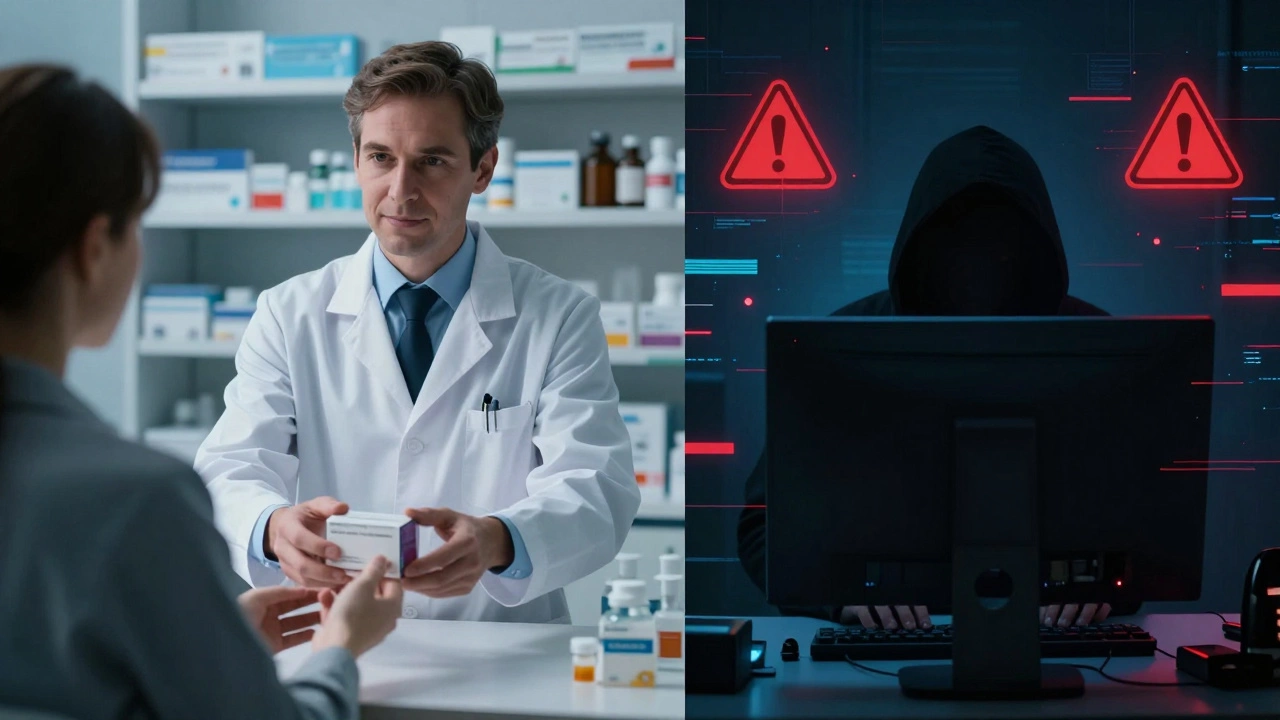
Illegal online pharmacies often lure customers with deals that seem too good to be true. And usually, they are. Here are the most common signs that a site is not legitimate:
- No Prescription Required: Selling controlled substances or prescription-only medications without a valid prescription is illegal in most jurisdictions. Sites that bypass this step are operating outside the law.
- Prices Drastically Lower Than Average: While online pharmacies can offer discounts, prices that are 50-80% lower than local brick-and-mortar stores often indicate counterfeit, expired, or substandard drugs.
- Unsolicited Emails: Be wary of emails offering cheap medications, especially if they come from generic addresses like @gmail.com or @yahoo.com rather than a professional domain.
- Lack of Privacy Policy: Legitimate pharmacies must comply with data protection laws like HIPAA in the US or GDPR in Europe. If a site doesn’t clearly state how they protect your personal and medical data, assume they don’t.
- Spelling and Grammar Errors: Professional healthcare providers invest in quality websites. Poorly written content, broken links, and awkward phrasing suggest a hastily assembled scam operation.
Another subtle red flag is the location of the server. Many illegal pharmacies operate from countries with lax regulations. Check the URL. If the site uses a .ru, .cn, or other non-standard domain extension while claiming to serve Western customers, proceed with extreme caution.
Why Counterfeit Drugs Are a Serious Risk
You might think, “If the pill looks right, it must be fine.” Unfortunately, appearance means nothing. The World Health Organization estimates that one in ten medical products in low- and middle-income countries is substandard or falsified. Even in developed nations, the risk exists.
Counterfeit drugs can contain:
- Incorrect Dosage: Too little active ingredient means the treatment fails. Too much can lead to overdose.
- Harmful Substances: Some fake pills have been found to contain rat poison, printer ink, or even ground-up bricks instead of active pharmaceutical ingredients.
- No Active Ingredient: For conditions like hypertension or diabetes, taking a sugar pill instead of real medication can lead to stroke, heart attack, or organ failure.
In 2025, the FDA warned consumers about several popular weight loss and erectile dysfunction drugs sold illegally online that contained undeclared prescription stimulants, leading to hospitalizations. The stakes are high. Your health depends on the purity and potency of the medication you take.
Where to Find Safe and Affordable Medication
Finding a legitimate online pharmacy doesn’t mean you have to pay retail prices. There are safe ways to save money:
- Use Verified Directories: Start with trusted sources like the National Association of Boards of Pharmacy (NABP) website, which maintains a list of accredited pharmacies. In the UK, use the GPhC register. These directories are free and updated regularly.
- Telehealth Services with Integrated Pharmacies: Platforms like Teladoc, Hims & Hers, or Roman partner with licensed pharmacies. They handle the consultation and prescription process legally, then ship medication from verified facilities. This model ensures oversight at every step.
- Mail-Order Programs from Major Chains: Large retailers like CVS, Walgreens, and Boots offer mail-order services for maintenance medications. These are often cheaper for 90-day supplies and are fully regulated.
- Patient Assistance Programs: Many pharmaceutical companies offer coupons or assistance programs for uninsured patients. Check the manufacturer’s website directly rather than third-party discount sites that may redirect you to unsafe vendors.
Remember, convenience should never come at the cost of safety. Taking five minutes to verify a pharmacy’s credentials can prevent serious health complications down the line.
| Feature | Legitimate Online Pharmacy | Illegal Online Pharmacy |
|---|---|---|
| Prescription Requirement | Required from licensed provider | Not required or easily bypassed |
| Accreditation | NABP VIPPS, GPhC, or equivalent | No verifiable accreditation |
| Contact Information | Physical address and phone number listed | Only email or chat support |
| Pricing | Competitive but realistic discounts | Unusually low prices (50%+ off) |
| Privacy Policy | Clear HIPAA/GDPR compliance statement | Vague or missing privacy policy |
Regulations and Legal Frameworks in 2026
The landscape of online pharmacy regulation continues to evolve. In the US, the Drug Quality and Security Act of 2013 laid the groundwork for tracking prescription drugs through the supply chain. By 2026, the implementation of interoperable electronic tracing systems means that legitimate pharmacies can prove the origin of every box of medication they sell. If a pharmacy cannot provide this traceability, it’s likely sourcing from unauthorized channels.
In the European Union, the Falsified Medicines Directive requires all prescription medicines to have a unique identifier-a 2D barcode-that can be scanned by pharmacists before dispensing. This system helps ensure that only genuine products reach patients. While this primarily applies to EU-based pharmacies, many international providers serving EU citizens now adhere to these standards.
For patients in the UK, the NHS provides a list of approved online pharmacies. Using these services ensures that you’re covered by national insurance schemes and that the medications meet UK regulatory standards. Always cross-reference any new pharmacy with official government or professional body lists.
Practical Tips for Verifying a Pharmacy Before You Buy
Before you enter your credit card details, take these steps to verify the pharmacy:
- Check the URL: Ensure the site uses HTTPS (look for the padlock icon in the browser bar). This encrypts your data during transmission.
- Verify the Seal: Click on any accreditation seal (like VIPPS) to ensure it links to the official verification page, not just a static image.
- Read Reviews Carefully: Look for reviews on independent platforms like Trustpilot or the Better Business Bureau. Be skeptical of glowing reviews on the pharmacy’s own website.
- Consult Your Pharmacist: Ask your local pharmacist if they recognize the online vendor. They often have insights into reputable mail-order services.
- Start Small: If you’re trying a new online pharmacy, order a small quantity first to test their service, packaging, and product quality before committing to large orders.
These simple checks can save you from financial loss and potential health hazards. Remember, if something feels off, trust your instincts. There are plenty of safe options available-you don’t need to risk it.
Is it safe to buy prescription drugs online?
Yes, it is safe if you use a legitimate, accredited online pharmacy that requires a valid prescription from a licensed healthcare provider. Always verify the pharmacy’s credentials through official bodies like the NABP or GPhC before making a purchase.
How can I tell if an online pharmacy is fake?
Red flags include not requiring a prescription, offering prices significantly lower than market rates, lacking a physical address or phone number, and having poor website quality. Always check for verified accreditation seals and read independent reviews.
What is the NABP VIPPS seal?
The NABP VIPPS seal stands for Verified Internet Pharmacy Practice Sites. It is awarded by the National Association of Boards of Pharmacy in the US to online pharmacies that meet strict standards for safety, legitimacy, and patient care. Clicking the seal should link to the NABP website for verification.
Are there risks with buying medication from overseas online pharmacies?
Yes, significant risks exist. Medications purchased from unregulated overseas sources may be counterfeit, contaminated, or contain incorrect dosages. Additionally, customs may seize packages, and you have little recourse if something goes wrong. Stick to domestic, accredited pharmacies whenever possible.
Can I get a prescription online without seeing a doctor?
You can consult with a licensed healthcare provider via telehealth services, which may result in a prescription if deemed appropriate. However, legitimate services will involve a real medical evaluation, not just an automated questionnaire. Controlled substances typically require stricter protocols.