Tooth Extraction vs Implant Pain: What Actually Hurts More?
 Oct, 2 2026
Dental Pain Predictor: Extraction vs. Implant
Use this tool to understand how your specific situation might affect pain levels. Adjust the sliders to reflect your current condition and anxiety levels.
Adjust inputs and click "Compare Pain Levels" to see results.
Calculating...
Calculating...
Most people dread the dentist chair for one specific reason: the fear of pain. It’s a primal instinct. You hear the drill, you smell the antiseptic, and your body tenses up before the needle even touches your gum. But when it comes to replacing a missing tooth, patients often face a confusing dilemma. Is pulling a bad tooth worse than putting in a titanium screw? The short answer might surprise you. For most patients, tooth extraction is significantly more painful than getting a dental implant.
This sounds counterintuitive, right? After all, an implant involves drilling into the jawbone. An extraction just wiggles a loose or damaged tooth out. So why does the "simple" pull hurt more? It comes down to what happens inside your mouth after the procedure ends. Let’s break down the actual experience, step by step, so you know exactly what to expect from both procedures.
The Immediate Experience: During the Procedure
Here is the golden rule of modern dentistry: if you feel sharp pain during either procedure, stop immediately. Your dentist needs to add more local anesthesia such as lidocaine or articaine to block nerve signals completely. In a properly anesthetized mouth, neither extraction nor implant placement should hurt while you are sitting in the chair.
With an extraction, especially if the tooth is infected or broken below the gum line, the area might be acidic due to inflammation. Acidic tissue neutralizes anesthesia, making it harder to get numb. This can lead to that dreaded "pinch" sensation. With implants, the bone itself has no pain receptors. The discomfort usually comes from the soft tissue (gums) being cut and stretched. Because the bone doesn't feel pain, many patients report feeling pressure but zero pain during implant surgery. If you have anxiety, ask about conscious sedation. It changes everything.
The Recovery Phase: Where the Real Difference Lies
This is where the pain scales diverge sharply. The first 24 to 72 hours determine how miserable you’ll feel.
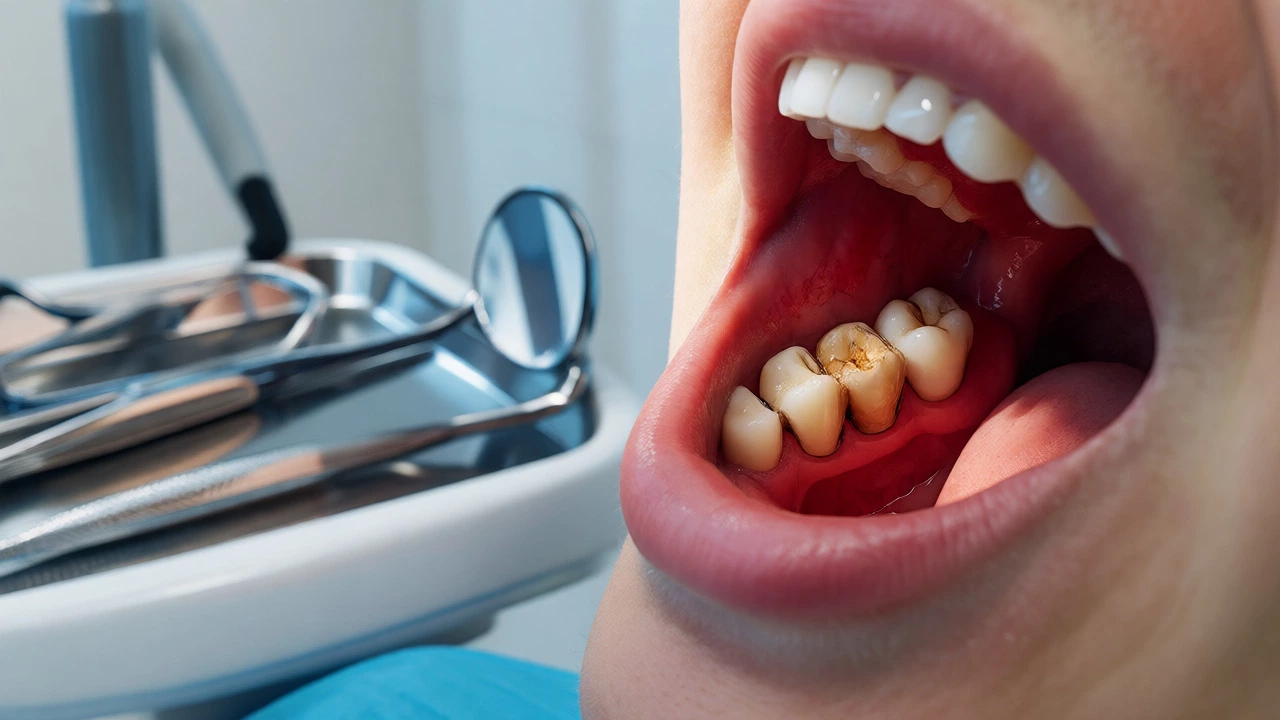
Tooth extraction is a traumatic injury to the socket where the tooth root was anchored. The blood clot forms, and the surrounding bone and gums swell significantly. Why? Because you’ve ripped a root out of living tissue. If the tooth was infected, bacteria were already present, increasing inflammation. Patients often describe this pain as throbbing. It keeps them awake at night. Swelling peaks around day two or three. Eating becomes difficult because chewing triggers the sore site.
In contrast, dental implant placement is a controlled surgical insertion of a titanium post into prepared bone. Yes, there is swelling and some bruising. But because the site is clean and the trauma is contained within the bone and gum flap, the inflammatory response is usually milder. Most patients manage with over-the-counter ibuprofen and paracetamol. They rarely need prescription opioids. Many return to work the next day. The pain feels more like a dull ache than a sharp throb.
| Factor | Tooth Extraction | Dental Implant |
|---|---|---|
| Pain During Procedure | Moderate risk if infection present | Low; bone lacks pain nerves |
| Peak Pain Time | 24-72 hours post-op | 12-24 hours post-op |
| Pain Type | Throbbing, sharp, radiating | Dull ache, pressure, mild soreness |
| Medication Needed | Often prescription strength | Usually OTC (Ibuprofen/Paracetamol) |
| Swelling Duration | 3-5 days | 2-3 days |
| Return to Normal Life | 3-7 days | 1-2 days |
Why Extractions Hurt More Than You Think
You might wonder, "But I had a wisdom tooth pulled and it didn't hurt." That’s possible, but complex extractions are different. Simple extractions of loose teeth are easy. But surgical extractions-where the dentist cuts the gum and removes bone to free a trapped tooth-are major trauma events.
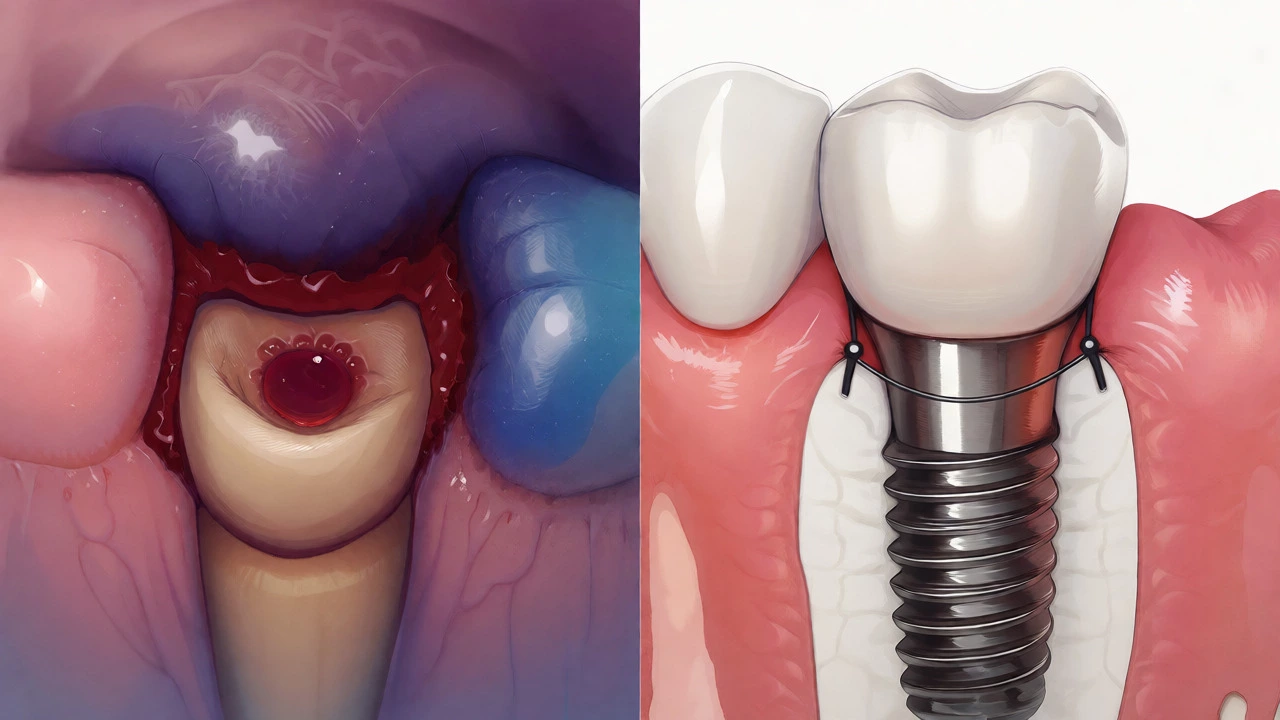
Consider the biology. When you extract a tooth, you leave an open wound. Food particles, saliva, and air hit that raw socket constantly. This irritates the healing tissue. If the clot dislodges, you get dry socket a painful condition where the bone is exposed to air and food, causing severe radiating pain. Dry socket occurs in about 2-5% of extractions and can cause agony lasting several days. Implants don’t have this risk because the gum is stitched closed over the site, protecting the bone underneath.
Also, think about the pre-existing pain. Often, you’re extracting a tooth because it already hurts. It’s abscessed, cracked, or decayed. The extraction adds acute trauma on top of chronic inflammation. An implant goes into healthy, healed bone. There is no baseline pain to worsen.
The Implant Recovery Myth
People assume drilling into bone must be excruciating. Here’s the reality: bone heals faster and cleaner than soft tissue in many cases. The titanium implant integrates with the jawbone through osseointegration, a process that causes minimal inflammatory response once initial healing starts.
After implant surgery, you follow strict hygiene rules. No rinsing vigorously for 24 hours. Soft diet only. Ice packs on the cheek. These steps minimize swelling. Because the wound is closed, bacteria stay out. Less bacteria means less inflammation. Less inflammation means less pain. It’s a simple equation.
However, if you skip the aftercare, things go wrong. Smoking drastically increases pain and failure rates for both, but implants are more sensitive to smoke toxins because they rely on precise bone integration. If you smoke, tell your surgeon. They might delay the implant or use additional grafting materials to ensure stability.
Factors That Change the Equation
Not every extraction is painful, and not every implant is comfortable. Several variables shift the balance:
- Location: Lower molars are harder to extract due to dense bone and curved roots. Upper teeth come out easier. Implants in the upper jaw may require sinus lifts, which add complexity and potential discomfort.
- Bone Quality: Soft bone accepts implants easily. Dense bone requires more drilling force, which generates heat and pressure sensations.
- Patient Anxiety: High stress lowers pain thresholds. If you’re terrified, your muscles tense, and you perceive pain more intensely. Sedation dentistry solves this.
- Surgeon Skill: A gentle hand matters. Experienced oral surgeons minimize tissue trauma, reducing post-op pain regardless of the procedure type.

Managing the Pain: Practical Tips
Whether you’re facing an extraction or an implant, preparation reduces suffering. Don’t wait until you’re in pain to take medication. Start taking anti-inflammatories before the anesthesia wears off. This creates a "pain blockade" before the nerves wake up fully.
For extractions, keep the head elevated. Sleep with two pillows. This reduces blood flow to the head, decreasing throbbing. Avoid straws. Suction pulls the clot out. For implants, stick to cool foods. Yogurt, smoothies, mashed potatoes. Heat increases swelling. Cold constricts blood vessels. Use ice for the first 48 hours, then switch to warm compresses if stiffness remains.
If pain spikes suddenly after day three, call your dentist. For extractions, it could be dry socket. For implants, it could be early infection. Catching it early prevents weeks of misery.
Frequently Asked Questions
Does removing a tooth hurt more than getting an implant?
Generally, yes. Tooth extraction involves removing a root from living tissue, leaving an open wound prone to irritation and dry socket. Implant placement is a controlled surgery into clean bone with a closed wound, resulting in less inflammation and pain for most patients.
How long does pain last after a tooth extraction?
Acute pain typically lasts 3 to 5 days. Throbbing subsides after the first 48 hours. Full healing takes 1-2 weeks. If pain persists beyond 5 days or worsens, contact your dentist immediately as it may indicate dry socket or infection.
Is implant surgery painful while it is happening?
No, not if properly anesthetized. Bone does not have pain receptors. You will feel pressure and vibration, but not sharp pain. Local anesthesia blocks sensation in the gums and surrounding tissues effectively.
What helps reduce pain after dental surgery?
Alternating ibuprofen and paracetamol works best for dental pain. Apply ice packs for the first 48 hours to reduce swelling. Keep your head elevated when sleeping. Avoid smoking and using straws, as suction can disrupt healing.
Can I choose extraction instead of implant to avoid pain?
Extraction is quicker but leaves a gap that affects bite and bone health. While extraction has higher immediate pain, implants offer better long-term comfort and function. Discuss pain management options with your dentist rather than avoiding necessary treatment due to fear.