Ayurveda Timeline: Key Milestones in Ancient Indian Medicine
When you hear Ayurveda, a 5,000-year-old system of holistic health from India that balances body, mind, and spirit through diet, herbs, and lifestyle. Also known as the science of life, it's not just about herbs—it's a complete way of understanding how your body works with nature. This isn’t some mystical tradition stuck in the past. It’s a living system that evolved over millennia, shaped by scholars, healers, and everyday people who observed what worked—and what didn’t.
The earliest records of Ayurveda appear in the Vedas, ancient Indian scriptures dating back to 1500–1000 BCE that laid the foundation for spiritual and medical knowledge, especially the Atharva Veda. By 600 BCE, texts like the Charaka Samhita and Sushruta Samhita were written, turning oral wisdom into structured medicine. These weren’t just lists of herbs—they detailed anatomy, surgery, diagnosis, and the three Doshas, Vata, Pitta, and Kapha—the biological energies that govern everything from digestion to emotion. If your body feels out of sync, Ayurveda says it’s because one of these Doshas is out of balance. That’s still the core idea today.
What makes the Ayurveda timeline unique is how it stayed practical. While Western medicine was still debating humors, Ayurvedic surgeons were performing cataract removal and plastic surgery using bamboo instruments. They didn’t just treat symptoms—they looked at your Prakriti, your unique constitutional type determined at birth, based on your Dosha mix. Two people with the same headache? One might need cooling herbs; the other, warming oils. That’s personalized medicine, long before DNA tests existed.
Herbs didn’t appear randomly in Ayurveda—they were chosen based on taste, energy, and effect. Turmeric for inflammation, ashwagandha for stress, triphala for digestion. These weren’t supplements. They were tools, used in combination, timed to seasons, and matched to your body. Modern science is now catching up, studying how these plants work at the molecular level. But Ayurveda never needed lab results to know what worked—it had centuries of real-life use.
There’s no single moment when Ayurveda "started" or "ended." It adapted. It survived invasions, colonial bans, and modern skepticism. Today, you’ll find Ayurvedic clinics in Mumbai and Berlin, yoga studios in Texas, and herbal teas in your local grocery. The timeline isn’t linear—it’s circular. The same principles that guided healers 3,000 years ago still guide people choosing what to eat, how to sleep, and when to rest.
What you’ll find in the posts below isn’t a history lesson. It’s proof that Ayurveda isn’t just about old books. It’s about real people using its wisdom to manage pain, improve sleep, avoid side effects from drugs, and understand why their body reacts the way it does. From safety checks on herbal supplements to how Doshas affect daily routines, these articles connect ancient ideas to modern problems. You don’t need to become an expert to benefit. You just need to start asking the right questions.
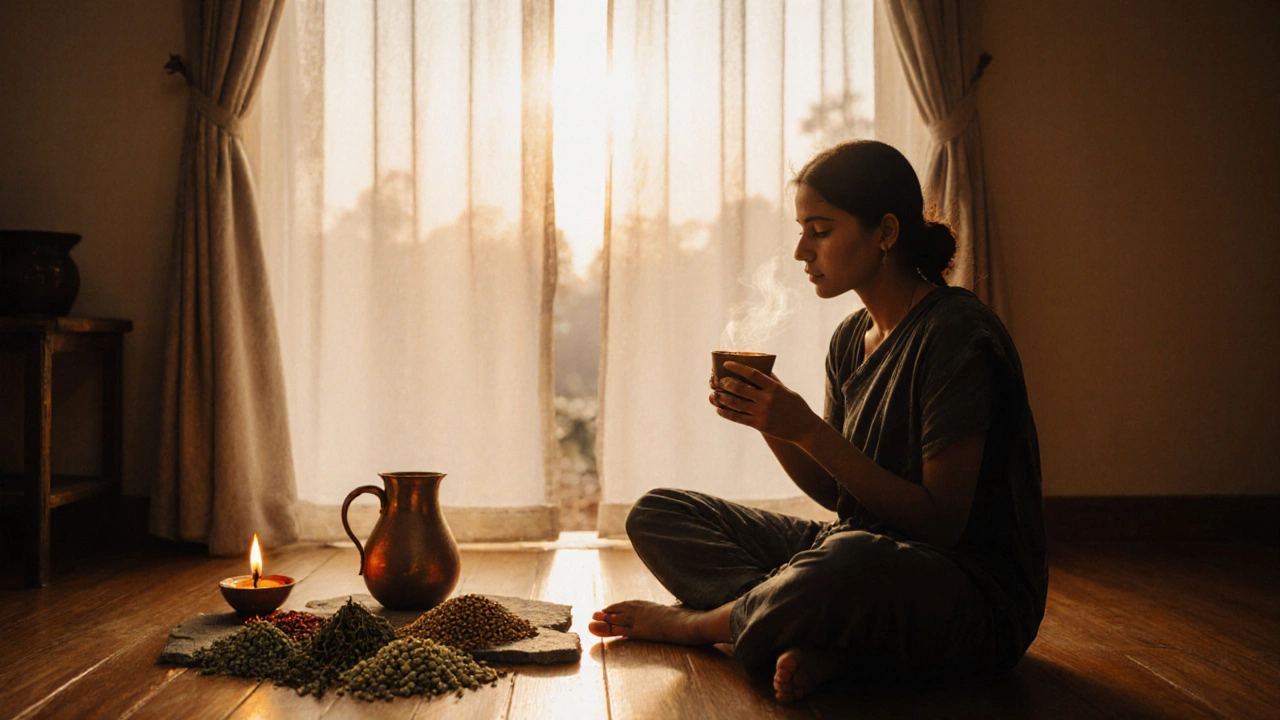
How Long Does It Take for Ayurveda to Work? Real Timelines for Common Conditions
Ayurveda doesn't work overnight - but if you stick with it, you'll notice deeper, lasting changes in digestion, sleep, energy, and stress. Here's what to expect at 2 weeks, 3 months, and 6 months.