Signs Someone's Body Is Shutting Down with Cancer: A Family Guide
 Sep, 22 2026
End-of-Life Signs Tracker
Check the signs you are observing in your loved one to understand where they might be in the dying process. This tool is for educational support and does not replace professional medical advice.
Note: Every patient is unique. These signs often overlap. Use this as a conversation starter with your hospice nurse.
Watching a loved one battle cancer is exhausting. But when the treatment stops working and the focus shifts to comfort, things change fast. You might notice subtle shifts that feel confusing or scary. Are they just tired? Or is their body starting to wind down?
End-of-life signs in cancer patients are physical changes that happen as the body loses its ability to sustain vital functions. These aren't random; they follow a predictable pattern for many people. Knowing what to expect can help you prepare emotionally and practically. It turns panic into presence.
The Shift from Curative to Palliative Care
Before we look at the specific signs, it helps to understand where this fits in the journey. Palliative care focuses on quality of life rather than curing the disease. When doctors say treatments like chemotherapy or radiation are no longer helping, they often recommend switching to hospice. This isn't giving up. It's choosing comfort over stress.
Hospice teams use tools like the Functional Assessment Staging Tool (FAST) or similar clinical scales to estimate prognosis. They look at how much time a person spends in bed versus sitting up, and how much they eat. If someone is spending more than 50% of their day in bed and eating very little, the timeline often shortens to weeks or days.
Changes in Energy and Appetite
The most common early sign is profound fatigue. This isn't normal tiredness. It's a deep exhaustion where even talking feels like running a marathon. Your loved one might sleep for 16 to 20 hours a day. They may lose interest in hobbies, TV, or even visitors.
Appetite loss follows closely. The body stops needing fuel because it's shutting down non-essential systems. Forcing food can cause nausea or choking. Instead of three big meals, offer small sips of water or ice chips if they want them. Remember, not eating doesn't mean they are starving in a painful way. Their metabolism has slowed drastically.
- Fatigue: Sleeping most of the day, low energy for basic tasks.
- Anorexia: Complete lack of hunger, refusing solid foods.
- Dehydration: Dry mouth, less urine output (dark yellow or brown).
Breathing Patterns That Signal Change
Breathing changes are often the most alarming for families. You might hear a rattling sound when they exhale. This is called the "death rattle." It happens because fluids build up in the chest and throat since the person can't swallow or cough anymore. It sounds worse than it feels. The patient is usually unaware of the noise and not distressed by it.
You might also see periods of rapid breathing followed by long pauses where they don't breathe at all. This is called Cheyne-Stokes respiration. It’s a sign the brainstem is struggling to regulate breathing. Don’t try to fix it with stimulation. Just keep them comfortable. Repositioning them slightly on their side can sometimes help clear the airway naturally.
| Pattern | Description | What To Do |
|---|---|---|
| Death Rattle | Gurgling sound due to secretions | Reposition patient, suction only if uncomfortable |
| Cheyne-Stokes | Cycles of deep/fast breaths then apnea | No action needed, monitor comfort |
| Air Hunger | Gasping or open-mouth breathing | Oxygen if prescribed, fan for airflow |
Skin Temperature and Circulation Changes
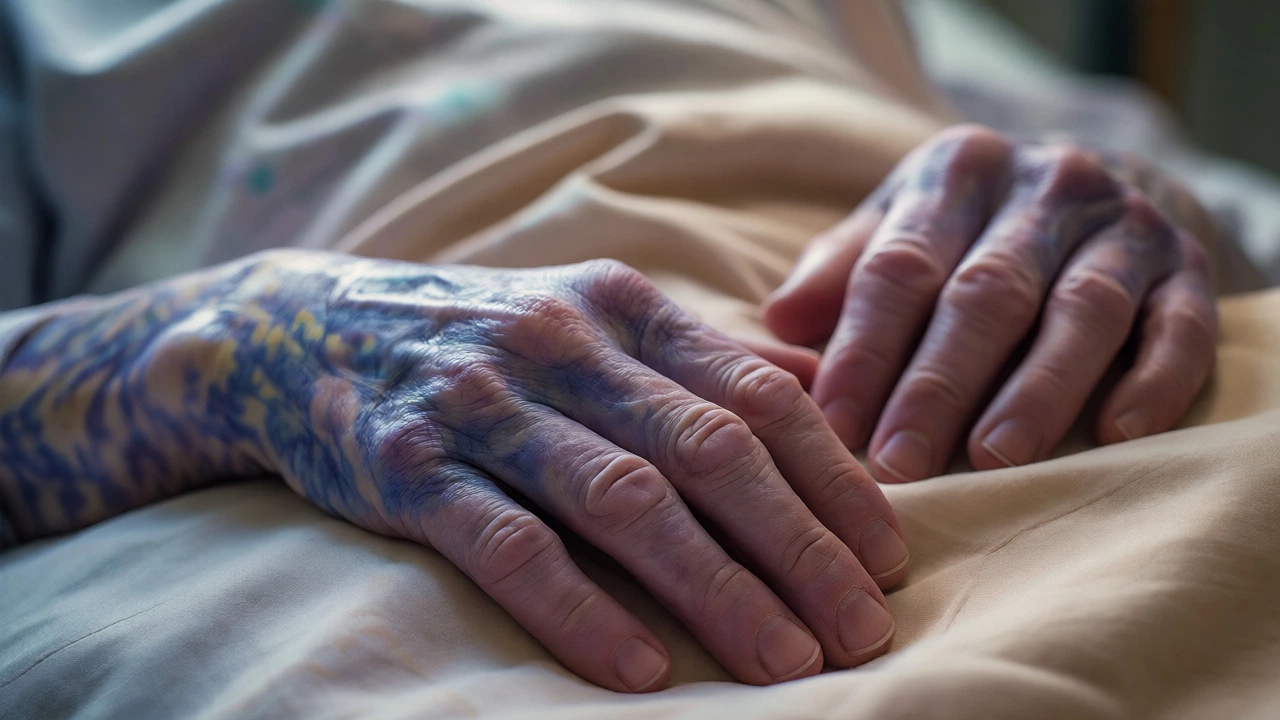
As blood flow slows, the body prioritizes keeping the heart and brain alive. Blood pulls away from the hands, feet, and legs. You’ll notice these areas become cool to the touch. The skin might look mottled-patchy purple or blue spots appear on the knees, elbows, and feet. This is called livedo reticularis.
This change often starts at the extremities and moves inward toward the trunk. It’s a visual cue that circulation is failing. Keep socks on them to retain heat, but don’t worry if their hands stay cold. Warm blankets on the core are better than trying to warm the limbs artificially.
Confusion, Restlessness, and Terminal Delirium
Mental status changes are tricky. Some people become withdrawn and quiet. Others get agitated, pick at sheets, or seem confused about where they are. This is known as terminal delirium. It can be caused by medication buildup, organ failure, or metabolic imbalances.
If your loved one seems restless, check for simple causes first. Are they full of urine? Is their mouth dry? Are they in pain? Sometimes a gentle hand massage or soft music calms them. If agitation persists, contact the hospice nurse. They can adjust medications like midazolam or haloperidol to ease anxiety without sedating them too deeply.
How long does the active dying phase last?
The active dying phase typically lasts between three days and two weeks. However, this varies widely based on the type of cancer and overall health. Once breathing patterns change significantly and consciousness fades, death often occurs within hours to a few days.
Does stopping food and water cause suffering?
No. In the final stages, the body releases natural ketones that act as mild anesthetics. Dehydration can actually reduce fluid buildup in the lungs, making breathing easier. Forcing fluids can lead to swelling and discomfort. Focus on mouth care with swabs instead.
Can hearing continue after someone becomes unresponsive?
Yes, many healthcare professionals believe hearing is the last sense to go. Speak calmly and lovingly to your loved one, even if they show no response. Tell them you love them and give them permission to let go if appropriate.
What should I do if my loved one has a seizure?
Stay calm. Protect their head from injury. Do not put anything in their mouth. Note the duration. Hospice nurses can provide rectal diazepam or other meds if seizures recur. Most single seizures resolve on their own.
Is pain always present during the shutdown process?
Not necessarily. Many patients experience a natural analgesic effect as the body shuts down. Pain management remains crucial, but doses may need adjustment as consciousness decreases. Work closely with palliative care specialists to ensure comfort.
Preparing for the Final Hours
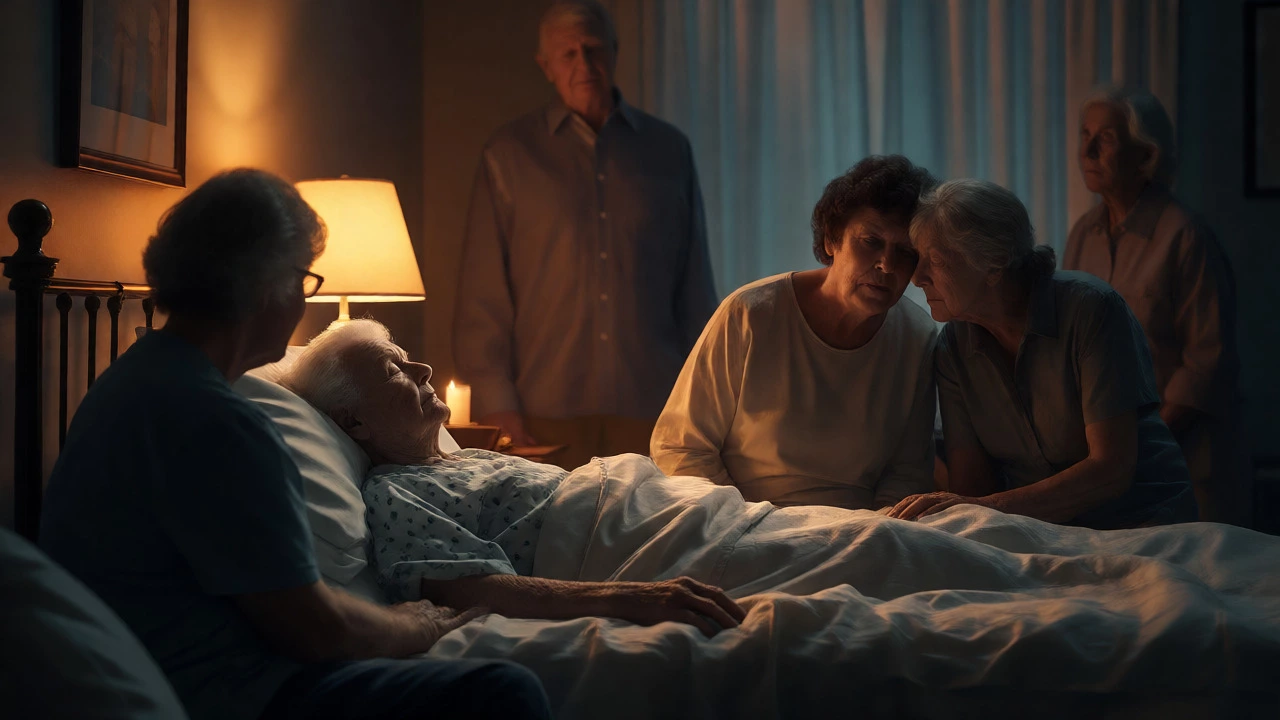
In the last hours, breathing may become irregular and shallow. The pulse weakens and becomes hard to find. Skin color may turn pale or grayish. You might notice the jaw dropping open as muscles relax. These are definitive signs that death is imminent.
Keep the environment peaceful. Dim lights, play soft music, or sit in silence. Gather family members who wish to say goodbye. Hospice staff can guide you through the paperwork and immediate next steps after passing. Having a plan reduces chaos in those emotional moments.
When to Call for Help
Don't hesitate to call the hospice team if you see sudden bleeding, severe distress, or if you're unsure about symptoms. They are available 24/7. Remember, every patient is different. While these signs are common, individual experiences vary. Trust your instincts. If something feels wrong, ask questions. You know your loved one best.