How Successful Is IVF on the First Try? Real Success Rates and What Affects Them
 Jan, 9 2026
IVF Success Rate Calculator
Personalize Your IVF Success Estimate
Your Personalized IVF Success Rate
Key Factors Affecting Your Rate
When you’re starting IVF, the biggest question isn’t just IVF success rate first try-it’s Will this work for me? The truth is, there’s no one-size-fits-all answer. Some people get pregnant on their first round. Others need three or more. And that’s completely normal. What matters isn’t just the numbers-it’s understanding what those numbers mean for your body, your age, and your situation.
What’s the real chance of getting pregnant on the first IVF cycle?
In the UK, the average success rate for a single IVF cycle using fresh eggs and embryos is around 32% for women under 35. That’s about one in three. For women aged 35 to 37, it drops to about 25%. By 38 to 39, it’s closer to 19%. At 40 to 42, the chance is roughly 11%. After 43, it’s under 5%. These numbers come from the Human Fertilisation and Embryology Authority (HFEA), which tracks every licensed clinic in the UK.
But here’s what most clinics don’t tell you upfront: these are live birth rates, not just pregnancy rates. A positive pregnancy test doesn’t always mean a baby. About 1 in 5 early IVF pregnancies end in miscarriage, especially for women over 40. So if you hear someone say their IVF success rate is 40%, make sure they’re talking about live births-not just a positive test.
Age is the biggest factor-but it’s not the only one
Age isn’t just a number when it comes to IVF. It’s about egg quality. As women get older, eggs are more likely to have chromosomal abnormalities. That’s why even if you get pregnant, the embryo might not implant-or might stop developing early. That’s why success rates drop sharply after 35.
But age isn’t the whole story. Other factors play a big role:
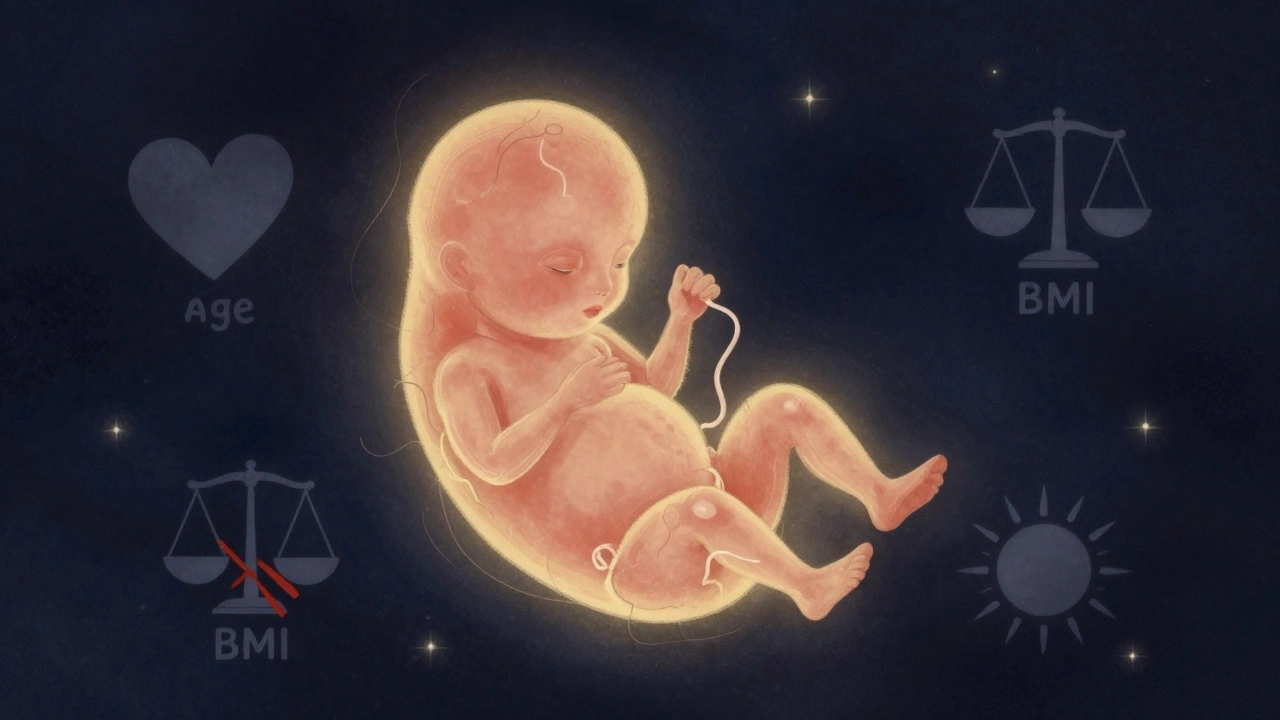
- Body mass index (BMI): Women with a BMI over 30 have lower implantation rates. Losing even 5-10% of body weight can improve outcomes.
- Smoking: Smokers have a 30-40% lower chance of success. Quitting before starting IVF makes a measurable difference.
- Previous pregnancies: Women who’ve had a baby before-even naturally-are more likely to succeed with IVF.
- Reason for infertility: If the issue is blocked tubes, success rates are higher than if it’s severe male factor infertility or unexplained infertility.
One study from the University of Birmingham’s fertility unit found that women under 35 with a normal BMI, no smoking history, and unexplained infertility had a 41% chance of live birth on their first cycle. That’s significantly higher than the national average. So while the stats are useful, your personal profile matters more.
What about frozen embryos? Are they less successful?
No. In fact, many clinics now recommend freezing all embryos and transferring them later in a frozen cycle. Why? Because the hormones used during egg retrieval can make the uterine lining less receptive. A frozen transfer lets your body reset.
For women under 35, frozen embryo transfers have live birth rates that match or even slightly exceed fresh transfers-around 33-35%. For women over 40, frozen transfers often perform better because they allow for better timing and more controlled conditions.
Also, if you have extra embryos after your first cycle, you don’t need to go through another full IVF cycle to try again. Just thaw and transfer. That’s much less expensive and physically easier. About 60% of UK patients who start IVF end up using frozen embryos in later attempts.
How many cycles do most people need?
It’s common to think you need three cycles to have a good chance. And statistically, that’s true. By the third cycle, cumulative success rates jump to about 65-70% for women under 35. For those aged 38-40, it’s closer to 50%.
But here’s the reality: not everyone does three cycles. Financial pressure, emotional burnout, or medical advice often stop people after one or two. A 2024 HFEA report showed that nearly 40% of patients stop after their first cycle-even if they’re under 35 and had a good prognosis.
That’s why it’s important to talk to your clinic about your personal odds. If you’re 32 with normal ovarian reserve and no major health issues, your chance of success on cycle one is high enough that it’s worth going all in. If you’re 41 with low AMH and a high FSH, you might be better off planning for multiple cycles from the start.
What can you do to improve your chances?
There’s no magic pill, but evidence-backed steps can help:
- Take folic acid and vitamin D: Low vitamin D levels are linked to lower implantation rates. Most UK patients are deficient, especially in winter.
- Avoid alcohol and caffeine: Even moderate intake (more than 200mg caffeine a day) can reduce success rates.
- Manage stress: While stress doesn’t cause infertility, high cortisol levels can interfere with ovulation and implantation. Mindfulness, yoga, or even talking therapy can help.
- Choose the right clinic: Not all clinics have the same success rates. Check the HFEA website for clinic-specific data. Look for clinics with high live birth rates for your age group-not just pregnancy rates.
One patient from Coventry, 34, had two failed IVF cycles before she started tracking her sleep, took vitamin D supplements, and switched clinics. On her third try-using a frozen embryo from her second cycle-she got pregnant. She didn’t change her medication. She changed her lifestyle and her clinic’s approach.
When should you consider donor eggs?
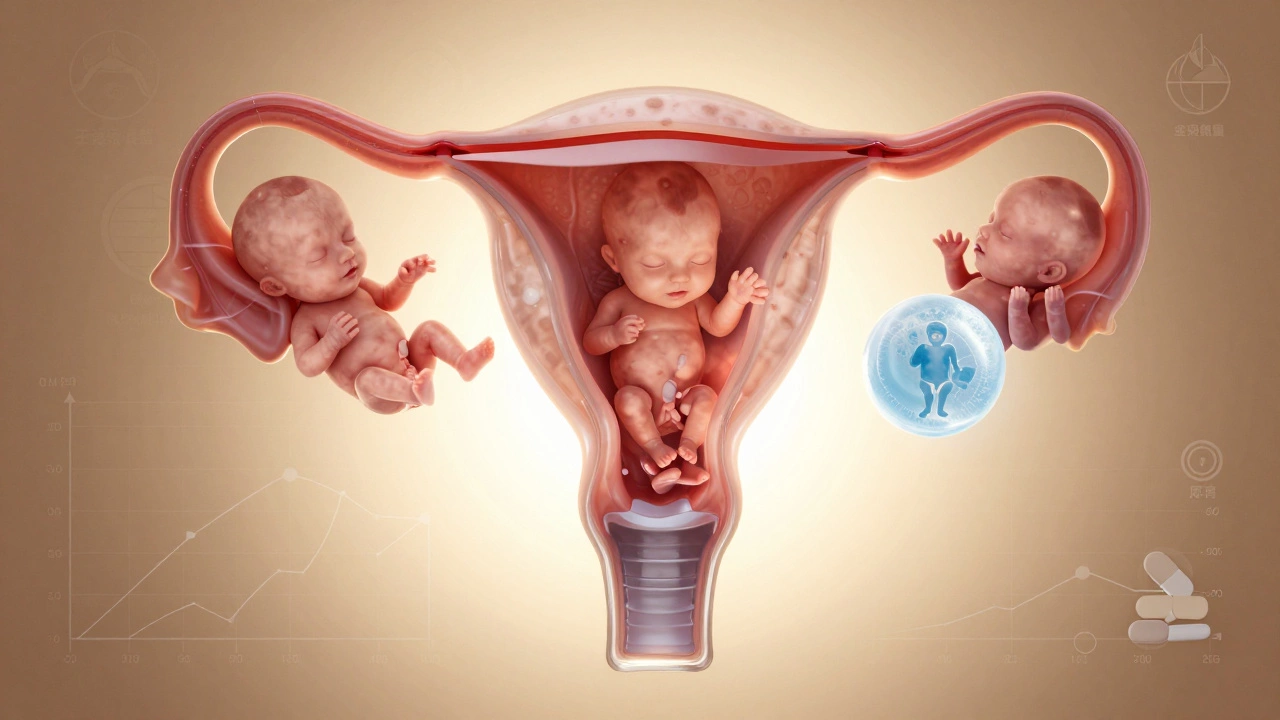
If you’re over 42 and haven’t succeeded with your own eggs after two or three cycles, donor eggs become a realistic option. Success rates with donor eggs don’t drop with age-they stay around 50-60% per transfer, regardless of the recipient’s age. That’s because the eggs come from young donors (usually under 30).
Donor eggs aren’t a failure. They’re a different path. Many couples who use donor eggs say they feel relief, not disappointment. They get to experience pregnancy and birth, even if the genetics aren’t theirs.
In the UK, donor eggs are regulated tightly. Donors are anonymous, and you can choose based on physical traits, medical history, and education. The process is emotionally complex, but it works-and it’s more common than most people think.
What if the first IVF cycle fails?
Failure doesn’t mean you’re broken. It doesn’t mean you won’t ever get pregnant. It just means this cycle didn’t work-and that’s statistically normal.
After a failed cycle, most clinics will do a review. They’ll look at your hormone levels, embryo quality, and uterine lining. Sometimes, they’ll suggest changing the stimulation protocol, using a different trigger shot, or testing for immune factors or blood clotting issues.
One in five women who have a failed IVF cycle find a treatable issue on review. That’s why it’s crucial to ask: What did we learn? Not: Why didn’t it work?
Many people feel guilt or shame after a failed cycle. That’s normal. But remember: IVF is a medical process, not a test of worth. You’re not failing-you’re learning.
Is IVF worth it if the first try fails?
Yes-if you’re prepared for the emotional and financial cost. Each cycle in the UK costs between £5,000 and £8,000 privately. NHS funding is limited and varies by region. In some areas, you might get one free cycle if you’re under 40. In others, you get nothing.
But here’s the thing: the emotional cost is often higher than the financial one. The waiting, the hormones, the hope, the letdown-it’s exhausting. That’s why many couples choose to stop after two cycles, even if their chances are still good.
Ask yourself: What’s your breaking point? What would make you feel at peace, whether you have a baby or not? That’s the real question behind the numbers.
What are the chances of IVF working on the first try for women under 35?
For women under 35, the chance of a live birth after one IVF cycle using fresh eggs is about 32% in the UK. That means roughly one in three women get pregnant and carry to term on their first attempt. Success rates are higher if the woman has a normal BMI, doesn’t smoke, and has no major underlying fertility issues.
Does IVF work better with frozen embryos than fresh ones?
Yes, for many women, frozen embryo transfers (FET) have equal or slightly higher success rates than fresh transfers. This is especially true for women over 35 or those with high estrogen levels during stimulation. Freezing embryos allows the body to recover from hormone treatments, creating a more natural environment for implantation. Success rates for FET in women under 35 are around 33-35% per transfer.
How many IVF cycles do most people need to succeed?
About 65-70% of women under 35 achieve a live birth after three IVF cycles. For women aged 38-40, the cumulative success rate after three cycles is around 50%. Many people stop after one or two cycles due to cost or emotional strain, but continuing increases your chances significantly.
Can lifestyle changes improve IVF success on the first try?
Yes. Quitting smoking, maintaining a healthy BMI (18.5-24.9), taking folic acid and vitamin D, reducing caffeine to under 200mg per day, and managing stress can improve your chances by 10-20%. These changes don’t guarantee success, but they remove known barriers to implantation and embryo development.
When should I consider using donor eggs for IVF?
Donor eggs are often recommended after two or more failed IVF cycles with your own eggs, especially if you’re over 42. Success rates with donor eggs remain around 50-60% per transfer, regardless of the recipient’s age, because the eggs come from young, healthy donors. It’s not a last resort-it’s a highly effective alternative for many couples.
Is IVF worth it if the first cycle fails?
It depends on your goals, resources, and emotional resilience. Statistically, your chances improve with each cycle, but the emotional toll can be heavy. Many people find peace not by continuing indefinitely, but by setting a personal limit-like two or three cycles-and accepting whatever outcome comes. Success isn’t just about a baby-it’s about making a choice you can live with.