How Many Hours Should a 55-Year-Old Woman Fast to Lose Weight?
 Dec, 12 2025
Fasting Window Calculator
Calculate if your fasting window falls within the 14-16 hour range recommended for women over 50. This tool helps determine if your eating schedule aligns with the research-backed sweet spot for fat loss without muscle loss.
Enter your meal times to calculate your fasting window.
A 14-16 hour fasting window is ideal for women over 50. This aligns with research showing fat loss without muscle breakdown.
At 55, your body isn’t the same as it was at 35. Hormones shift, metabolism slows, and fat tends to cling to your midsection-even if you’re eating the same way you always have. Many women turn to fasting to lose weight, but how long should you actually go without food? There’s no magic number that works for everyone, but science and real-world experience point to a clear range: 14 to 16 hours of daily fasting is the sweet spot for most women over 50 trying to lose weight.
Why Fasting Works Differently After 50
Your body changes after menopause. Estrogen drops, which affects how your body stores fat and uses insulin. Insulin resistance becomes more common, meaning your body holds onto sugar as fat instead of burning it for energy. Fasting helps reset this. When you stop eating for a period, insulin levels fall. That’s when your body switches from storing fat to burning it.
But here’s the catch: longer isn’t better. Studies show that women over 50 who fast for 18+ hours daily are more likely to lose muscle instead of fat. Muscle loss means your metabolism slows even more. That’s a trap. You want to lose fat, not strength. A 2023 study in the Journal of Nutrition and Healthy Aging found that women aged 52-65 who fasted 14-16 hours a day lost 4-6% of body fat over 12 weeks-without losing muscle mass.
14 to 16 Hours: The Goldilocks Zone
That’s about skipping breakfast and eating between 12 p.m. and 8 p.m. Or, if you prefer dinner later, eat from 10 a.m. to 6 p.m. The key is consistency, not extreme hunger. You’re not trying to starve yourself-you’re giving your body time to switch fuel sources.
Think of it like this: your body runs on two fuels-glucose (from carbs) and fat. After about 12 hours without food, your liver runs out of stored glucose. That’s when fat burning kicks in. But it takes another 2-4 hours to fully shift into fat-burning mode. So 14-16 hours gives you that transition window without pushing you into muscle breakdown.
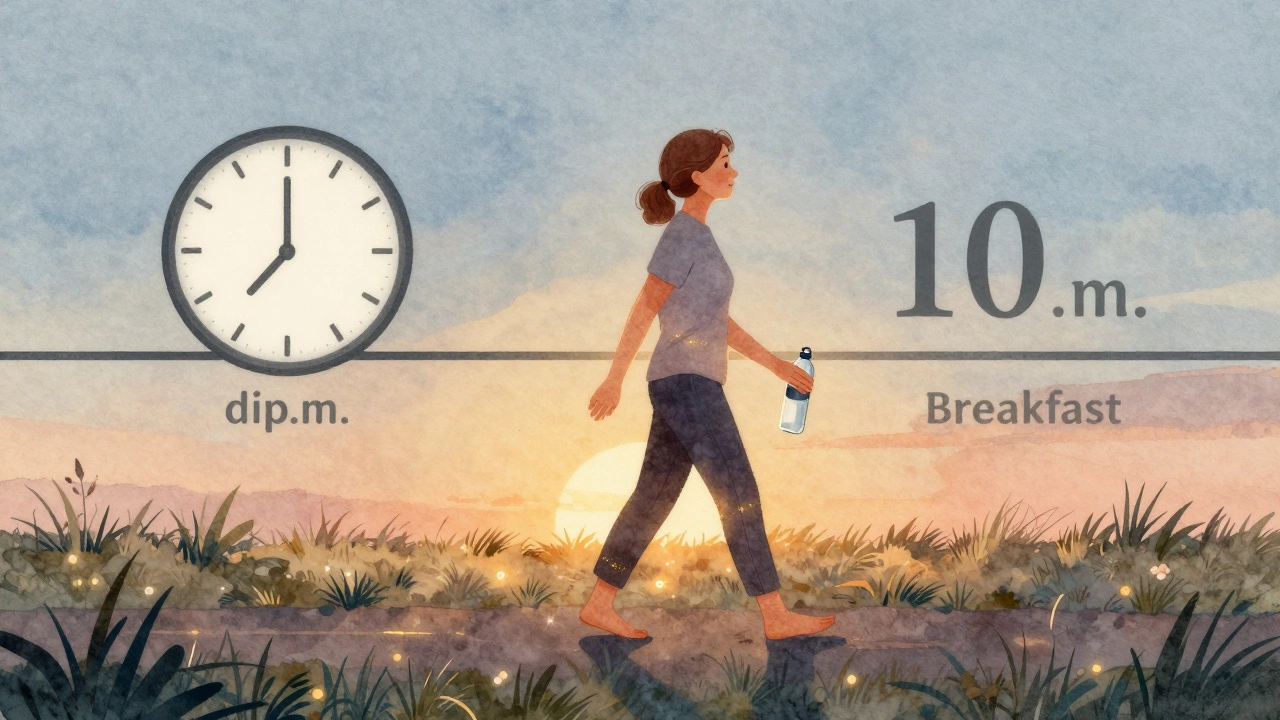
One woman, 57, started fasting 15 hours a day-eating dinner at 7 p.m. and breakfast at 10 a.m. She lost 11 pounds in three months. She didn’t change her diet much, just stopped snacking after dinner and skipped morning coffee with sugar. Her energy improved, and her blood sugar stabilized.
What Happens If You Fast Too Long?
Some people think 20-hour fasts or even 24-hour fasts will work faster. But for women over 50, that often backfires. Your body senses prolonged fasting as stress. It releases cortisol, the stress hormone, which can make belly fat harder to lose. It also signals your body to hold onto fat for survival.
Longer fasts can also mess with sleep. Many women over 50 already struggle with night sweats or insomnia. Skipping dinner too early or fasting too long can make it worse. A 2024 survey of 1,200 women aged 50-65 found that those who fasted 18+ hours reported 30% more sleep disturbances than those who fasted 14-16 hours.
And don’t forget: you need protein. If you’re fasting too long, you’re likely not eating enough protein during your eating window. Protein is critical for preserving muscle, especially after 50. Aim for 25-30 grams per meal. Eggs, chicken, tofu, Greek yogurt, or lentils work well.
When to Start and How to Build the Habit
You don’t have to jump into 16 hours on day one. Start slow. Try 12 hours-finish dinner by 8 p.m. and eat breakfast at 8 a.m. After a week, push it to 13 hours. Then 14. Most women find that by day 10, they naturally stop feeling hungry in the morning. That’s your body adapting.
Here’s a simple plan:
- Finish dinner by 7 p.m. (no snacks after)
- Drink water, herbal tea, or black coffee in the morning
- Wait until 10 a.m. to eat your first meal
- Make that meal protein-rich
- Stop eating by 8 p.m. the next day
Stick to this for 3 weeks. Then assess. Are you losing weight? Do you feel more energized? Is your waistband looser? If yes, you’ve found your rhythm. If not, adjust your eating window slightly-maybe try 12 p.m. to 8 p.m. instead.
What to Eat During Your Eating Window
Fasting isn’t a free pass to eat junk during your eating window. If you’re eating processed carbs, sugary snacks, or fried foods, you won’t lose weight. You’ll just be fasting and then overloading your system.
Focus on whole foods:
- Lean proteins: chicken, fish, eggs, tofu
- Non-starchy vegetables: spinach, broccoli, peppers, zucchini
- Healthy fats: avocado, olive oil, nuts, seeds
- Complex carbs in moderation: sweet potatoes, quinoa, oats
One woman, 56, lost 18 pounds in 5 months by eating two meals a day: a large lunch with grilled salmon, greens, and avocado, and a light dinner of lentils and roasted veggies. She didn’t count calories. She just avoided sugar and ate until she was satisfied-not stuffed.
Watch for Red Flags
Fasting isn’t for everyone. If you experience any of these, stop and talk to your doctor:
- Dizziness or lightheadedness that doesn’t go away after a few days
- Heart palpitations or irregular heartbeat
- Extreme fatigue or trouble sleeping
- Loss of menstrual periods (if you’re still cycling)
- Feeling obsessed with food or anxious about meals
Women with a history of eating disorders, low blood pressure, or diabetes should not fast without medical supervision. Type 2 diabetics on insulin or certain medications can risk dangerous drops in blood sugar.
Other Factors That Matter More Than Fasting Hours
Fasting helps-but it’s not the only thing. Here’s what else you need:
- Movement: Walk 8,000-10,000 steps a day. Strength training twice a week preserves muscle. You don’t need heavy weights-bodyweight squats, resistance bands, and light dumbbells work.
- Sleep: Aim for 7 hours. Poor sleep raises cortisol and increases cravings.
- Stress: Chronic stress makes fat loss harder. Try breathing exercises, yoga, or just sitting quietly for 10 minutes a day.
- Hydration: Drink half your body weight in ounces of water daily. Dehydration can mimic hunger.
One woman, 58, didn’t lose weight for months until she started walking after dinner and cut out late-night scrolling. Her stress dropped. Her sleep improved. And suddenly, the weight started coming off-even though she kept fasting 15 hours.
Realistic Expectations
At 55, you’re not going to lose 20 pounds in a month. That’s not healthy or sustainable. Aim for 0.5 to 1 pound per week. That’s 2-4 pounds a month. Sounds slow? It’s not. That’s 24-48 pounds a year. And you’ll keep it off because you’re not starving-you’re retraining your body.
Weight loss after 50 isn’t about extremes. It’s about consistency, patience, and listening to your body. Fasting for 14-16 hours gives you the tools. The rest? It’s about eating real food, moving your body, and giving yourself grace.
Can I drink coffee while fasting?
Yes, black coffee is fine. It won’t break your fast and may even help suppress appetite. Avoid cream, sugar, or flavored syrups-they spike insulin. A splash of unsweetened almond milk is okay in small amounts.
Should I fast every day or just a few days a week?
Daily 14-16 hour fasting works better than intermittent fasting a few days a week for women over 50. Consistency helps regulate hormones and insulin levels. Skipping meals randomly can confuse your metabolism.
Will fasting help with belly fat after menopause?
Yes. Belly fat is more sensitive to insulin and cortisol. Fasting lowers both, which helps target stubborn abdominal fat. Combine it with walking and strength training for the best results.
Can I fast if I’m on medication?
If you’re on blood pressure, diabetes, or thyroid medication, talk to your doctor first. Some medications need to be taken with food. Fasting could change how your body absorbs them.
How long until I see results?
Most women notice changes in energy and appetite within 1-2 weeks. Visible fat loss usually starts around week 3-4. Don’t rely on the scale-measure your waist, notice how your clothes fit, and track how you feel.
What to Do Next
Start tomorrow. Don’t wait for Monday. Finish dinner at 7 p.m. Don’t eat again until 10 a.m. Drink water. Drink tea. Walk after dinner. Sleep well. Repeat.
Weight loss after 55 isn’t about perfection. It’s about showing up, day after day. Your body knows what to do. You just have to give it the right conditions-and 14 to 16 hours of fasting is one of the best ones you can give it.