How Long Can Someone Live With Cancer? Understanding Survival Rates and Prognosis
 Jul, 14 2026
Cancer Survival Rate Estimator
Five-Year Relative Survival Rate
Receiving a cancer diagnosis is a medical condition characterized by uncontrolled cell growth that can spread to other parts of the body often triggers an immediate, terrifying question: "How long do I have?" It is the most human reaction to fear. You want a number. You want a timeline. But medicine rarely deals in certainties, especially when it comes to oncology.
The honest answer is that there is no single number. Some people live decades after their diagnosis; others face a much shorter journey. The difference usually comes down to three things: the specific type of cancer, how early it was caught, and how well the patient’s body responds to treatment. Let’s break down what actually determines life expectancy, moving past the vague statistics and looking at real-world factors.
The Power of Early Detection and Staging
If you look at any cancer statistic, the first thing you will notice is the emphasis on "stage." This is not just bureaucratic jargon; it is the single biggest predictor of survival. Doctors use the TNM system-Tumor size, Node involvement, and Metastasis-to classify disease progression.
Consider breast cancer is the most common cancer among women worldwide, originating in the milk-producing glands of the breast. According to data from the American Cancer Society, the five-year relative survival rate for localized breast cancer (confined to the breast) is over 99%. That means nearly everyone diagnosed at this stage is alive five years later. However, if the cancer has spread to distant organs (Stage IV), that rate drops significantly, though it is still around 30% and rising due to better treatments. The gap between Stage I and Stage IV is often measured in years, sometimes decades.
This is why screening matters. A mammogram or a colonoscopy isn’t just a test; it is a time machine. It catches the disease before it acquires the ability to travel through the bloodstream. For colon cancer is a malignancy that develops in the large intestine or rectum, detecting polyps before they become malignant can prevent cancer entirely. Once it becomes invasive, the clock starts ticking faster. Early detection shifts the conversation from "how long" to "how to manage a chronic condition."
Not All Cancers Are Created Equal
People often treat "cancer" as one disease, but it is hundreds of different diseases. The biology of pancreatic cancer is an aggressive malignancy arising in the pancreas, often difficult to detect early is vastly different from prostate cancer is a slow-growing cancer that affects the prostate gland in men. Comparing survival rates between them is like comparing a sprint to a marathon.
| Cancer Type | Localized (Early Stage) | Regional (Spread to Lymph Nodes) | Distant (Metastasized) |
|---|---|---|---|
| Breast Cancer | 99% | 86% | 31% |
| Prostate Cancer | 100% | 100% | 32% |
| Melanoma (Skin) | 99% | 67% | 34% |
| Pancreatic Cancer | 44% | 16% | 3% |
| Lung Cancer | 65% | 38% | 9% |
Notice the contrast. Prostate cancer is often so slow-growing that many men die *with* it, not *from* it. Pancreatic cancer, however, is aggressive and often silent until late stages. These numbers are averages, not prophecies. They tell us about populations, not individuals. Your genetics, your immune system, and your access to care play massive roles in where you fall on that spectrum.
The Revolution of Modern Treatments
Statistics lag behind reality. Most survival data relies on patients diagnosed five or more years ago. If you were diagnosed today, your outlook might be significantly better than the charts suggest. Why? Because we are in the middle of a therapeutic revolution.
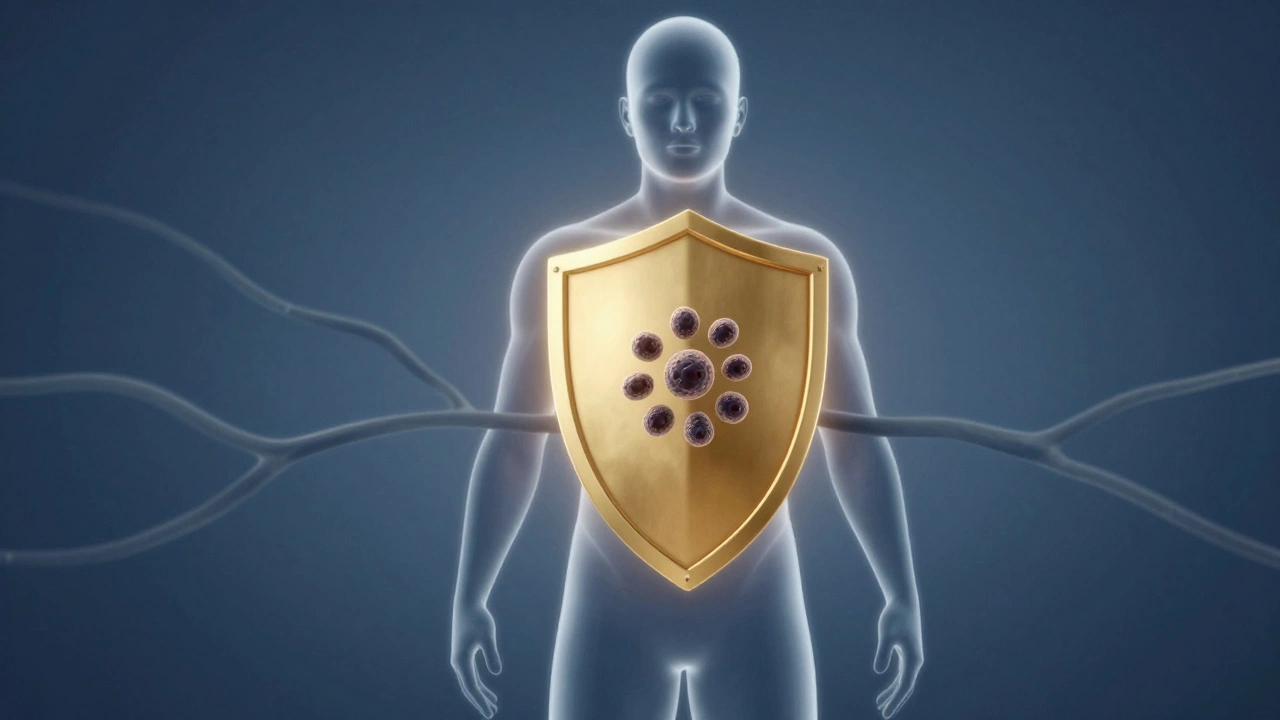
Immunotherapy is a treatment that uses the body's own immune system to fight cancer cells has changed the game for cancers like melanoma and lung cancer. Instead of poisoning the whole body with chemotherapy, these drugs help your T-cells recognize and destroy tumor cells. Some patients with advanced melanoma, once considered terminal, are now living ten, fifteen, even twenty years post-diagnosis.
Similarly, targeted therapy is drugs designed to attack specific genetic mutations within cancer cells allows doctors to tailor treatment to the molecular profile of a tumor. If you have a specific mutation, like EGFR in lung cancer, there is likely a pill that targets it precisely. This turns some forms of advanced cancer into manageable chronic conditions, similar to diabetes or hypertension. You take medication, you monitor levels, and you live a full life.
Beyond Biology: Lifestyle and Mental Health
You cannot control your genes or the initial mutation. But you have significant influence over how your body handles the stress of cancer and treatment. Studies consistently show that lifestyle factors impact survival rates independently of the cancer type.
- Nutrition: A diet rich in antioxidants, lean proteins, and fiber helps maintain muscle mass during treatment. Malnutrition weakens the immune system, making recovery harder.
- Physical Activity: Moderate exercise reduces fatigue, improves mood, and may lower the risk of recurrence. Even short walks daily make a measurable difference in quality of life and longevity.
- Mental Resilience: Chronic stress releases cortisol, which can suppress immune function. While mindset doesn't cure cancer, managing anxiety and depression through therapy or support groups helps patients stick to treatment plans and recover faster.
I’ve seen patients who defied odds not because they had "magic" biology, but because they refused to let the diagnosis define their entire existence. They stayed active, connected with loved ones, and focused on what they could control. That agency is powerful.

Understanding "Survival Rate" vs. "Life Expectancy"
It is crucial to distinguish between statistical survival and personal life expectancy. A "five-year survival rate" does not mean you will only live five years. It means that five years after diagnosis, X% of people are still alive. Many of those people go on to live another ten, twenty, or thirty years. For many cancers, surviving five years is considered a functional cure, as the risk of recurrence drops dramatically after that point.
Conversely, for aggressive cancers, "life expectancy" might be measured in months. In these cases, the goal of care often shifts from curative to palliative-focusing on comfort, dignity, and maximizing the quality of remaining time. This is not giving up; it is choosing peace over pain. Honest conversations with your oncologist about goals of care are essential. Ask them: "What is the best-case scenario? What is the most likely scenario? And what can we do to ensure my quality of life remains high regardless?"
Next Steps for Patients and Families
If you or a loved one is facing this question, here is how to navigate the uncertainty:
- Get a Second Opinion: Oncology is complex. Another specialist might see a different treatment path or clinical trial opportunity.
- Ask About Clinical Trials: New therapies are always being tested. Participation can provide access to cutting-edge treatments before they are widely available.
- Focus on Metrics You Can Control: Sleep, diet, exercise, and emotional support. These are levers you can pull every day.
- Avoid Dr. Google: Online forums are filled with worst-case scenarios. Algorithms prioritize engagement, not accuracy. Stick to reputable sources like the National Cancer Institute or major cancer centers.
The question "How long can someone live with cancer?" has no universal answer. But for millions of people, the answer is "a very long time." Medicine is advancing faster than ever. Stay informed, stay proactive, and focus on living well today.
Is cancer always a death sentence?
No. Many types of cancer are highly curable, especially when detected early. Skin cancer, thyroid cancer, and testicular cancer have cure rates exceeding 90-95%. Even some advanced cancers are becoming manageable chronic conditions thanks to immunotherapy and targeted drugs.
What does a 5-year survival rate actually mean?
It means that five years after diagnosis, that percentage of people are still alive compared to the general population. It does not mean the person will die after five years. Many survivors live decades longer. It is a benchmark used by researchers to track progress.
Can lifestyle changes extend life with cancer?
Yes. While lifestyle cannot cure cancer alone, it significantly impacts treatment tolerance and recovery. Regular exercise, a nutrient-dense diet, and stress management have been linked to lower recurrence rates and better overall survival times in multiple studies.
Why are survival rates for pancreatic cancer so low?
Pancreatic cancer is often called a "silent" disease because symptoms rarely appear until it has spread. By the time it is diagnosed, it is usually at an advanced stage. Additionally, it is biologically aggressive and resistant to many standard chemotherapy drugs, though new treatments are slowly improving outcomes.
Should I ask my doctor about my personal prognosis?
Yes, but frame the question carefully. Instead of asking "How long do I have?", ask "What is the typical range of outcomes for my specific stage and type?" and "What are our goals for treatment?" This opens a dialogue about realistic expectations without relying solely on cold statistics.