Does Stiffness Ever Go Away After Knee Replacement? Realistic Recovery Timelines
 Aug, 18 2026
Knee Replacement Stiffness Recovery Tracker
Enter how many weeks have passed since your surgery to see where you fit in the standard healing curve. This tool helps set realistic expectations for when tightness should improve.
Phase 1: Acute Inflammation
Weeks 1-4Swelling is at its peak. You may feel a "tight band" around the knee. This is critical time for passive range of motion exercises to prevent permanent loss of flexion.
- Goal: Break through initial swelling, achieve ~90° flexion by end of week 4.
- Action: Consistent physical therapy participation is non-negotiable.
Walking into the operating room with a stiff, painful knee is one thing. Walking out weeks later and feeling like your leg belongs to someone else is another. If you are wondering whether that tight, locked sensation will ever truly disappear, the short answer is yes-but it takes time, consistency, and realistic expectations. Most patients do not return to their pre-surgery baseline immediately; in fact, the journey back to full mobility often spans six months to a year.
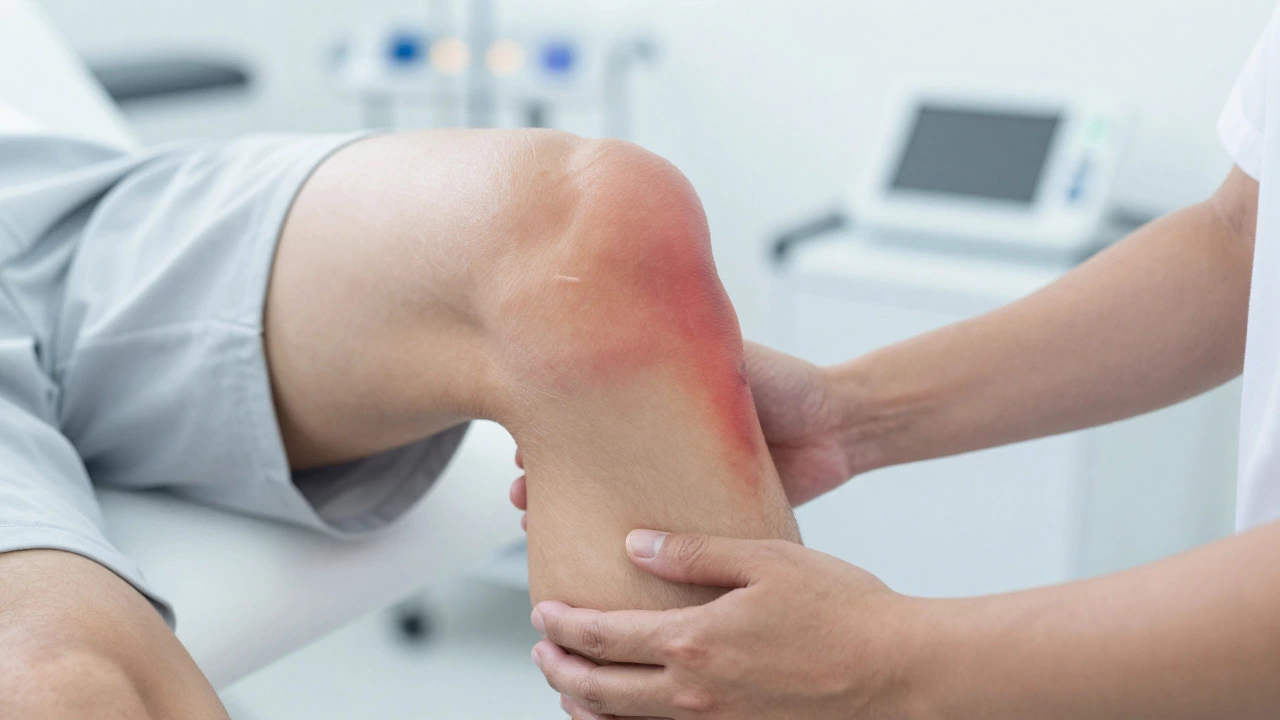
Knee replacement stiffness is a common complaint in the early stages of recovery. It usually stems from swelling, scar tissue formation, and muscle guarding. Your body is healing a significant surgical wound, and inflammation naturally restricts movement. However, if stiffness persists beyond the expected timeline without improvement, it might indicate a specific complication like arthrofibrosis or patellar maltracking that requires targeted intervention.
Understanding the Timeline of Stiffness
Recovery from a Total Knee Arthroplasty is a surgical procedure where damaged cartilage and bone are replaced with metal and plastic components. The healing process follows a predictable biological sequence. Here is what typically happens:
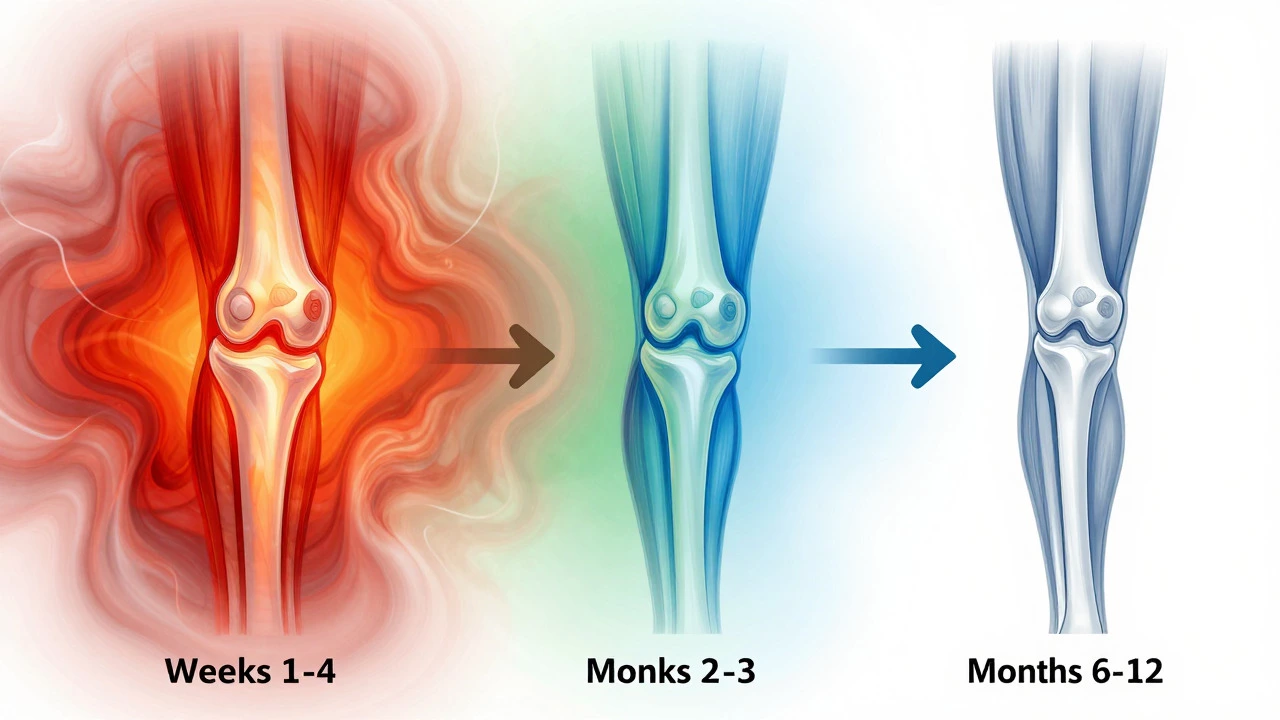
- Weeks 1-4: This is the peak of acute inflammation. Swelling is at its highest, and range of motion (ROM) gains are slow but critical. Patients often feel a "tight band" around the knee. Active participation in physical therapy is non-negotiable here to prevent permanent loss of flexion.
- Months 2-3: Swelling begins to subside, and scar tissue starts to mature. You should notice a significant increase in bending ability. Many patients can bend past 90 degrees during this phase, which is essential for sitting comfortably and climbing stairs.
- Months 4-6: The focus shifts from basic mobility to functional strength. Stiffness becomes less about the joint capsule and more about muscle weakness or residual soft-tissue tightness. Gait patterns start to normalize.
- Months 6-12: Fine-tuning occurs. Any remaining mild stiffness is usually manageable with daily stretching. By this point, most patients report that the "foreign object" feeling has faded significantly.
If you are stuck at less than 90 degrees of flexion by week six, that is a red flag. Orthopedic surgeons generally consider this a milestone for evaluating potential complications.
Why Does the Knee Feel Tight?
It is easy to assume that because the new implant is made of smooth materials, the knee should move freely right away. But the surrounding structures tell a different story. Several factors contribute to that persistent tightness:
- Scar Tissue Formation: As the incision heals, collagen fibers cross-link and tighten. If these fibers form adhesions inside the joint capsule, they physically block movement. This condition is known as Arthrofibrosis, which is excessive scarring within the joint that limits range of motion.
- Muscle Guarding: Your quadriceps and hamstrings protect the new joint by staying tense. Over time, this protective tension becomes habitual, limiting how far you can straighten or bend the leg.
- Patellar Tracking Issues: The kneecap must glide smoothly over the new implant. If the tracking mechanism is off due to muscle imbalance or implant positioning, it creates friction and a sensation of catching or stiffness.
- Residual Inflammation: Even after visible swelling goes down, microscopic inflammation can persist in the synovial membrane, causing a dull ache and reduced lubrication.
Understanding these mechanisms helps you target the right exercises. For example, if the issue is scar tissue, simple stretching might not be enough; you may need manual therapy techniques to break up adhesions.
The Role of Physiotherapy in Resolving Stiffness
Physiotherapy is the single most effective tool for overcoming post-operative stiffness. It is not just about doing exercises; it is about aggressive, consistent mobilization. A good physical therapist will assess your specific limitations and tailor a program accordingly.
| Intervention Type | Primary Goal | Typical Timing |
|---|---|---|
| Passive Range of Motion | Stretch joint capsule and reduce adhesions | Weeks 1-6 |
| Active-Assisted Exercises | Build initial muscle activation | Weeks 2-8 |
| Manual Therapy | Break up scar tissue and improve gliding | Weeks 4-12 |
| Strength Training | Restore muscle balance and stability | Months 3-6 |
One key technique often used is continuous passive motion (CPM), though its use has declined in favor of active therapy. Modern protocols emphasize patient-driven movement. If you skip sessions or perform exercises half-heartedly, stiffness tends to rebound. Consistency beats intensity in the early phases.
When to Worry: Signs of Complications
While some stiffness is normal, certain signs suggest something is wrong. You should contact your orthopedic surgeon if you experience:
- Sudden onset of severe pain accompanied by fever or redness (signs of infection).
- Inability to straighten the knee fully (extension lag) beyond three months.
- A locking sensation where the knee gets stuck in a bent position and won't release.
- Persistent clicking or grinding sounds that cause pain rather than just noise.
In rare cases, stiffness may require a second procedure called manipulation under anesthesia (MUA). This involves a surgeon manually breaking up scar tissue while you are asleep. It is most effective when performed between six weeks and three months post-op. Beyond that window, the scar tissue becomes too dense for manipulation to work well, and revision surgery might be considered.
Long-Term Outlook and Lifestyle Adjustments
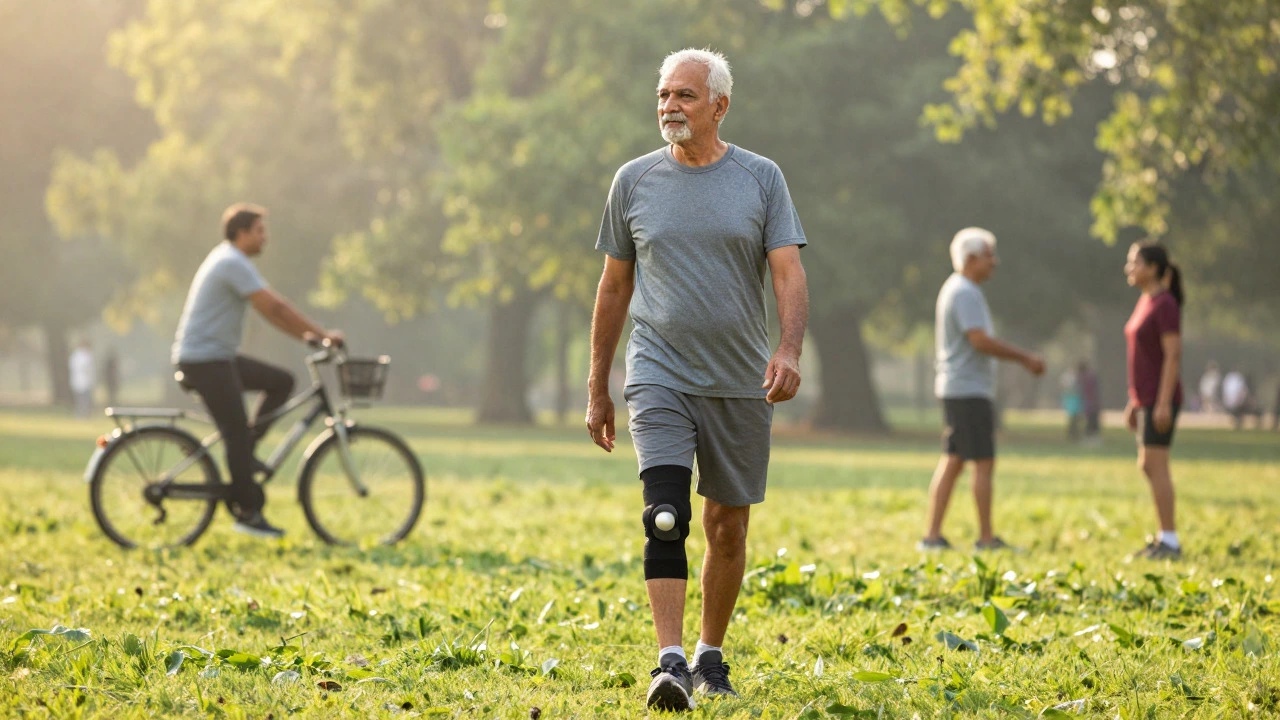
For the vast majority of patients, stiffness does resolve to a level that allows for a high quality of life. You may never feel exactly like you did before arthritis set in, but you can achieve near-normal function. Daily habits play a crucial role in maintaining this progress.
Keeping the knee warm can help reduce morning stiffness. Using heat packs before activity and ice after activity helps manage inflammation cycles. Additionally, maintaining a healthy weight reduces the load on the artificial joint, minimizing wear and tear on the surrounding soft tissues. Low-impact activities like swimming, cycling, and walking are ideal for keeping the joint lubricated without excessive stress.
Psychological factors also matter. Fear of re-injury can lead to voluntary stiffness. Cognitive behavioral strategies or simply trusting the rehabilitation process can help unlock that final percentage of movement. Remember, the implant is strong, but your confidence needs to be stronger.
Frequently Asked Questions
How long does it take for knee stiffness to go away completely?
Most significant stiffness resolves within 3 to 6 months. However, minor tightness may persist for up to a year. Full functional recovery, including optimal range of motion, typically takes 12 months of consistent rehabilitation.
Is it normal to still have a stiff knee after 3 months?
Some residual stiffness is normal, but if you cannot bend your knee past 90 degrees or straighten it fully, you should consult your surgeon. At this stage, aggressive physical therapy or evaluation for arthrofibrosis is recommended.
Can I fix knee stiffness without surgery?
Yes, in most cases. Intensive physical therapy, manual therapy, and possibly oral anti-inflammatory medications can resolve stiffness. Surgery, such as manipulation under anesthesia, is reserved for cases where conservative treatments fail.
Does weather affect knee stiffness after replacement?
Many patients report increased sensitivity to cold or damp weather. While the implant itself doesn't react to temperature, the surrounding nerves and muscles can become tighter in colder conditions, leading to perceived stiffness.
What exercises are best for reducing stiffness?
Heel slides, quad sets, and straight leg raises are foundational. As you progress, incorporate wall sits and step-ups. Always follow the specific protocol provided by your physical therapist to avoid overloading the healing tissues.