Does American Health Insurance Work in Europe? The Complete Guide for Travelers
 Jun, 12 2026
European Medical Cost Estimator
Select Your Scenario
Choose a common medical situation to see estimated costs and coverage gaps.
Your Coverage Settings
Estimated Financial Impact
Total Medical Bill
€400
~$430 USDOut-of-Pocket (You Pay)
€400
Without proper coverageAmount Covered
€0
By insurance providersCost Breakdown:
Recommendation:
Loading...
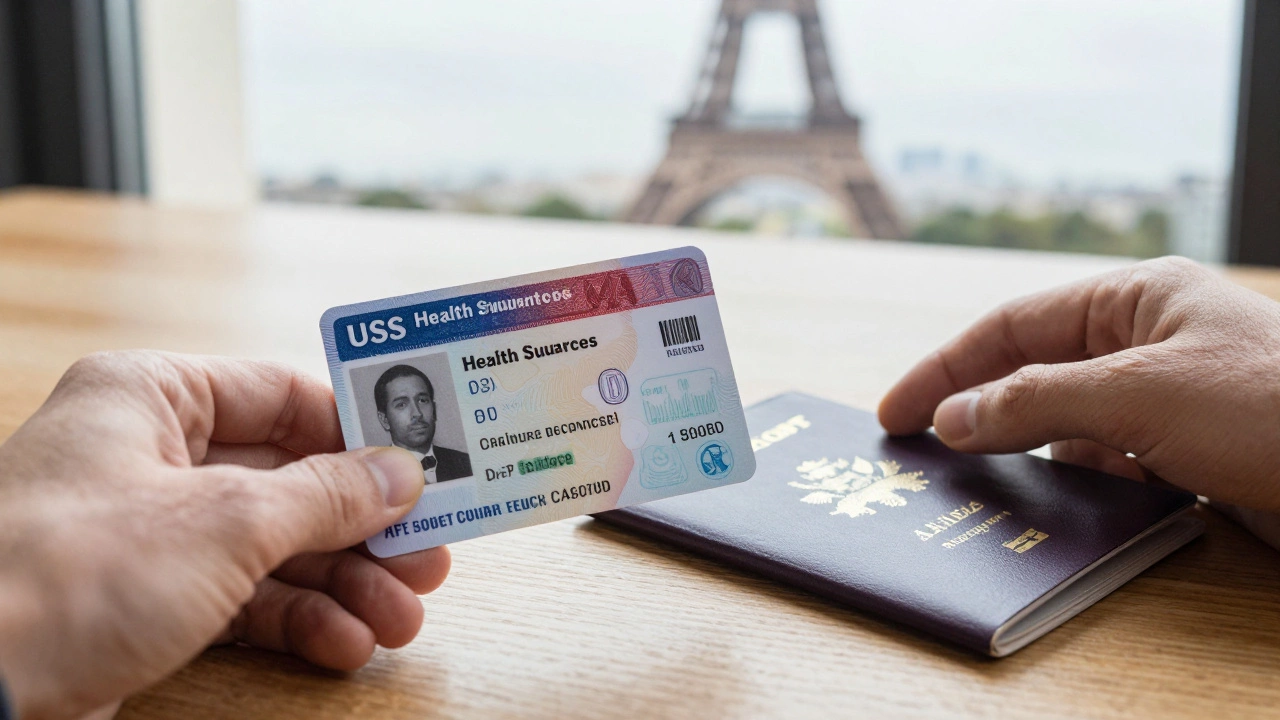
You pack your bags, grab your passport, and maybe even print out that digital card from your US health insurer. You're heading to Paris for a wedding or hiking the Dolomites. But then the question hits you: if you get sick or hurt over there, will your American plan actually pay the bill?
The short answer is no. Almost never.
Most standard US health insurance policies provide little to no coverage outside the United States. If you break a leg in Barcelona or need urgent care in Berlin, you could be looking at thousands of dollars in out-of-pocket expenses. This isn't just an inconvenience; it's a financial risk that catches thousands of travelers off guard every year.
Why Your Domestic Plan Fails Abroad
To understand why your coverage vanishes the moment you cross the Atlantic, you have to look at how the US system is built. Unlike countries with nationalized healthcare systems, the US relies on private contracts between insurers and providers. These contracts are strictly territorial.
Your insurance policy is a legal agreement with a specific network of hospitals and doctors within the US. When you land in London, you are stepping outside that network entirely. There is no automatic reciprocity between a US insurer like Blue Cross Blue Shield and a hospital in Munich. They don't share billing systems, they don't recognize each other's codes, and they certainly don't agree on prices.
Even major global employers often restrict their "international" benefits. Many corporate plans only cover emergencies up to a tiny deductible, or they require you to file claims manually after paying upfront. Some high-end expatriate plans exist, but these are rare for typical vacationers. If you have a standard PPO or HMO plan from your job or through the marketplace, assume it is useless overseas.
| Feature | Standard US Health Insurance | Travel Medical Insurance |
|---|---|---|
| Geographic Scope | USA & Territories (usually) | Worldwide (excluding home country) |
| Emergency Care | Limited or None | High Limits ($50k - $1M+) |
| Pre-existing Conditions | Covered (if stable) | Often Excluded or Limited |
| Medevac/Repatriation | Rarely Covered | Standard Inclusion |
| Payment Method | Direct Billing (In-Network) | Reimbursement or Direct Pay |
The Hidden Cost of European Healthcare
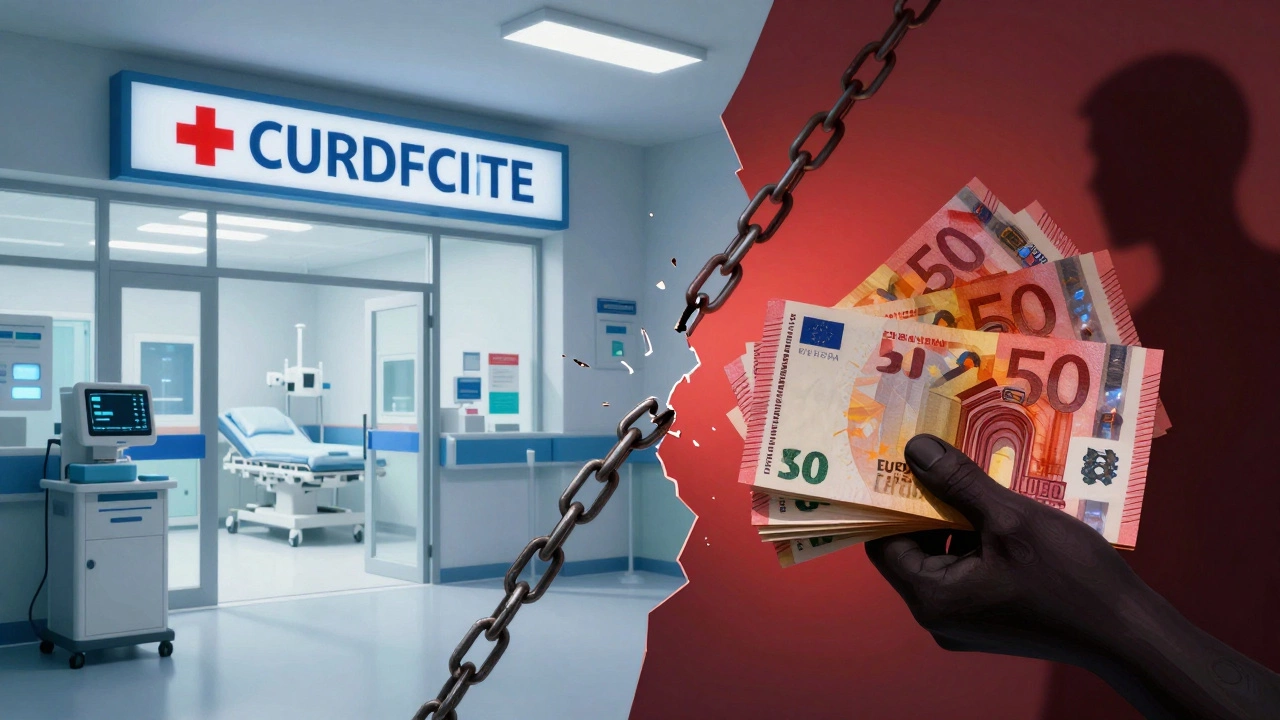
People often assume that because many European countries have public healthcare, visiting a doctor will be cheap. This is a dangerous misconception. While citizens pay low co-pays funded by taxes, tourists are classified as "private patients."
In France, Germany, or Switzerland, private medical costs can skyrocket quickly. A simple visit to an emergency room for a severe infection might cost €300-€500. If you need surgery, such as an appendectomy, bills can easily exceed €5,000-€10,000. In Switzerland, one of the most expensive places on earth, a single night in a private hospital room can run you €2,000 or more.
Consider this scenario: You twist your ankle skiing in Austria. You need an MRI and physical therapy. Without insurance, you pay cash upfront. With a standard US plan, you file a claim months later and likely get denied due to "out-of-network" or "geographic exclusion" clauses. With proper travel insurance, the provider pays directly, or you get reimbursed quickly.
Exceptions: When US Insurance Might Help
There are a few narrow scenarios where your domestic policy might offer a lifeline, though you should verify these details before booking your flight.
- Global Elite Memberships: If you use Global Entry or similar trusted traveler programs, some premium credit cards (like certain Amex Platinum or Chase Sapphire Reserve variants) include travel accident insurance. However, this usually covers accidental death or dismemberment, not general medical treatment.
- Expatriate Corporate Plans: If you work for a multinational corporation and are stationed in Europe long-term, your employer may have purchased a global health plan (GHP). These are different from standard US domestic plans.
- Military Dependents (TRICARE): Active duty military families often have TRICARE For Life or Overseas benefits that cover care abroad, sometimes requiring reimbursement processes.
- Specific High-End PPOs: A small number of large employers negotiate global networks. Check your Summary of Benefits and Coverage (SBC) document for terms like "International Emergency Coverage." Even then, limits are often capped at $5,000-$10,000, which is insufficient for serious trauma.
If you do not fall into one of these categories, your coverage is effectively zero.
The Solution: Travel Medical Insurance
Since your US plan won't help, you need a separate product designed specifically for this gap: Travel Medical Insurance. This is not the same as trip cancellation insurance, which refunds your flight cost if you get sick before leaving. Travel medical insurance pays the doctors when you are already there.
When shopping for a policy, look for three key metrics:
- Coverage Limit: Aim for at least $100,000 in medical coverage. For trips to Western Europe or if you are engaging in adventure sports, $250,000+ is safer.
- Deductible: Choose a deductible you can afford to pay out-of-pocket in an emergency. $0-$250 is common for comprehensive plans.
- Exclusions: Read the fine print regarding pre-existing conditions. Most standard policies exclude chronic issues like diabetes or heart disease unless you buy a waiver within 10-21 days of your initial trip deposit.
Popular providers include Allianz, World Nomads, and IMG (International Medical Group). Compare them based on your age, destination, and activities. A backpacker through Southeast Asia needs different coverage than a retiree cruising the Mediterranean.
Schengen Visa Requirements
If you are traveling to the Schengen Area (which includes 29 European countries like France, Germany, Italy, and Spain), insurance isn't just a safety net-it's a legal requirement for many visa applicants.
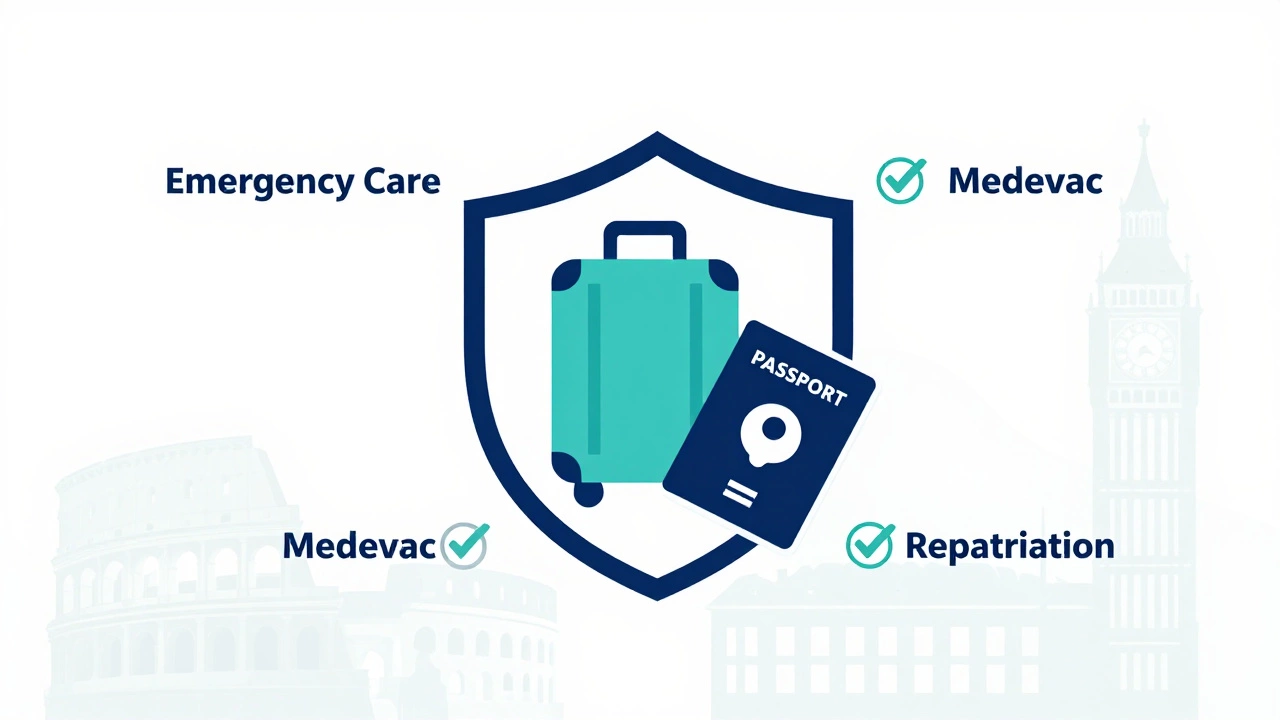
To obtain a Schengen visa, you must prove you have travel medical insurance with a minimum coverage of €30,000 (approximately $32,000 USD). This policy must cover:
- Emergency medical treatment
- Hospitalization
- Repatriation for medical reasons
- Repatriation of remains
This applies to citizens of countries that require visas to enter the EU. Even if you are a US citizen who does not need a visa for stays under 90 days, having this level of coverage is still highly recommended given the potential costs.
What About Credit Cards?
Many Americans rely on their premium credit cards for travel perks. Do not make the mistake of thinking your card replaces health insurance.
While cards like the Chase Sapphire Preferred or Capital One Venture X offer excellent *trip delay* or *baggage loss* insurance, their medical benefits are often limited. Some cards offer "travel accident insurance," which pays a lump sum if you die or lose a limb in an accident. It does not pay for your ICU stay. Always check the Guide to Benefits for your specific card, but assume it does not cover routine or emergency medical care.
Practical Steps Before You Go
Don't wait until you are at the airport. Take these steps now:
- Call Your Insurer: Ask specifically: "Do I have any medical coverage outside the US? What are the limits?" Write down the representative's name and reference number.
- Buy Travel Medical Insurance: Purchase this as soon as you book your non-refundable flights. This maximizes your window for waivers on pre-existing conditions.
- Download the App: Most insurers have apps that let you find local hospitals and file claims digitally. Save the offline version.
- Carry Physical Copies: Print your policy declaration page and keep it with your passport. Digital files can be inaccessible if your phone dies or gets lost.
- Know the Local Number: In Europe, the universal emergency number is 112. It works in all EU countries and connects you to police, fire, and ambulance services.
Conclusion: Protect Your Wallet and Your Health
American health insurance is a vital tool at home, but it becomes a paperweight abroad. The complexity of international billing, the lack of reciprocal agreements, and the high cost of private care in Europe mean you cannot rely on your domestic plan.
Treating travel insurance as an optional extra is a gamble you don't need to take. For a fraction of the cost of your flight, you can secure peace of mind knowing that a broken bone or sudden illness won't lead to financial ruin. Buy a dedicated travel medical policy, read the exclusions, and enjoy your European adventure without looking over your shoulder.
Will my Medicare work in Europe?
No. Original Medicare (Parts A and B) provides almost no coverage outside the US and its territories. There are very rare exceptions for emergencies near the Canadian border or if you are on a cruise ship, but these do not apply to standard travel in Europe. You must purchase separate travel medical insurance.
Can I use my US insurance card at a European pharmacy?
Generally, no. European pharmacies operate on different billing systems. You will likely need to pay cash or use a credit card for medications. Some travel insurance plans allow you to submit receipts for reimbursement later, but direct billing with a US card is extremely rare.
Is travel insurance worth it for a short weekend trip?
Yes. Accidents happen regardless of trip duration. A minor issue like a severe allergic reaction or food poisoning can lead to ER visits costing hundreds or thousands of euros. Since travel insurance is often inexpensive for short durations, the protection outweighs the cost significantly.
What happens if I have a pre-existing condition?
Most standard travel insurance policies exclude pre-existing conditions. However, if you purchase your policy within 10-21 days of making your first trip payment, you may qualify for a waiver that covers acute flare-ups of those conditions. Be sure to disclose your history honestly during application.
Do I need insurance if I'm staying with family in Europe?
Yes. Staying with family reduces accommodation costs, but it does not reduce medical risks. If you fall ill, you will still be treated as a foreign patient in the local healthcare system, subject to full private rates unless you have valid insurance coverage.