Do IVF Babies Look More Like Mom or Dad? The Science of Genetics
 Apr, 21 2026
Baby Trait Predictor: Genetic Probability Tool
How it works: Select the physical traits of both parents. This tool uses basic Mendelian genetics (dominant vs. recessive) to estimate the likely outcome. Note: Real genetics can be more complex!
Parent 1
Parent 2
Predicted Outcome:
The Big Question: Who Do They Look Like?
You've spent months navigating appointments, hormone injections, and the emotional rollercoaster of fertility treatments. Now, the baby is here, and the family debate begins. One uncle says the baby has the father's nose; the grandmother insists the eyes are exactly like the mother's. If you conceived via IVF treatment is a complex series of procedures where eggs are fertilized by sperm outside the body, you might wonder if the process itself changes how a child inherits traits. Does the lab environment or the way embryos are selected tilt the scales toward one parent or the other?
Here is the short answer: No. An IVF baby is genetically identical to a baby conceived naturally. The biological "blueprint" remains the same regardless of whether the sperm met the egg in a fallopian tube or a petri dish. The resemblance depends entirely on the random shuffle of genetic inheritance, not the medical method used to achieve pregnancy.
Quick Takeaways:
- IVF doesn't change the DNA ratio; it's still 50% from the egg and 50% from the sperm.
- Physical appearance is determined by dominant and recessive genes.
- Donor eggs or sperm will, obviously, shift the resemblance toward the donor.
- Epigenetics can influence how genes are expressed, but not who the baby looks like fundamentally.
How Genetics Actually Work in the Lab
To understand why an IVF baby looks the way they do, we have to look at Genetics, which is the study of heredity and variation in organisms. Every person carries two copies of each gene-one from each parent. When a scientist performs In Vitro Fertilization (IVF), they are simply facilitating the meeting of the gametes (the egg and sperm). Once the sperm penetrates the egg, the genetic code is locked in.
The visual result is a game of biological chance. If a father has a dominant trait, like brown eyes, and the mother has a recessive trait, like blue eyes, the baby is more likely to have brown eyes. This happens exactly the same way in a clinic as it does in a bedroom. The Embryo doesn't know it was created in a lab; it only knows the instructions written in its DNA.
Some people ask if PGT-A (Preimplantation Genetic Testing for Aneuploidies) affects appearance. PGT-A is used to screen for chromosomal abnormalities, such as Down syndrome, by checking if the embryo has the correct number of chromosomes. It doesn't select for "cuteness," eye color, or height. It's a health screen, not a cosmetic selection tool.
The Role of Dominant and Recessive Traits
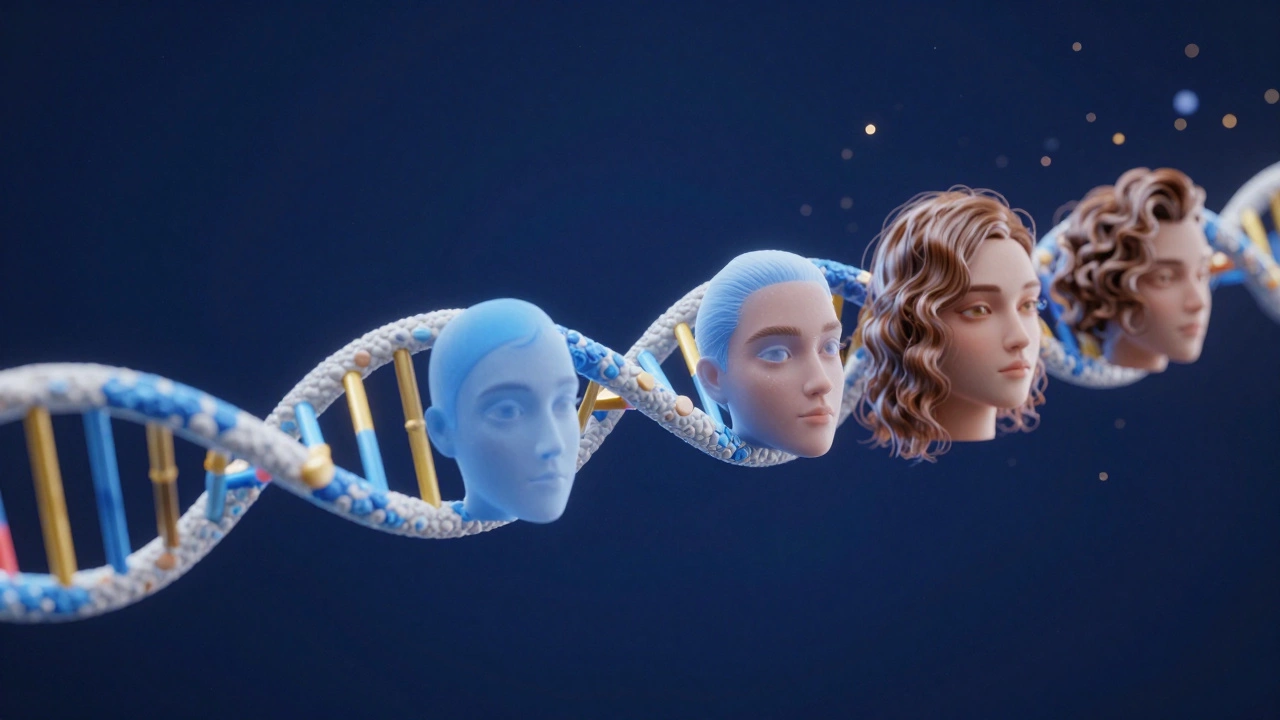
Why does one child look like a clone of the dad while their sibling looks exactly like the mom? It comes down to which alleles win the tug-of-war. Dominant genes override recessive ones. For example, if you have one allele for dark hair and one for blonde, the dark hair usually wins. This is why some IVF babies seem to "favor" one parent-they simply inherited more of that parent's dominant physical markers.
| Trait | Dominant Version | Recessive Version | Likely Outcome |
|---|---|---|---|
| Eye Color | Brown | Blue/Green | Brown usually dominates |
| Hair Texture | Curly | Straight | Curly often prevails |
| Earlobes | Free/Detached | Attached | Free is more common |
| Chin Shape | Cleft Chin | Smooth Chin | Cleft is dominant |
What About Donor Eggs or Sperm?
This is where the conversation changes. When a couple uses a Donor Egg or Donor Sperm, the genetic contribution of one biological parent is replaced. In these cases, the child will naturally resemble the genetic donor and the other biological parent.
For instance, if a mother uses donor sperm, the baby will not share any genetic traits with the father's partner; instead, they will reflect the DNA of the donor. Many parents find this a surprising transition, especially when a baby is born with a trait-like red hair-that neither parent possesses but was present in the donor's history. This doesn't change the bond, but it does change the visual "family map."
It is also worth mentioning Gestational Surrogacy. In this scenario, a surrogate carries the baby, but she has no genetic link to the child. The baby's appearance is determined solely by the egg and sperm providers, regardless of who carries the pregnancy to term.
Does the IVF Environment Influence Appearance?
Some parents worry that the chemicals, incubators, or the process of freezing and thawing embryos might alter the baby's appearance. There is no scientific evidence to support the idea that the IVF process changes physical traits like skin tone, facial structure, or height. The DNA sequence is stable.
However, there is a field called Epigenetics. This is the study of how your behaviors and environment can cause changes that affect the way your genes work. While epigenetics can influence things like metabolism or how a person reacts to stress, it doesn't rewrite the basic physical blueprint. It won't turn a baby with a "dad nose" into a baby with a "mom nose." The structural traits are hard-coded into the genome from the moment of fertilization.

The Psychological Side of Resemblance
Interestingly, the question of "who do they look like?" is often more about psychology than biology. Parents who have struggled with infertility often look for markers of connection. When a parent sees their own eyes in an IVF baby, it reinforces a powerful emotional bond. This is a natural human instinct to seek kinship and recognition.
In cases of donor conception, parents sometimes experience "searching for a likeness." They might subconsciously look for any tiny detail-a way of smiling or a gesture-that connects the child to them, even if the genetic link is only one-sided. This emotional process is a normal part of building a family in the modern age.
Common Misconceptions About IVF Babies
There is a lingering myth that IVF babies are "different" or that the process creates a genetic shift. Let's clear some of those up. First, some think that selecting the "best" embryo means the baby will be a perfect hybrid. In reality, embryos are selected based on their ability to implant and result in a healthy pregnancy, not based on their projected looks.
Second, some believe that the use of hormonal medications for egg stimulation might alter the baby's DNA. This is false. Hormones affect the ovaries and the production of eggs, but they do not enter the nucleus of the egg to change the genetic sequence. The DNA remains the same as if the eggs had been released naturally during a monthly cycle.
Can an IVF baby look like neither parent?
Yes, this happens in natural conception too. This usually occurs when both parents carry recessive genes for a certain trait. For example, two brown-eyed parents might both carry a hidden recessive gene for blue eyes. If the baby inherits the blue gene from both, they will have blue eyes despite neither parent having them.
Does the gender of the baby affect who they look like?
Indirectly, yes. Boys often inherit certain traits more strongly from their mothers because they receive an X chromosome from the mom and only a Y from the dad. Since the X chromosome is much larger and carries more genetic information, some people find that sons often resemble their mothers more than daughters do.
Will an IVF baby have the same health traits as natural babies?
Absolutely. There is no evidence that the physical or health characteristics of IVF babies differ significantly from naturally conceived children. They inherit the same predispositions and health markers based on the parents' genetic history.
Does PGT screening allow parents to choose the baby's look?
No. PGT (Preimplantation Genetic Testing) is designed to detect chromosomal counts and specific genetic disorders. It cannot be used to predict or select for physical attributes like hair color, eye color, or height.
Does the surrogate's appearance affect the baby?
No. A gestational surrogate provides the womb and the life-support system (placenta), but she does not contribute DNA. The baby will look like the genetic parents, not the surrogate.
Next Steps for New Parents
If you are currently in the middle of your IVF journey, the best thing to do is focus on the health of the pregnancy. The mystery of who the baby will look like is one of the most rewarding parts of parenthood. Whether they have your smile or their father's chin, the genetic lottery is a thrill that is exactly the same for every parent.
If you are considering donor options, it can be helpful to request more detailed physical profiles or photos of the donor to get a general idea of the possible traits. However, remember that genetics are unpredictable. A donor might have brown eyes, but if you carry a recessive blue gene, your child could still end up with blue eyes.
Ultimately, the bond you build with your child is far more significant than whose nose they have. Whether conceived in a lab or naturally, the love and connection are what truly define the family relationship.