Counseling vs Therapy: Key Differences, Costs, and How to Choose in the UK
 Jul, 21 2026
Counseling vs Psychotherapy: Which Is Right for You?
Answer these three questions to get a personalized recommendation based on current UK mental health practices.
Solve a Specific Issue
Breakup, job loss, stress managementDeep Self-Understanding
Explore past trauma, personality patternsShort-Term (6-20 Sessions)
Efficient, solution-focusedLong-Term (Months/Years)
Open-ended, exploratory processStructured & Practical
Tools, homework, clear techniquesOpen & Conversational
Exploration of feelings, no strict agendaHave you ever stared at a therapist’s website, scrolled through their bio, and felt more confused than when you started? One says they are a "licensed counselor," another calls themselves a "psychotherapist," and a third just uses the word "therapist." It feels like everyone is speaking a different language. You’re looking for help with anxiety, grief, or just feeling stuck, but the terminology gets in the way.
Here is the short answer: In the real world, there is very little difference between counseling and therapy. They use similar techniques, aim for similar goals, and often involve sitting across from a trained professional talking about your life. However, there are subtle distinctions in training, focus, and duration that can help you pick the right person for your specific needs.
This guide cuts through the jargon. We will look at what each approach actually involves, who regulates them (especially if you are in the UK), and how to decide which path is right for you.
The Core Difference: Focus and Duration
While the terms are often used interchangeably, historically, they had distinct purposes. Understanding these roots helps clarify why you might choose one over the other today.
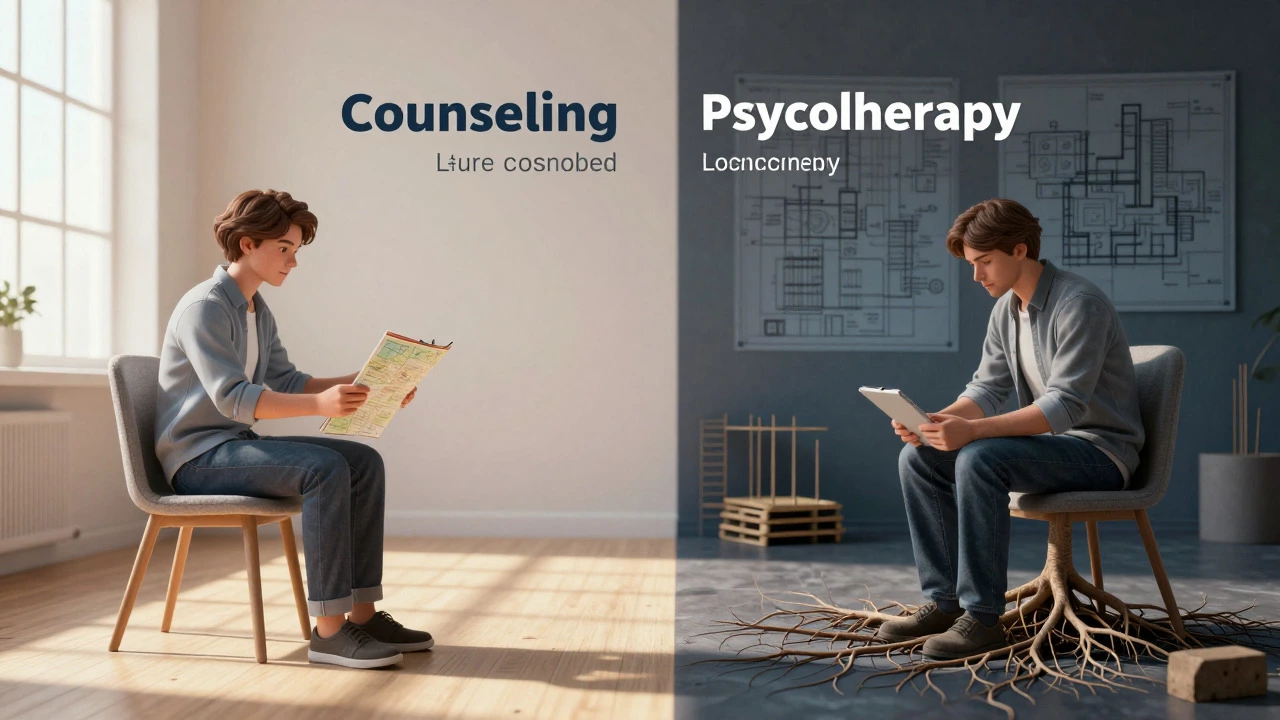
Counseling is typically focused on specific, current problems and practical solutions. Think of it as addressing a distinct issue in your life right now. Maybe you are dealing with a breakup, struggling with work-life balance, or navigating a career change. Counseling is often shorter-term. It aims to help you develop coping strategies and tools to manage the immediate challenge. Once the problem is resolved or managed, the counseling usually ends.
Psychotherapy, often referred to simply as therapy, is generally deeper and longer-term, focusing on underlying patterns, past trauma, and personality structures. If counseling is about fixing the leak in the roof, psychotherapy is about examining why the house was built that way. It explores childhood experiences, recurring relationship dynamics, and deep-seated emotional triggers. The goal is not just to solve a current problem but to facilitate lasting personal change and self-understanding.
That said, the lines have blurred significantly. Many counselors are trained to handle deep issues, and many therapists offer short-term, solution-focused work. The label matters less than the individual practitioner’s style and training.
Training and Qualifications: What Do the Letters Mean?
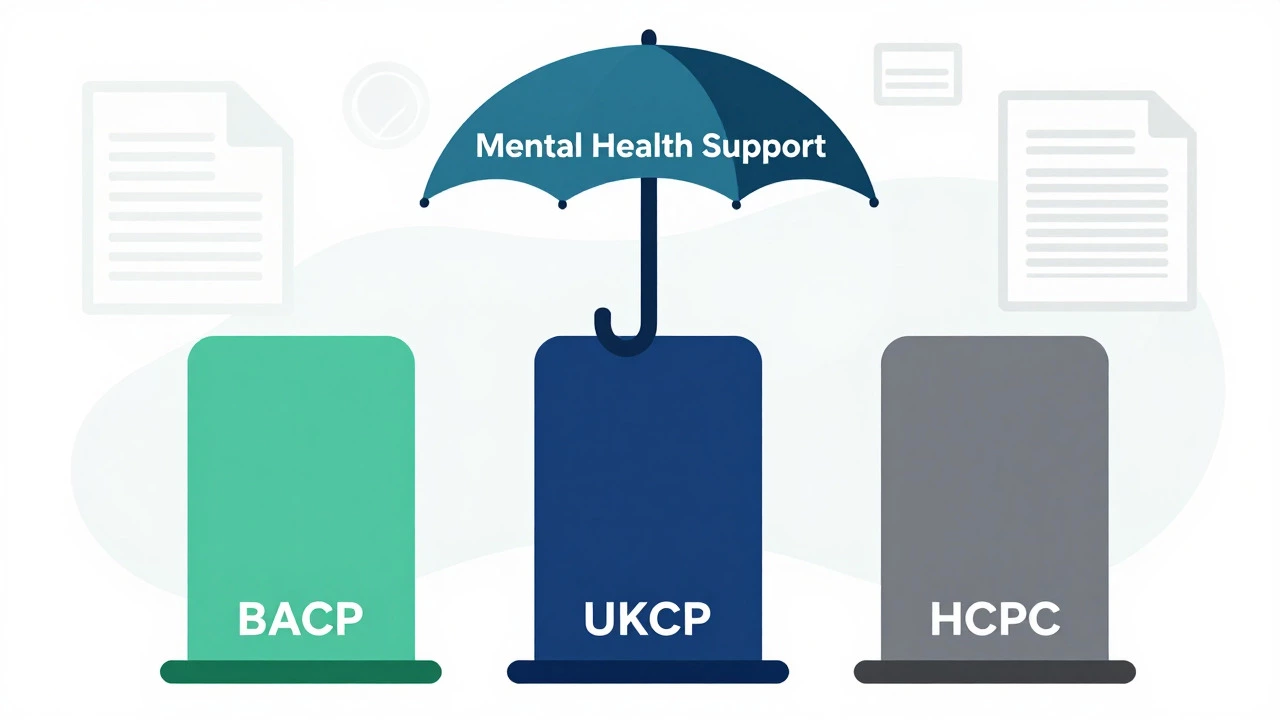
This is where things get technical, but also crucial for your safety and satisfaction. In the United Kingdom, the landscape is regulated by several bodies. Knowing which organization a practitioner belongs to tells you a lot about their training.
| Title/Credential | Typical Training Level | Regulatory Body (UK) | Primary Focus |
|---|---|---|---|
| BACP Registered Counselor | Diploma or Degree level | BACP (British Association for Counselling & Psychotherapy) | Talking therapies, broad range of issues |
| MBACP Member | Accredited Diploma/Degree | BACP | Standardized ethical practice |
| UKCP Registered Psychotherapist | Masters or Doctorate level | UKCP (UK Council for Psychotherapy) | Deep psychological analysis, complex trauma |
| Chartered Psychologist (HCPC) | Doctorate (PhD/PsyD) or Masters | HCPC / BPS | Clinical assessment, evidence-based treatments (CBT, etc.) |
| Psychiatrist | Medical Degree + Specialization | GMC (General Medical Council) | Medication management, severe mental illness |
If you are looking for someone in Birmingham or elsewhere in the UK, check for registration with the BACP or UKCP. These are voluntary registers, but they ensure the practitioner meets strict standards of training and ethics. For psychologists, look for HCPC registration, which is legal requirement for using the title "Clinical Psychologist" or "Counselling Psychologist."
A common pitfall is hiring someone who claims to be a "therapist" but has no recognized accreditation. Always ask: "Which body do you register with, and what is your qualification?" A good professional will tell you this immediately.
Common Therapeutic Approaches
Whether you call it counseling or therapy, the method matters. Different approaches work better for different people and problems. Here are the most common ones you will encounter:
- Cognitive Behavioral Therapy (CBT): This is highly structured and focuses on changing negative thought patterns. It is excellent for anxiety, depression, and phobias. It is often short-term (6-12 sessions).
- Psychodynamic Therapy: This explores how past experiences influence current behavior. It is less structured and more open-ended. It suits those interested in deep self-discovery and understanding long-standing relationship issues.
- Humanistic Therapy (Person-Centered): This focuses on your potential for self-growth. The therapist provides a supportive, non-judgmental environment. It is effective for low self-esteem and personal development.
- Systemic Therapy: This looks at relationships and family systems. It is ideal for couples counseling or family conflicts, as it views problems as interactions between people rather than inside one individual.
- Integrative Therapy: Many modern practitioners blend methods. They might use CBT techniques for immediate relief while exploring deeper psychodynamic themes. This flexibility can be very beneficial.
When to Choose Counseling
You might benefit most from counseling if:
- You are facing a specific, recent crisis (e.g., job loss, bereavement, divorce).
- You want practical tools to manage stress or anxiety in daily life.
- You prefer a shorter-term commitment with clear goals.
- You are generally functioning well but feel stuck in a particular area.
- You want someone to listen actively and help you gain perspective without deep excavation of your past.
Counseling is like having a skilled guide for a difficult hike. They don’t carry you, but they show you the path and help you navigate the rough patches.
When to Choose Psychotherapy
Psychotherapy may be more appropriate if:
- You have experienced significant trauma or abuse.
- You notice recurring patterns in your relationships or life that you cannot break.
- You struggle with identity issues, chronic loneliness, or deep-seated shame.
- You are willing to commit to a longer process (months or years).
- You want to understand the root causes of your emotional pain, not just manage symptoms.
Psychotherapy is like renovating the foundation of a house. It takes time, it can be messy, but the result is a stronger, more stable structure for the future.
Costs and Accessibility in the UK
Let’s talk money, because it is a major barrier. Private therapy in the UK can cost anywhere from £40 to £80 per session, depending on the location and the therapist’s experience. In cities like London or Birmingham, prices tend to be higher.
However, you do not always have to pay out of pocket. The NHS offers talking therapies through the IAPT program (Improving Access to Psychological Therapies). To access this, you need a referral from your GP. IAPT primarily offers CBT and other low-intensity interventions. It is free at the point of use, but wait times can vary. For more complex issues requiring long-term psychotherapy, NHS provision is limited, and private care is often necessary.
If cost is a concern, look for trainees. Universities and training centers often have clinics where supervised trainees offer sessions at a reduced rate. Also, some charities and community groups offer sliding-scale fees based on income.

How to Find the Right Practitioner
Finding the right fit is personal. Chemistry matters. You should feel safe, heard, and respected. Here is a step-by-step approach:
- Check Directories: Use reputable directories like the BACP or UKCP find-a-therapist tools. Filter by location, cost, and issue.
- Read Profiles Carefully: Look for someone who mentions your specific issue. Do their words resonate with you? Do they explain their approach clearly?
- Ask Questions: Most therapists offer a free initial consultation. Use it. Ask about their experience with your issue, their typical session length, and their cancellation policy.
- Trust Your Gut: After the first few sessions, ask yourself: Do I feel slightly lighter? Do I feel understood? If you feel judged, rushed, or disconnected, it is okay to switch.
- Consider Logistics: Can you afford the fee? Is the location convenient? Are online sessions an option? Practical barriers can derail progress if ignored.
Myths About Counseling and Therapy
There are still stigmas and misconceptions surrounding mental health support. Let’s debunk a few:
- Myth: Only "mentally ill" people go to therapy.
Truth: People seek therapy for all reasons-personal growth, relationship improvement, stress management, and creativity blocks. It is a tool for anyone wanting to live better. - Myth: Therapists give advice.
Truth: Good therapists rarely give direct advice. Instead, they help you explore options so you can make your own informed decisions. This empowers you rather than creating dependency. - Myth: It takes forever.
Truth: While some therapy is long-term, many issues are resolved in 8-20 sessions. Short-term counseling is designed to be efficient. - Myth: Everything you say is recorded.
Truth: Confidentiality is sacred. Therapists keep notes, but they are secure and private. Information is only shared without consent in rare cases of imminent danger to self or others.
Conclusion: Taking the First Step
The difference between counseling and therapy is nuanced, but the most important factor is the therapeutic relationship. Whether you call it counseling, psychotherapy, or just "talking," the goal is the same: to feel better, understand yourself, and move forward.
Don’t let the labels paralyze you. Start by identifying what you need right now. Is it immediate support for a crisis? Or deep exploration of lifelong patterns? Then, find a qualified professional who matches that need. Your mental health is worth the investment. Reach out, ask questions, and take that first step toward clarity and well-being.
Is counseling covered by insurance in the UK?
Many private health insurance plans in the UK cover counseling and psychotherapy, but coverage varies widely. Check your policy for limits on the number of sessions, required pre-authorization, and whether you must use a specific network of providers. Some policies exclude certain types of therapy or require a GP referral.
Can I see a counselor for depression?
Yes, counseling is effective for mild to moderate depression. Cognitive Behavioral Therapy (CBT), often delivered by counselors, is a first-line treatment recommended by NICE guidelines. For severe depression, a combination of medication (prescribed by a psychiatrist or GP) and therapy may be necessary.
What is the difference between a psychologist and a therapist?
A psychologist has a doctoral degree in psychology and undergoes extensive scientific training. They can diagnose mental health conditions and often work in clinical settings. A therapist is a broader term that includes counselors and psychotherapists with various levels of training. All psychologists are therapists, but not all therapists are psychologists.
How long does counseling usually last?
Short-term counseling typically lasts 6 to 20 sessions. Each session is usually 50 minutes. Long-term psychotherapy can last months or even years. The duration depends on your goals, the complexity of your issues, and your progress. Regular reviews with your therapist help determine if you are ready to conclude.
Is online therapy as effective as face-to-face?
Research shows that online therapy can be just as effective as face-to-face sessions for many common issues like anxiety and depression. It offers convenience and accessibility. However, for severe trauma or complex conditions, some clients prefer the presence and non-verbal cues of in-person meetings. Try both if possible to see what works for you.