Can You Avoid Knee Replacement If You Are Bone-on-Bone? Real Options That Work
 Dec, 1 2025
Knee Pressure Reduction Calculator
Discover how much pressure you're putting on your knees and how weight loss can reduce pain. Based on clinical evidence showing that every pound lost reduces 3-4 pounds of knee pressure.
Based on clinical studies showing 50% pain reduction with 5% weight loss
When your X-ray shows bone-on-bone knee arthritis, it feels like the end of the road. Doctors often say, "You need a knee replacement." But what if that’s not your only option? Many people assume bone-on-bone means surgery is inevitable. That’s not true. While knee replacement is a common and often successful solution, it’s not the only path - and for some, it’s not even the best first step.
What "Bone-on-Bone" Really Means
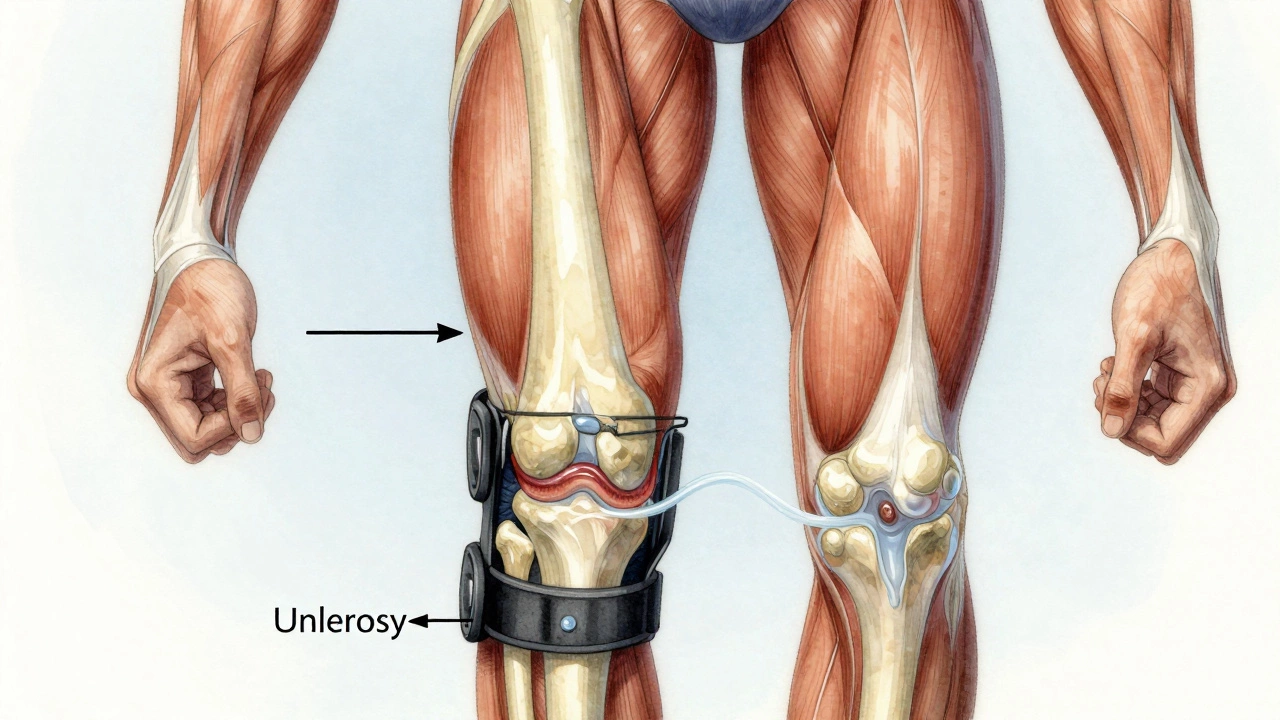
"Bone-on-bone" isn’t a medical term - it’s a shorthand for advanced osteoarthritis. It means the cartilage that once cushioned your knee joint has worn away completely. Now, the ends of your femur and tibia rub directly against each other. This causes severe pain, stiffness, swelling, and grinding sensations. The joint space on an X-ray looks almost gone.
But here’s the key point: the amount of cartilage left doesn’t always match how much pain you feel. Some people with near-total cartilage loss walk with minimal discomfort. Others with moderate wear are crippled by pain. Pain comes from inflammation, muscle weakness, joint instability, and nerve sensitivity - not just bone rubbing on bone.
Why Knee Replacement Isn’t Always the Answer
Knee replacement surgery works well for many. About 90% of patients report major pain relief after five years. But it’s still major surgery. Recovery takes 3 to 6 months. You’ll need physical therapy. There’s a 1 in 100 risk of infection. Implants wear out over time - most last 15 to 20 years. If you’re under 60, you might need a second replacement later.
Studies show that people who delay surgery until their pain is unbearable often have worse outcomes. Why? Because muscles weaken, movement patterns change, and weight gain adds more stress. The goal isn’t to wait until you’re desperate - it’s to manage the condition before it breaks you.
Non-Surgical Options That Actually Work
Here’s what works when you’re bone-on-bone - backed by clinical evidence and real-world results.
1. Weight Management - The Most Powerful Tool
Every pound of body weight puts 3 to 4 pounds of pressure on your knee when you walk. Lose 10 pounds, and you remove 30 to 40 pounds of force from your joint with every step. That’s like taking a backpack full of bricks off your knee daily.
A 2023 study in The Lancet followed 500 people with severe knee arthritis. Those who lost just 5% of their body weight cut their pain by 50% on average. Many avoided surgery for over five years. You don’t need to be thin - just leaner. Even small, consistent changes make a difference.
2. Strength Training - Build Your Own Support System
Your knee doesn’t just need cartilage. It needs strong muscles. The quadriceps (front thigh) and hamstrings (back thigh) act like shock absorbers. Weak muscles force your bones to take the full load.
Research from the Arthritis Foundation shows that people who do targeted strength training three times a week reduce knee pain by 40 to 60%. You don’t need weights. Bodyweight squats (to a comfortable depth), seated leg extensions, and hamstring curls with resistance bands are enough. Start slow. Focus on control, not speed or weight.
3. Low-Impact Movement - Keep the Joint Lubricated
Movement isn’t the enemy. It’s the cure. Cartilage needs motion to get nutrients from joint fluid. Sitting still makes stiffness worse.
Swimming, cycling on a stationary bike, elliptical machines, and walking on flat ground are safe. Avoid high-impact activities like running, jumping, or step aerobics. One patient I worked with - a 68-year-old retired teacher - started swimming 30 minutes, four times a week. Within three months, she stopped using her cane. She’s still walking without surgery four years later.
4. Bracing and Footwear - Redistribute the Pressure
Unloader braces shift weight away from the most damaged part of your knee. They’re not magic, but they work for people with arthritis on one side (medial or lateral compartment). A 2022 review in Arthritis Care & Research found that 70% of users reported improved function and reduced pain.
Shoes matter too. Flat, cushioned shoes with good arch support reduce knee stress. Avoid high heels, worn-out sneakers, or shoes with no support. Orthotics made for knee arthritis can help - especially if you have flat feet or overpronation.
5. Injections - Temporary Relief with Real Benefits
There are two types of injections that help bone-on-bone knees:
- Corticosteroids: Reduce inflammation. They work fast - often within days. But effects last only weeks to a few months. Most doctors limit these to 3 to 4 times a year.
- Hyaluronic acid (viscosupplementation): Adds lubrication to the joint. Studies show mixed results, but for some, it cuts pain for 6 to 12 months. It’s not a cure, but it can buy time.
Platelet-rich plasma (PRP) and stem cell injections are popular, but there’s not enough strong evidence yet to recommend them as standard care. They’re expensive and rarely covered by insurance.
What Doesn’t Work (And Why)
There’s a lot of noise out there. Here’s what you can skip:
- Glucosamine and chondroitin: Multiple large studies, including one from the NIH, show no meaningful benefit for bone-on-bone knees.
- Cruciate ligament braces: These don’t help osteoarthritis. They’re for torn ligaments.
- Extreme rest: Staying off your knee makes muscles weaker and stiffness worse.
- "Natural" creams and oils: They might feel soothing, but they don’t change the joint structure.
When Surgery Still Makes Sense
Not everyone can avoid knee replacement. If you’ve tried everything for six months - weight loss, strength training, bracing, injections - and you still can’t walk to the mailbox, sleep through the night, or stand up from a chair without pain, then surgery is a valid choice.
Don’t wait until you’re housebound. Don’t let fear keep you from a solution that can restore your life. A good candidate for knee replacement isn’t someone who’s "done" - it’s someone who’s tried everything else and still wants to move freely.
Realistic Expectations
Even if you avoid surgery, your knee won’t go back to how it was at 25. Arthritis is a chronic condition. The goal isn’t to reverse it - it’s to manage it so it doesn’t control you.
People who succeed without surgery are those who treat it like a long-term project. Not a quick fix. They make movement a habit. They watch their weight. They listen to their bodies. They don’t give up when progress is slow.
One woman I know, 72, has bone-on-bone arthritis in both knees. She walks 2 miles every morning. She does chair yoga three times a week. She lost 18 pounds over a year. She hasn’t had surgery. She still travels, gardens, and plays with her grandchildren. She didn’t find a miracle. She found consistency.
Next Steps: Your Action Plan
If you’re bone-on-bone and want to avoid knee replacement, here’s what to do next:
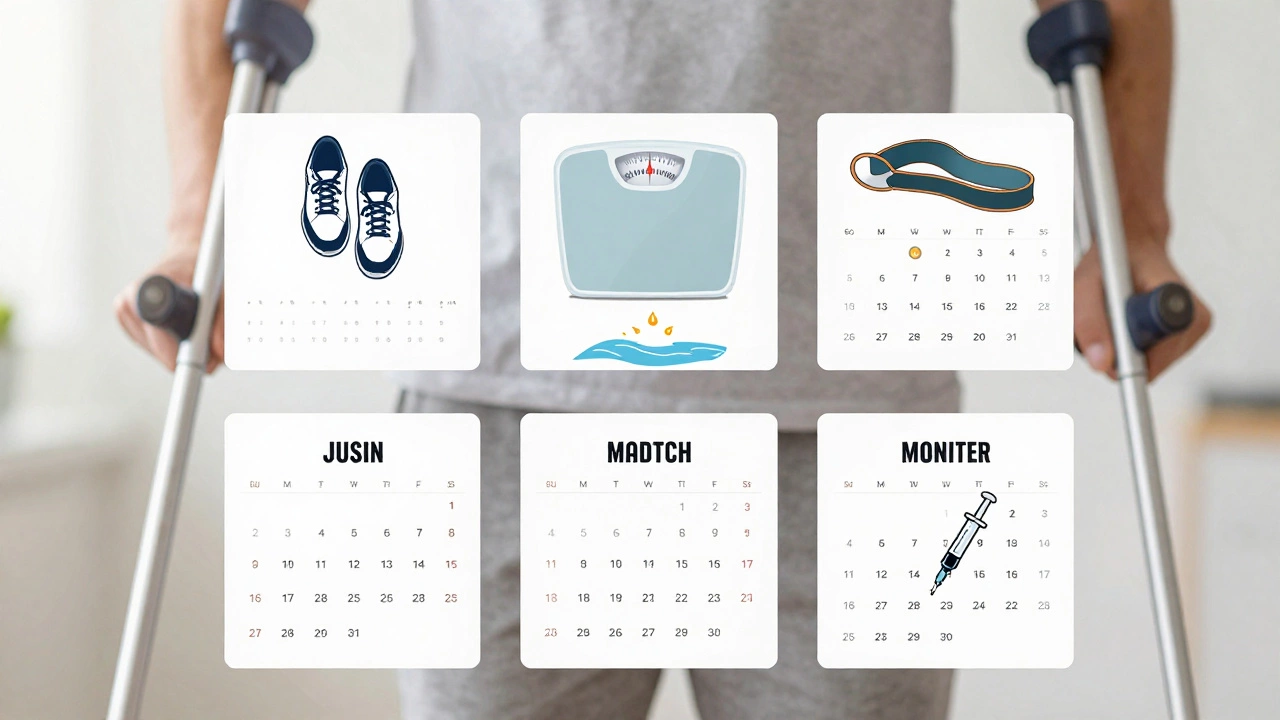
- See a physical therapist who specializes in arthritis. Get a personalized exercise plan.
- Track your weight. Aim to lose 5% of your body weight in the next 3 months.
- Start low-impact movement daily - even 15 minutes.
- Ask your doctor about an unloader brace if your pain is on one side of the knee.
- Try one corticosteroid injection if pain is flaring. Don’t rely on it long-term.
- Re-evaluate in 6 months. If pain hasn’t improved, consider surgery - not as a failure, but as a smart next step.
You don’t have to choose between suffering and surgery. There’s a middle path. It takes work. But it’s worth it.
Can you walk with bone-on-bone knees?
Yes, many people walk with bone-on-bone knees - but it’s often painful and stiff. Walking helps keep the joint lubricated and muscles strong, but you need to modify how you walk. Use a cane or walker if needed. Stick to flat, even surfaces. Avoid stairs and uneven ground. Walking with proper support and pacing can delay surgery for years.
How long can you delay knee replacement?
With consistent lifestyle changes, many people delay knee replacement for 5 to 10 years - or even longer. One study followed patients for 12 years. Those who lost weight, exercised, and used braces postponed surgery by an average of 7 years. The key is not waiting until you’re in constant pain. Start early, stay consistent.
Does walking make bone-on-bone arthritis worse?
No - but high-impact walking does. Power walking, hiking steep trails, or walking on concrete all day can worsen pain. Low-impact walking on flat ground, with supportive shoes, actually protects your joint. Movement keeps the joint fluid circulating and muscles strong. Avoid pain that lasts more than 2 hours after walking. That’s your signal to cut back.
Are knee injections safe for bone-on-bone arthritis?
Corticosteroid injections are generally safe when used sparingly (no more than 3-4 times a year). They reduce inflammation and can give you months of relief. Hyaluronic acid injections are also safe but work better for some than others. Both are temporary. They don’t repair cartilage, but they can help you stick to your exercise and weight-loss plan - which is what really matters long-term.
Can you reverse bone-on-bone arthritis naturally?
No - cartilage doesn’t regrow once it’s gone. But you can reverse the symptoms. Pain, stiffness, and disability can improve dramatically with weight loss, strength training, and movement. You can live well with bone-on-bone arthritis without surgery. You’re not fixing the cartilage - you’re fixing how your body handles the damage.
If you’re feeling stuck, remember: knee replacement isn’t the only outcome. It’s one option among many. The right choice for you depends on your pain, your goals, and your willingness to make daily changes. You still have control - even when your X-ray says otherwise.