Can I Use My US Health Insurance Abroad? A Practical Guide
 Oct, 23 2026
International Health Insurance Coverage Checker
Select your current insurance situation and travel scenario below to see an estimated coverage breakdown and potential out-of-pocket risks.
Coverage Assessment
What Your Plan Covers
Potential Risks & Gaps
Recommendation
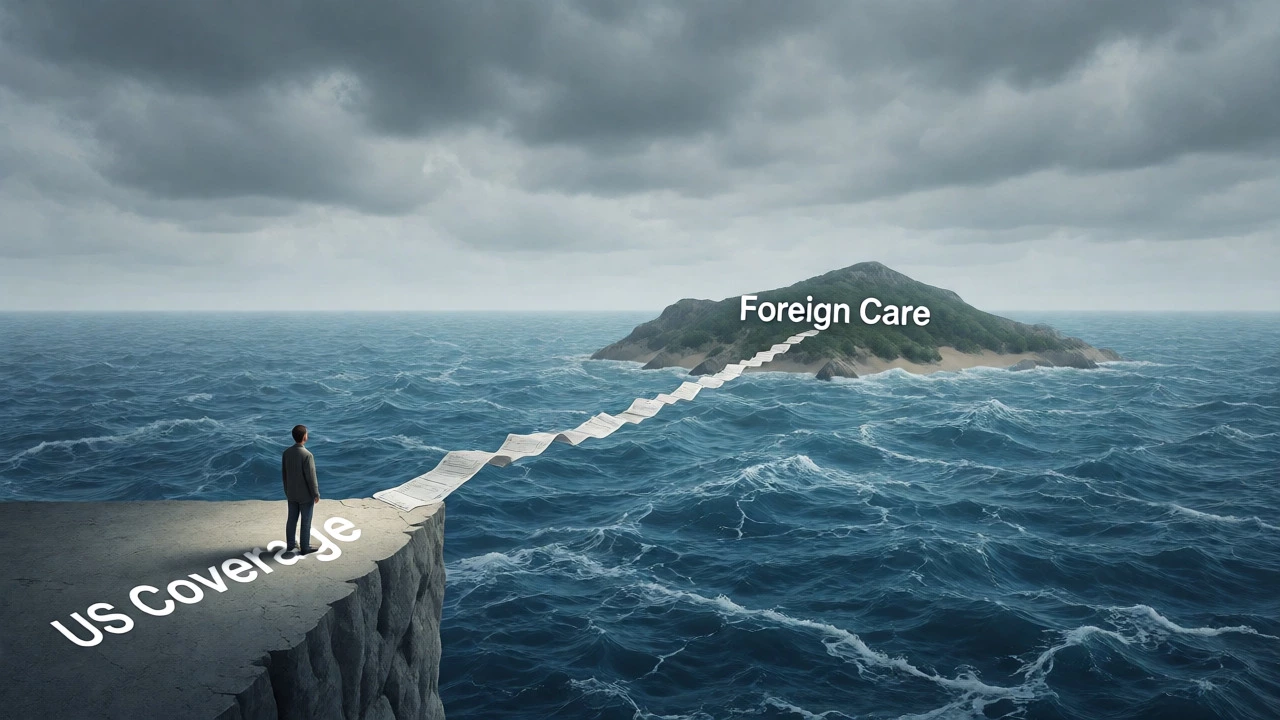
You’re sipping a mojito in Cancun or hiking the Swiss Alps when suddenly you feel a sharp pain. Your first instinct? Call your doctor back home. But wait-does that piece of plastic in your wallet actually work here? The short answer is: it’s complicated. Most standard US health insurance plans offer limited or no coverage outside the country, and if they do, the paperwork can be a nightmare.
Here is the reality check: while some premium plans have global networks, the majority of employer-sponsored plans and ACA marketplace policies are designed for domestic use. If you rely solely on your US card, you might end up paying thousands out of pocket before even thinking about reimbursement. Let’s break down exactly what happens to your coverage when you cross a border, how to avoid financial disasters, and what alternatives actually work.
The Reality of Domestic Plans Abroad
Most Americans assume their health insurance is universal because it covers them from coast to coast. It isn’t. When you step outside the United States, your network essentially vanishes. Hospitals in London, Tokyo, or Rio de Janeiro are considered "out-of-network" providers by default. This triggers a cascade of issues: higher deductibles, lower reimbursement rates, and often, upfront payment requirements.
For example, if you visit an emergency room in Mexico with a standard Blue Cross Blue Shield PPO, the hospital likely won’t accept your card directly. You’ll pay cash or put it on a credit card. Then, you must submit claims yourself, translating receipts and hoping your insurer doesn’t deny it based on "non-emergency" definitions. According to the Centers for Medicare & Medicaid Services (CMS), Medicare-the federal program for seniors-generally does not cover healthcare services received outside the US, with very few exceptions like cruise ships within certain waters.
| Plan Type | Emergency Care Coverage | Direct Billing | Reimbursement Process |
|---|---|---|---|
| Standard Employer PPO | Limited (often 60-70%) | Rarely available | Manual claim submission required |
| Medicare Part B | Very Limited (mostly excluded) | No | Strict criteria; often denied |
| Premium Global Plan | High (80-100%) | Available via direct billing partners | Simplified or automatic |
| Travel Medical Insurance | Full coverage for new injuries/illnesses | Yes, with assistance hotlines | Handled by insurer |
When Does Your US Insurance Actually Pay?
It’s not all doom and gloom. There are specific scenarios where your US plan kicks in. First, true emergencies. If you suffer a heart attack or break a leg, most insurers will reimburse a portion of the cost, though usually at a lower rate than in-network US care. Second, pre-existing conditions. If you need routine care for chronic issues like diabetes management while abroad, your plan might cover it, but only if you use a provider within their rare international network.
However, don’t confuse "emergency" with "urgent." A severe toothache or a rash might feel urgent to you, but insurers often categorize these as non-emergencies, meaning zero coverage. Always check your Summary of Benefits and Coverage (SBC) document before traveling. Look for the section labeled "Out-of-Area Coverage" or "International Coverage." If it says "Not Covered," believe it.
The Gap: Why Travel Insurance Isn’t Just for Lost Luggage
This is where travel insurance enters the picture. Many people buy comprehensive travel policies that include trip cancellation and lost baggage, but overlook the medical component. Standard travel insurance typically covers new accidents and sudden illnesses occurring during the trip. It does not cover pre-existing conditions unless you buy a specific waiver or upgrade.
Consider this scenario: You’re skiing in Colorado (domestic) and break your arm. Your US health insurance handles it perfectly. Now imagine you’re skiing in France. Your US plan might pay 50% after you front $5,000. A dedicated travel medical policy costing $50 would cover the full bill, arrange the hospital transfer, and handle the language barrier via an assistance hotline. The difference in stress and cost is massive.
Medical Tourism: A Special Case
If you are traveling specifically for treatment-known as medical tourism-the rules change again. Here, you aren’t looking for emergency help; you’re seeking elective procedures like dental implants, knee replacements, or fertility treatments. Most US insurers do not cover elective surgeries performed abroad because they cannot verify the quality of care or negotiate rates with foreign clinics.
Some newer programs, like those offered by large employers or specialized brokers, allow you to choose international hospitals for planned procedures. For instance, a company might partner with a clinic in Thailand for joint replacements, covering the cost entirely because the price is 60% lower than in the US. But this requires prior authorization. You cannot just show up at a clinic in Istanbul for a cosmetic procedure and expect your insurance to pick up the tab.
How to Navigate Payment and Claims
If you find yourself in a foreign hospital without adequate travel insurance, follow these steps to protect your finances:
- Ask for an Itemized Bill: Do not accept a lump sum charge. Request a detailed breakdown of every service, medication, and device used.
- Get Receipts in English: If possible, ask the hospital administration to provide receipts in English or attach a certified translation. Some insurers reject claims with illegible foreign text.
- Contact Your Insurer Immediately: Call the number on your card. They may have preferred providers nearby who accept direct billing, saving you the hassle of upfront payment.
- Keep Everything: Photograph prescriptions, discharge summaries, and proof of payment. Digital copies are safer than paper ones that fade or get lost.
Remember, reimbursement takes time. While domestic claims process in weeks, international claims can take three to six months. Keep a reserve fund to cover these expenses until the check arrives.

Alternatives That Actually Work
If you travel frequently or live abroad part-time, relying on US insurance is risky. Consider these options:
- Supplemental Travel Medical Insurance: Cheap, flexible, and covers emergencies. Brands like World Nomads or SafetyWing offer monthly subscriptions for digital nomads.
- Global Health Insurance Plans: These are standalone policies that work worldwide, similar to local insurance in each country. They are more expensive but offer comprehensive coverage, including routine care and preventive services.
- Employer Expat Packages: If your company sends you overseas, negotiate for expat health coverage. These plans often include evacuation services, which can cost over $100,000 if arranged privately.
Key Takeaways
- Most standard US health insurance plans offer minimal or no coverage abroad.
- Medicare generally does not cover healthcare outside the US.
- Always pay upfront abroad; reimbursement is slow and uncertain.
- Travel medical insurance is essential for covering new accidents and illnesses.
- Elective medical tourism usually requires separate financing or specialized employer programs.
Does Medicare cover healthcare in Canada or Mexico?
Generally, no. Medicare Part A and B do not cover healthcare services received outside the United States. Exceptions are rare and include situations like being on a cruise ship within US territorial waters or needing emergency care while passing through Canada en route to Alaska.
Will my HSA or FSA funds work internationally?
Yes, you can use HSA or FSA cards abroad for qualified medical expenses. However, you must keep detailed receipts showing the date, amount, and description of the service. Be aware that currency conversion rates may affect the final claim value, and some merchants may not code transactions as "medical," requiring manual verification.
What is medical evacuation coverage?
Medical evacuation (medevac) covers the cost of transporting you to the nearest adequate medical facility or back to your home country if local hospitals cannot treat your condition. This can involve air ambulances and costs tens of thousands of dollars. Most standard health insurance plans do not include medevac, so it is a critical add-on for travelers.
Do I need travel insurance if I have a premium global health plan?
If your plan explicitly states "worldwide coverage" and includes direct billing capabilities, you may not need additional travel medical insurance. However, always check for exclusions related to adventure sports, pre-existing conditions, or high-risk countries. Even premium plans sometimes lack robust evacuation benefits, so reviewing the fine print is crucial.
How long does it take to get reimbursed for international medical bills?
Processing times vary by insurer but typically range from 4 to 12 weeks for international claims. Delays often occur due to missing translations, incomplete documentation, or fraud checks. Submitting claims promptly and ensuring all documents are clear and translated can speed up the process.