Best Vitamins to Repair Nerve Damage: Science-Backed Choices
 Dec, 19 2025
Vitamin Dosage Calculator for Nerve Repair
Recommended Vitamin Dosages
This tool helps determine appropriate vitamin dosages for nerve repair based on clinical studies. Please fill out the form below to get personalized recommendations. Important: This is informational only and not medical advice. Always consult your healthcare provider before starting any supplement regimen.
Your Recommended Dosages
When nerves get damaged-from diabetes, injury, surgery, or chronic pressure-it’s not just pain you feel. It’s tingling, burning, numbness, or weakness that won’t go away. Many people turn to supplements hoping to speed up healing. But not all vitamins help the same way. Some actually make a measurable difference in nerve repair, while others just sit on the shelf.
Why nerve damage doesn’t heal fast
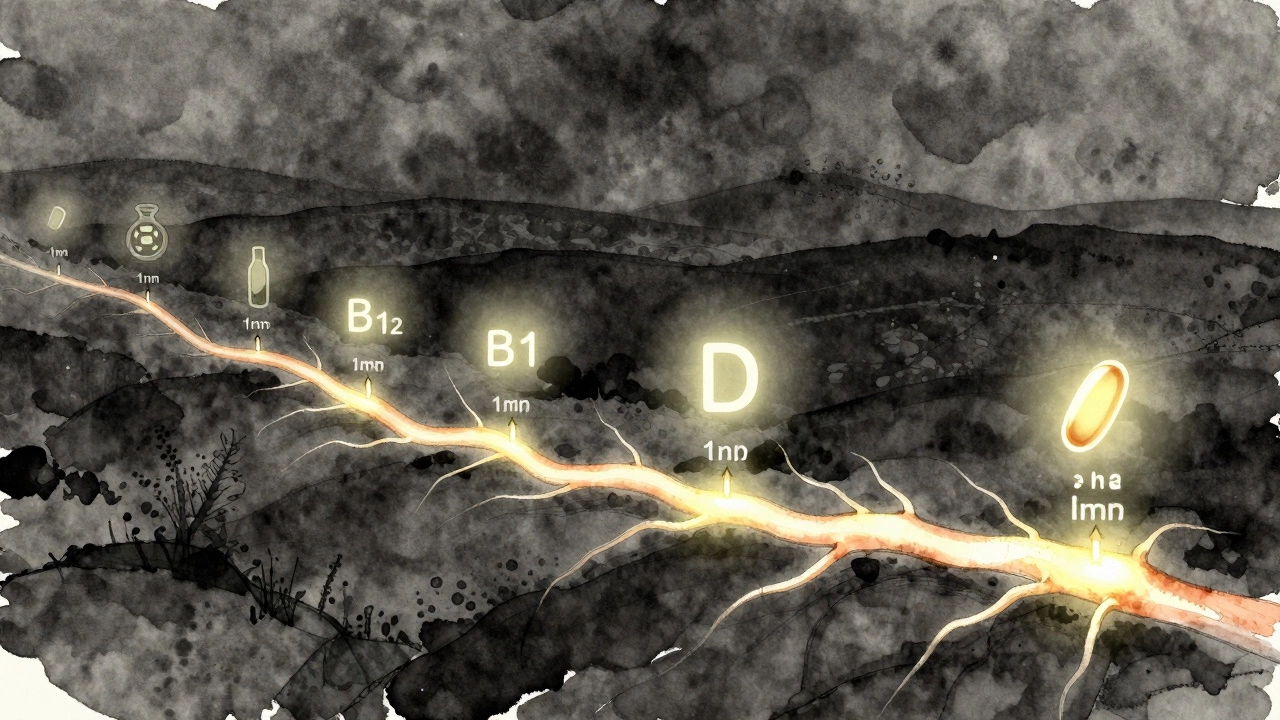
Nerves are slow to regenerate. Unlike skin or muscle, they don’t bounce back quickly. A damaged nerve fiber grows back at about 1 mm per day, if conditions are perfect. That means a pinched nerve in your wrist could take months to fully recover. And if your body lacks the right building blocks, it won’t heal at all.The key players in nerve repair are vitamins that support myelin-the fatty sheath around nerves-and help produce energy for nerve cells. Without enough of these, regeneration stalls. That’s why doctors in orthopedic and neurology clinics often check vitamin levels before recommending surgery or physical therapy.
Vitamin B12: The top choice for nerve repair
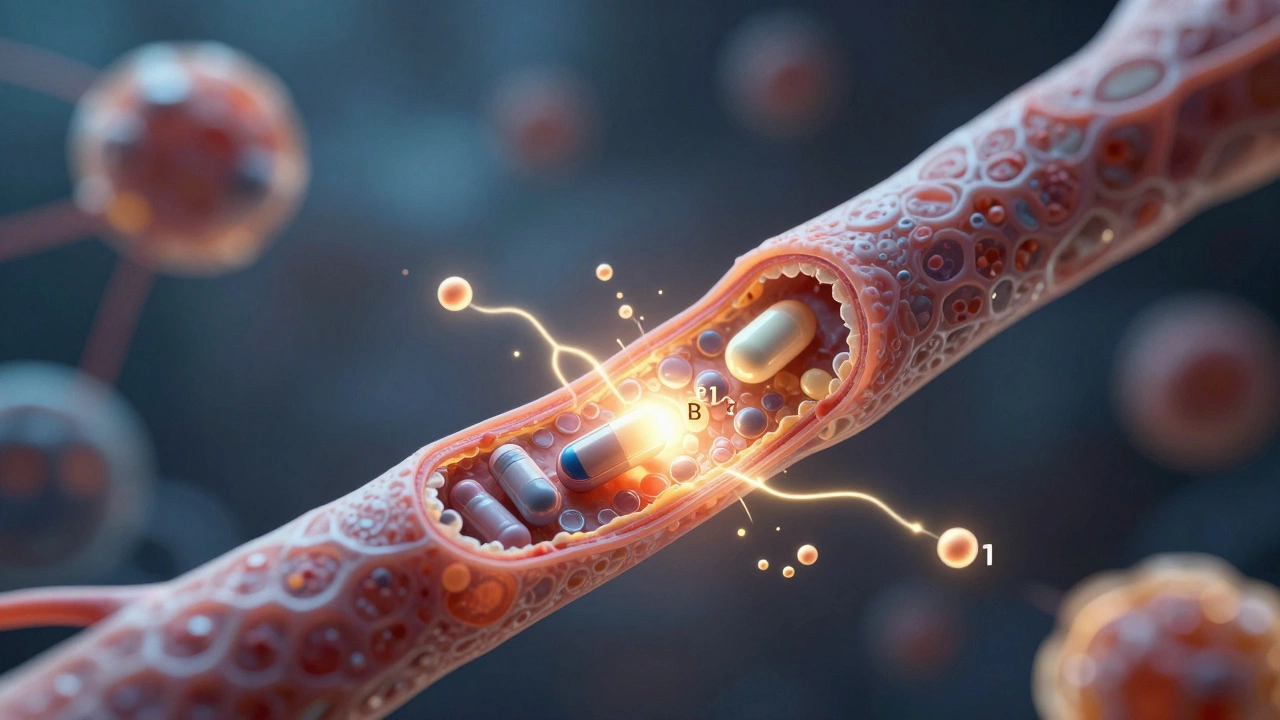
Vitamin B12 is the most studied and effective vitamin for repairing damaged nerves. It’s not just a supplement-it’s a critical part of nerve cell metabolism. B12 helps make myelin, the insulation that lets signals travel fast between your brain and limbs. When myelin breaks down, signals get slow or mixed up. That’s what causes the numbness and electric shocks people feel.Studies show that people with low B12 levels often have worse neuropathy symptoms. In one 2023 trial with 120 patients with diabetic neuropathy, those who took 1,000 mcg of B12 daily for 12 weeks reported 40% less pain and improved nerve conduction speed compared to the placebo group. The effect was strongest in those who were deficient to begin with.
Good sources? Animal products: meat, fish, eggs, dairy. But if you’re over 50, vegan, or have digestive issues (like Crohn’s or gastric bypass), your body may not absorb B12 well. That’s why many clinics recommend sublingual or injectable forms-not pills you swallow.
Vitamin B1 (Thiamine): Energy for nerve cells
Thiamine, or B1, is the fuel for nerve cells. It helps turn sugar into energy. Without it, nerves starve. This is especially true for people with diabetes, where high blood sugar blocks thiamine absorption.Research from the University of Birmingham found that diabetics with neuropathy who took 100 mg of thiamine daily for three months saw a 60% reduction in nerve pain. Their nerve function tests improved too. Thiamine doesn’t rebuild myelin like B12, but it keeps nerves alive while they heal.
It’s not easy to get enough from food alone. Whole grains, pork, beans, and sunflower seeds have it-but modern diets are often stripped of these. That’s why high-dose B1 supplements are commonly used in nerve clinics.
Vitamin B6: Support role with limits
Vitamin B6 helps make neurotransmitters like serotonin and GABA, which control pain signals. It also works with B12 to produce myelin. But here’s the catch: too much can hurt you.Doses over 200 mg per day for months can cause nerve damage themselves. That’s right-too much B6 can cause the same symptoms it’s meant to fix. Most people get enough from food: poultry, bananas, potatoes, chickpeas. Unless you’re on a high-dose supplement, you’re probably fine.
Stick to 10-50 mg daily if you’re using it for nerve repair. Always pair it with B12 and B1. They work as a team.

Other vitamins that help, but aren’t frontline
Vitamin D isn’t directly involved in nerve repair, but low levels are linked to chronic pain and inflammation. If your vitamin D is below 30 ng/mL, fixing it can reduce nerve sensitivity. Most people need 1,000-2,000 IU daily, especially in the UK where sunlight is limited. Vitamin E is an antioxidant that protects nerves from oxidative stress. A 2022 study showed that people with chemotherapy-induced neuropathy who took 400 IU of vitamin E daily had slower symptom progression. It won’t reverse damage, but it can slow it down. Alpha-lipoic acid isn’t a vitamin, but it’s often grouped with them. It’s a powerful antioxidant that improves blood flow to nerves. In clinical trials, 600 mg daily reduced pain and numbness in diabetic neuropathy. It’s widely used in European nerve clinics.What doesn’t work for nerve repair
Don’t waste money on:- High-dose vitamin C-it helps collagen, not nerves
- Glucosamine-it’s for joints, not nerves
- Herbal blends like “nerve support” without proven ingredients
- Over-the-counter B-complex pills with less than 100 mcg of B12
Many supplements are marketing traps. They use big labels and vague claims. Look for the exact amounts. If a bottle says “B complex” with no numbers, skip it.
How to take vitamins for nerve repair
There’s no magic pill. But a smart routine works:- Get your blood tested for B12, B1, B6, and vitamin D. Don’t guess.
- If deficient, take B12 (1,000 mcg daily, sublingual or injection), B1 (100 mg), and vitamin D (2,000 IU).
- Add alpha-lipoic acid (600 mg) if you have diabetic neuropathy.
- Keep B6 under 50 mg unless your doctor says otherwise.
- Give it 3-6 months. Nerves heal slowly.
Don’t stop physical therapy or manage your blood sugar if you’re diabetic. Vitamins help, but they’re not a replacement.
When to see a specialist
If after 3 months of proper vitamins you still have:- Loss of feeling in hands or feet
- Muscle weakness
- Burning pain that wakes you up
It’s time to see a neurologist or orthopedic specialist. You might need nerve conduction tests, MRI, or even surgery. Vitamins help the body heal-but they can’t fix structural damage like a herniated disc pressing on a nerve.
Real-world results
One patient, a 62-year-old teacher from Solihull, had numb toes and foot pain for 18 months after knee surgery. Her B12 was 180 pg/mL (normal is 200-900). She started on B12 injections weekly for a month, then monthly, plus 100 mg B1 daily. After 4 months, she could walk without pain. Her nerve test showed improved signal speed. She didn’t need surgery.Another, a warehouse worker with type 2 diabetes, took alpha-lipoic acid and B vitamins. His pain dropped from 8/10 to 3/10 in 12 weeks. He’s still on it, two years later.
These aren’t miracles. They’re science. And they only work if you do them right.
Final take: What to buy
If you’re serious about nerve repair, get:- Sublingual B12: 1,000 mcg daily
- Thiamine (B1): 100 mg daily
- Alpha-lipoic acid: 600 mg daily (if diabetic)
- Vitamin D3: 2,000 IU daily
- B6: Only if your level is low, max 50 mg
Buy from reputable brands-Thorne, Pure Encapsulations, or those sold in UK pharmacies. Avoid Amazon generics. You’re treating your nerves, not your budget.
Healing takes time. But with the right vitamins, you give your body the best shot it’s ever had.
Can vitamin B12 reverse nerve damage?
Vitamin B12 can help repair nerve damage if the damage is due to a deficiency. It supports myelin regeneration and improves nerve signal speed. But if the nerve is crushed, severed, or compressed by a herniated disc, B12 alone won’t fix it. It works best as part of a broader plan that includes managing underlying causes like diabetes or inflammation.
How long does it take for nerves to heal with vitamins?
Nerve healing is slow. You won’t see results in days or even weeks. Most people notice reduced pain or tingling after 6-12 weeks, but full recovery can take 3-12 months. Nerves grow about 1 mm per day, so a nerve damaged from the lower back to the foot might take over a year to fully reconnect. Consistency with vitamins and lifestyle changes is key.
Is it safe to take B12 and B6 together?
Yes, it’s safe and recommended. B12 and B6 work together in nerve metabolism. But B6 should not exceed 50 mg daily unless prescribed. High doses of B6 over time can cause nerve damage. Always pair B6 with B12 and B1 to balance the B-complex. Most good supplements already have the right ratio.
Can I get enough nerve-repairing vitamins from food?
It’s very hard. You’d need to eat liver daily for B12, a pound of pork or sunflower seeds for B1, and large amounts of fatty fish for B6. Most people don’t eat this way. Even then, absorption drops with age or gut issues. Supplements are often necessary to reach the therapeutic doses used in clinical studies.
Do B vitamins help with sciatica?
B vitamins won’t fix a pinched nerve from a herniated disc. But they can reduce the burning, tingling, and pain signals that come with sciatic nerve irritation. They don’t take pressure off the nerve-they help your nerves cope better with the stress. For structural sciatica, physical therapy or imaging is needed. Vitamins are a support tool, not a cure.
What’s the best form of B12 for nerve damage?
Methylcobalamin is the most bioactive form for nerve repair. It’s the version your body uses directly without conversion. Cyanocobalamin is cheaper but less effective-it has to be converted in the liver. Sublingual (under-the-tongue) methylcobalamin bypasses gut absorption issues. Injections are best for severe deficiency, but daily sublingual tablets work well for most people.