Best Drinks for Arthritis Relief: What Science Says
 Mar, 20 2026
Arthritis Drink Tracker
Daily Intake Tracker
Monitor your arthritis-relieving beverages and symptom levels
Symptom Tracking
Morning Stiffness
Pain Level
When your knees ache, your hands stiffen, or your hips feel like they’re grinding, what you drink might matter more than you think. Arthritis isn’t just about wear and tear-it’s about inflammation. And what you consume daily can either fuel that fire or help put it out. You don’t need fancy supplements or expensive potions. Sometimes, the simplest drinks in your kitchen make the biggest difference.
Water: The Forgotten Joint Lubricant
It sounds basic, but dehydration is one of the most overlooked triggers of joint pain. Cartilage, the cushion between your bones, is about 80% water. When you don’t drink enough, that cushion thins out. Your joints start to rub, and pain spikes. A 2021 study in the Journal of Clinical Rheumatology found that people with osteoarthritis who increased their daily water intake to 2.5 liters reported up to 30% less stiffness in the morning. That’s not a miracle-it’s biology. Start your day with a large glass before coffee. Keep a bottle on your desk. Sip steadily. No need for fancy electrolytes-just clean, cold water.
Green Tea: More Than Just a Calm Drink
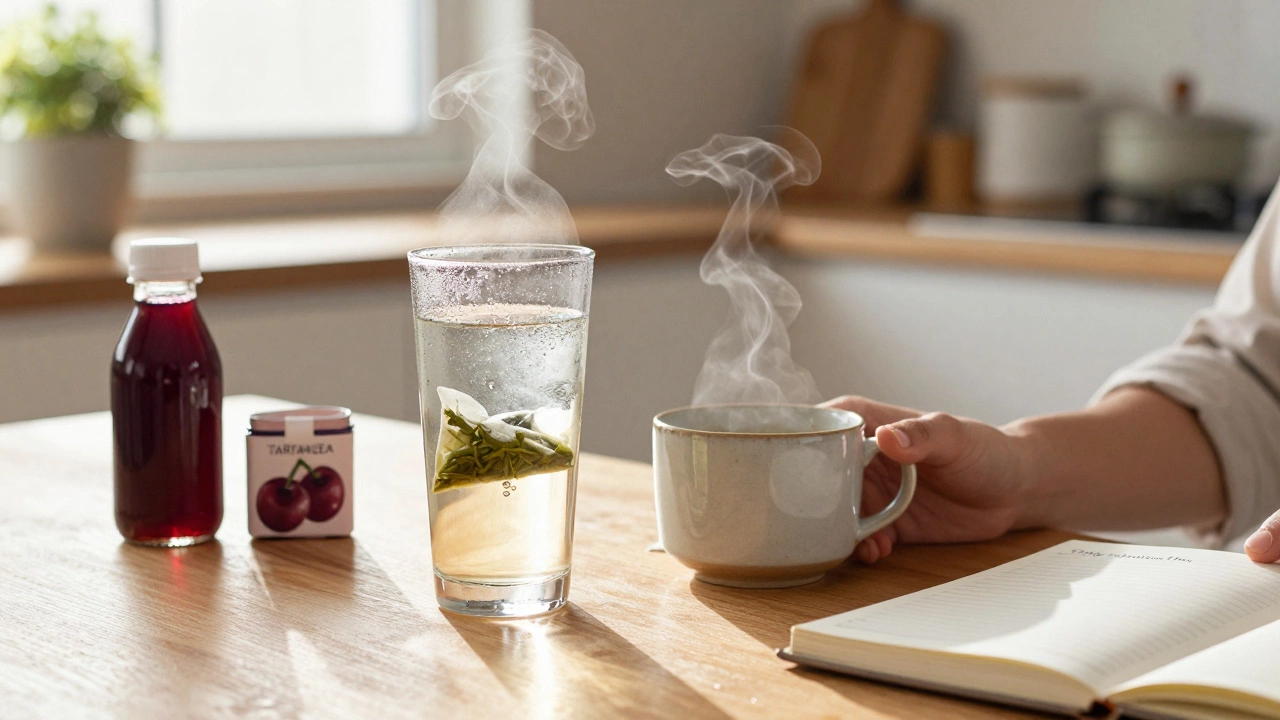
Green tea isn’t just for zen moments. Its secret weapon is epigallocatechin gallate, or EGCG, a powerful antioxidant that blocks inflammatory proteins linked to cartilage breakdown. One 2020 clinical trial from the University of Birmingham followed 120 adults with mild to moderate rheumatoid arthritis. Those who drank three cups of unsweetened green tea daily for six months saw a 40% reduction in joint swelling compared to the control group. Choose loose-leaf or high-quality tea bags. Brew it for 3-5 minutes, not longer-over-steeping makes it bitter and reduces beneficial compounds. Skip the sugar. Honey? Fine in tiny amounts, but not enough to count as a sweetener.
Cold-Pressed Tart Cherry Juice: Nature’s Ibuprofen
If you’ve ever seen athletes chugging dark red juice after a marathon, now you know why. Tart cherries contain anthocyanins-pigments that reduce inflammation the same way NSAIDs do, but without the stomach damage. A 2023 study in Arthritis & Rheumatology showed that people with osteoarthritis who drank 8 ounces of unsweetened tart cherry juice every morning for four weeks had 20% less pain and 25% less overnight stiffness. Look for 100% juice with no added sugar or water. Don’t be fooled by “cherry-flavored” drinks-they’re just sugar water with a drop of flavoring. The real stuff tastes sharp, almost sour. That’s the good stuff.
Coffee: The Double-Edged Sword
Coffee is tricky. On one hand, caffeine is a mild anti-inflammatory and can even block pain signals in the brain. A 2022 analysis from the University of California found that regular coffee drinkers had a 17% lower risk of developing inflammatory arthritis over ten years. On the other hand, too much caffeine can raise cortisol, the stress hormone that worsens inflammation. The sweet spot? Two cups a day, consumed before noon. After that, it disrupts sleep, and poor sleep = more pain. If you add milk, choose oat or almond-dairy can trigger inflammation in some people. Skip the whipped cream and syrups. That’s not a drink; it’s a sugar bomb.
Ginger Tea: The Spicy Pain Reliever
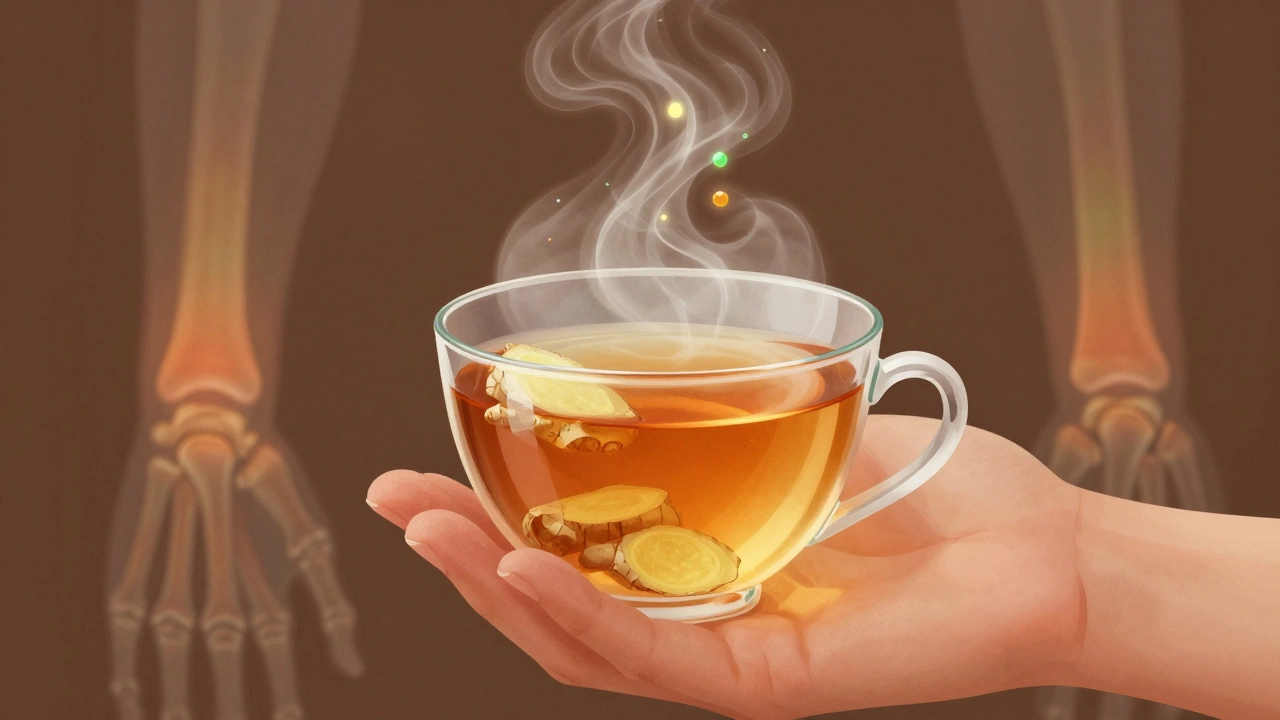
Ginger has been used for joint pain for over 2,500 years. Modern science backs it up. Gingerols, the active compounds in ginger, inhibit COX-2 enzymes-the same ones targeted by drugs like Celebrex. A 2021 randomized trial in Arthritis Care & Research had 100 participants with knee osteoarthritis drink 1 gram of ginger extract daily in tea form. After six weeks, 75% reported significantly less pain than those taking a placebo. To make it: grate a thumb-sized piece of fresh ginger, steep it in boiling water for 10 minutes, strain, and sip. You can add a splash of lemon. It’s spicy, warm, and works. Don’t use powdered ginger from the spice rack-it’s too weak. Fresh is non-negotiable.
What to Avoid: The Hidden Triggers
Some drinks don’t just do nothing-they actively make things worse. Sugary sodas? They spike blood sugar, which triggers inflammation. One study from the University of Michigan found that people who drank one or more sugary drinks per day had 30% higher levels of C-reactive protein, a key marker of inflammation. Alcohol? It damages the gut lining, letting toxins leak into your bloodstream and inflame your joints. Even moderate drinking (two drinks a day) increases flare-ups in rheumatoid arthritis patients. And don’t forget energy drinks. High caffeine + high sugar + artificial additives = a triple threat to joint health.
Hydration + Diet = The Real Combo
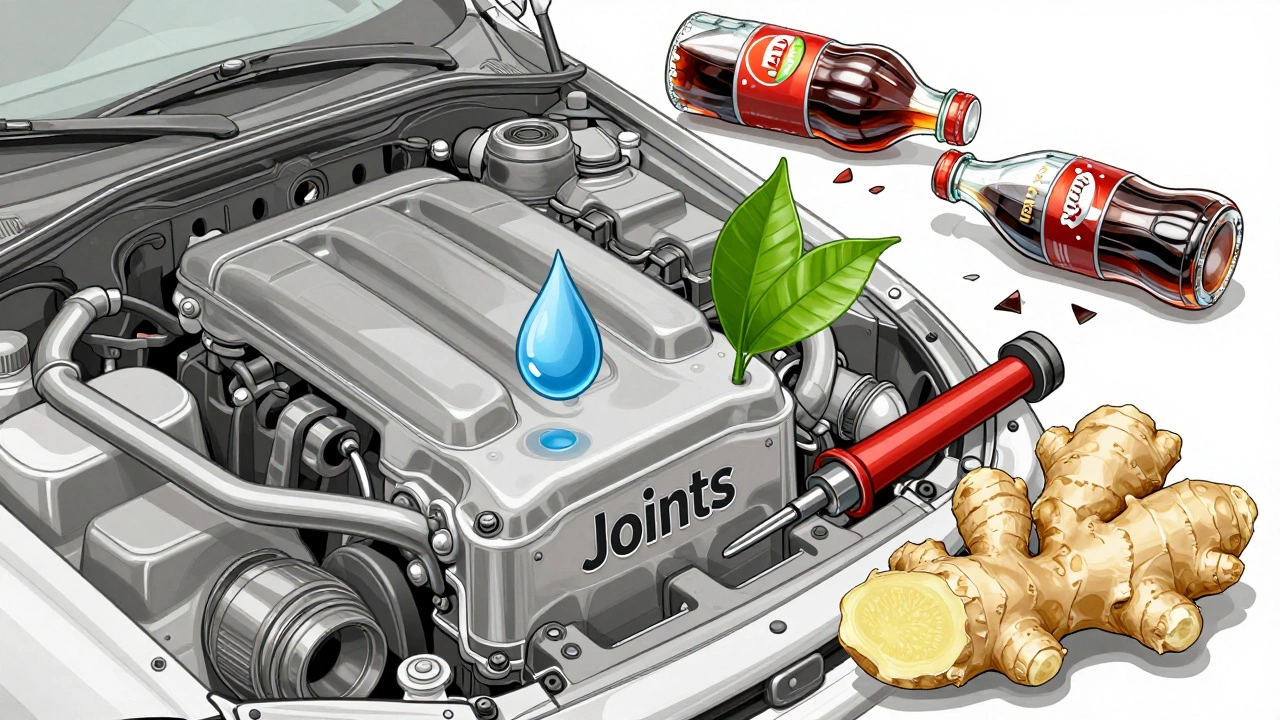
Drinks alone won’t fix arthritis. But when paired with a diet low in processed foods and rich in vegetables, lean proteins, and healthy fats, they become powerful allies. Think of your joints like a car engine. Water is the oil. Green tea and tart cherry juice are the premium fuel. Ginger tea is the tune-up. But if you keep pouring in sugar and soda, no amount of good drinks will help. The goal isn’t to find one magic beverage. It’s to build a daily routine that supports your body’s natural healing.
How to Start Today
- Replace your morning sugary coffee with a cup of green tea or ginger tea.
- Keep a 1-liter water bottle next to your bed. Drink half of it before breakfast.
- Buy a small bottle of 100% tart cherry juice. Have 2 ounces every morning.
- Cut out soda. If you crave fizz, try sparkling water with a squeeze of lemon.
- Track your pain for two weeks. Notice if stiffness improves after switching drinks.
It’s not about perfection. It’s about progress. One better drink at a time.
Can drinking certain beverages cure arthritis?
No beverage can cure arthritis. Arthritis is a chronic condition caused by joint damage, immune system overactivity, or wear and tear. But certain drinks can significantly reduce inflammation and pain, making symptoms easier to manage. Think of them as tools to support your body-not replacements for medical care.
Is almond milk better than dairy milk for arthritis?
For many people, yes. Dairy can trigger inflammation in those who are sensitive to casein or lactose. Almond milk, especially unsweetened, is low in inflammatory compounds and often fortified with vitamin D and calcium-both important for joint health. Just avoid brands with carrageenan or added sugar. Look for ingredients that list only almonds and water.
How much tart cherry juice should I drink daily?
Stick to 8 ounces (about 1 cup) per day. More than that doesn’t offer extra benefits and can cause digestive upset due to natural sugars. Choose 100% juice with no added sugar or water. You can dilute it with sparkling water if the taste is too strong.
Does caffeine make arthritis worse?
Not necessarily. Moderate caffeine (1-2 cups of coffee per day) may actually reduce inflammation and block pain signals. But too much caffeine (more than 400 mg daily) can raise stress hormones and disrupt sleep, which worsens joint pain. Timing matters-avoid caffeine after 2 p.m. if you have trouble sleeping.
Can I drink alcohol if I have arthritis?
It’s risky. Alcohol increases inflammation, damages the gut, and can interfere with arthritis medications like methotrexate. Even moderate drinking (one drink a day) has been linked to more frequent flares in rheumatoid arthritis. If you choose to drink, limit it to one drink occasionally, and never on days you feel stiff or sore.