At What Stage of Cancer Do You Feel Pain? Understanding When Pain Starts and Why
 Jan, 13 2026
Cancer Pain Estimator
Your Pain Likelihood
What this means:
Myth vs Reality:
Not everyone with cancer feels pain-and when they do, it doesn’t always mean the cancer is advanced. Many people assume pain equals late-stage cancer, but that’s not true. Pain can show up early, disappear for months, or only appear when the cancer spreads. What matters isn’t just the stage, but where the cancer is, how it’s growing, and what it’s touching.
Pain isn’t a reliable marker for cancer stage
Stage I cancer can cause pain if it’s pressing on a nerve, growing inside a sensitive organ, or triggering inflammation. For example, early-stage pancreatic cancer might cause back pain because the tumor presses on nerves behind the stomach. Stage IV cancer, on the other hand, might cause no pain at all if it’s only spreading to less sensitive areas like the outer layer of the liver or soft tissue.
Studies show that about 30% of people with early-stage solid tumors report pain before diagnosis. Meanwhile, 25% of people with metastatic cancer say they never had significant pain. Pain doesn’t follow a simple progression. It’s messy. It depends on location, nerve involvement, and individual pain tolerance.
Where pain shows up-and why
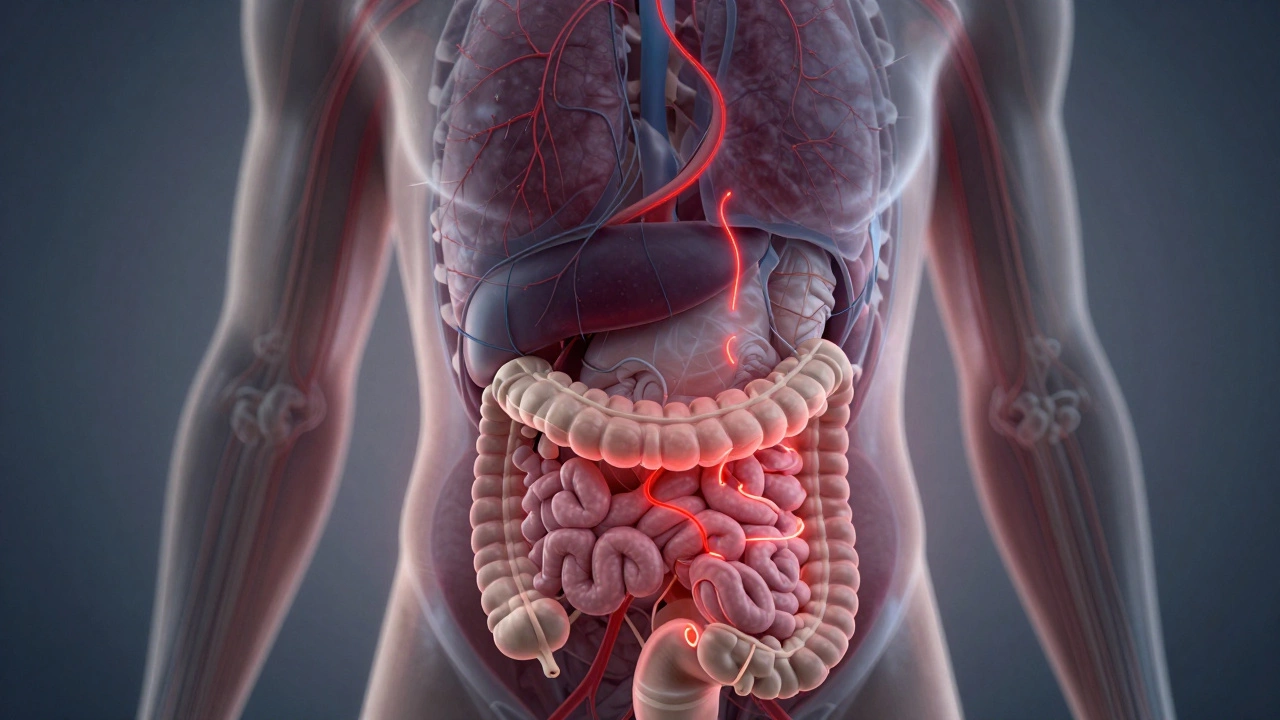
Cancer pain usually happens when tumors grow into or press on things that have nerves. Bones are common pain sites because they’re packed with nerve endings. When breast or prostate cancer spreads to the spine or ribs, it often causes deep, aching pain that gets worse at night. Lung cancer pressing on the chest wall or pleura can cause sharp, stabbing pain when breathing or coughing.
Some cancers cause pain by blocking passages. A tumor in the colon might cause cramping and pressure because it’s stopping stool from moving. A tumor near the bile duct can cause upper abdominal pain from backed-up fluids. Even small tumors in the brain can cause headaches if they increase pressure inside the skull.
Not all pain comes from the tumor itself. Cancer treatments can cause pain too. Chemotherapy can lead to nerve damage (peripheral neuropathy), making fingers and toes tingle or burn. Radiation can scar tissue, leading to stiffness or burning sensations months later. Surgery leaves scars and sometimes trapped nerves. So when someone says they’re in pain, you can’t assume it’s the cancer-it might be the treatment.
When pain becomes more common: stages III and IV
While pain can happen at any stage, it becomes more frequent and harder to control in stage III and IV. That’s when cancer has spread beyond its original site and is growing in multiple areas. Bone metastases are the most common cause of moderate to severe pain in advanced cancer. About 65% of people with stage IV breast, prostate, or lung cancer develop bone pain. Liver metastases can cause a constant, dull ache under the ribs. Brain metastases often lead to headaches, nausea, and vision changes.
At this point, pain isn’t just a symptom-it’s a major factor in quality of life. People with uncontrolled pain report worse sleep, less appetite, more anxiety, and less ability to move or talk with loved ones. That’s why doctors don’t wait for pain to get bad before acting. Screening for pain is now part of every cancer visit, no matter the stage.
Pain doesn’t always mean the cancer is getting worse
One of the biggest myths is that new pain means the cancer is spreading. That’s not always true. Sometimes, pain flares up because of infection, constipation, or even muscle strain. A person with lung cancer might feel sudden chest pain after lifting something heavy-not because the tumor grew, but because their ribs are weakened from treatment. A person with colon cancer might feel cramping after eating spicy food, not because the tumor is growing, but because their gut is sensitive.
That’s why doctors don’t jump to scans every time pain appears. They ask questions: When did it start? Is it new or different? Does it change with movement? Is it constant or sharp? Is there swelling, fever, or weight loss? These clues help tell if the pain is from cancer, treatment, or something else entirely.
How pain is managed at each stage
Pain management isn’t one-size-fits-all. In early stages, over-the-counter pain relievers like acetaminophen or ibuprofen are often enough. If the pain is nerve-related, doctors might prescribe gabapentin or duloxetine. Physical therapy, heat packs, and gentle stretching can help with muscle stiffness from surgery or radiation.
In advanced stages, stronger medications are common. Opioids like morphine, oxycodone, or fentanyl patches are used when pain is moderate to severe. These aren’t signs of failure-they’re tools to help people live better. Many people worry about addiction, but cancer-related pain is different. The goal isn’t to get high-it’s to get through the day without being held back by pain.
Other tools matter too. Nerve blocks, where medicine is injected near a nerve to block pain signals, can help for months. Radiation can shrink tumors causing pain, especially in bones. Acupuncture, massage, and mindfulness techniques help some people manage discomfort without more drugs.
What to do if you’re in pain
If you have cancer and you’re feeling pain, don’t wait. Don’t assume it’s normal. Don’t think you should just tough it out. Pain is a signal-and it’s one you’re allowed to act on.
- Write down when the pain happens, how bad it is (use 1 to 10), and what makes it better or worse.
- Tell your oncologist or nurse during your next visit-even if it’s not the reason you came in.
- Ask: Could this be from the cancer, treatment, or something else?
- Request a pain specialist if your current team isn’t helping. They exist for a reason.
There’s no shame in needing help. Pain doesn’t mean you’re weak. It means your body is reacting to something. And you deserve to feel better.
Myth vs. Reality: Pain and Cancer
Here are some common misunderstandings-and what’s really true:
- Myth: If I don’t have pain, my cancer isn’t advanced.
Reality: Many people with stage IV cancer feel no pain at all. Cancer doesn’t always hurt. - Myth: Pain means the cancer is spreading.
Reality: Pain can come from treatment, infection, or even stress. It’s not a reliable tracker. - Myth: Strong pain meds mean I’m near the end.
Reality: Opioids help people live better, longer. They’re not a death sentence. - Myth: I should just endure it.
Reality: Uncontrolled pain harms your body, sleep, mood, and immune system. Treating it helps you fight cancer better.
Final thought: Pain is treatable, not inevitable
Cancer doesn’t have to mean suffering. Pain is one of the most treatable symptoms-if you speak up. Whether you’re in stage I or stage IV, your comfort matters just as much as your survival. Doctors can’t help if they don’t know you’re hurting. And you deserve to live with dignity, even during treatment.
Does all cancer cause pain?
No. Many people with early-stage cancer feel no pain at all. Pain depends on location, size, and whether the tumor touches nerves or organs. Some cancers, like early-stage thyroid or skin cancer, rarely cause pain. Others, like pancreatic or bone cancer, often do-even in early stages.
Can cancer pain go away on its own?
Sometimes, yes-but not because the cancer disappeared. Pain can ease temporarily due to changes in inflammation, posture, or even stress levels. But if pain returns or changes, it’s a sign to check in with your care team. Don’t assume it’s gone for good.
Is it normal to have pain after cancer treatment ends?
Yes. Radiation can cause lasting tissue scarring. Surgery can leave nerve damage or adhesions. Chemotherapy can cause long-term nerve pain called peripheral neuropathy. These aren’t signs of cancer returning-they’re side effects. Many are treatable with physical therapy, nerve medications, or time.
Do opioids lead to addiction in cancer patients?
Rarely. When used for cancer-related pain under medical supervision, the risk of addiction is very low. The goal is pain control, not euphoria. Doctors start low and adjust slowly. Most patients don’t develop dependence because their pain is tied to a physical condition, not emotional craving.
What if my doctor says my pain isn’t serious?
Ask for a second opinion or request a referral to a pain specialist. Cancer pain is complex, and not all providers are trained in managing it. You have the right to be heard. If pain is affecting your sleep, mood, or ability to eat, it’s serious-even if scans show no change.
Next steps if you’re experiencing pain
If you’re living with cancer and dealing with pain, here’s what to do next:
- Track your pain for 3 days: note time, intensity, location, and triggers.
- Bring your notes to your next appointment-even if it’s for a routine checkup.
- Ask: "What’s causing this? Is it the cancer, treatment, or something else?"
- Request a pain management plan. It should include medication, non-drug options, and when to call for help.
- If nothing improves after 2 weeks, ask for a referral to a palliative care or pain specialist.
Pain isn’t a sign you’re failing. It’s a signal-and signals are meant to be answered.